Primary Sources from the Cold War

Cold War Political Cartoons

Context: Cartoonists were sometimes the sharpest critics of Cold War politics, using their art to satirize governments on all sides.
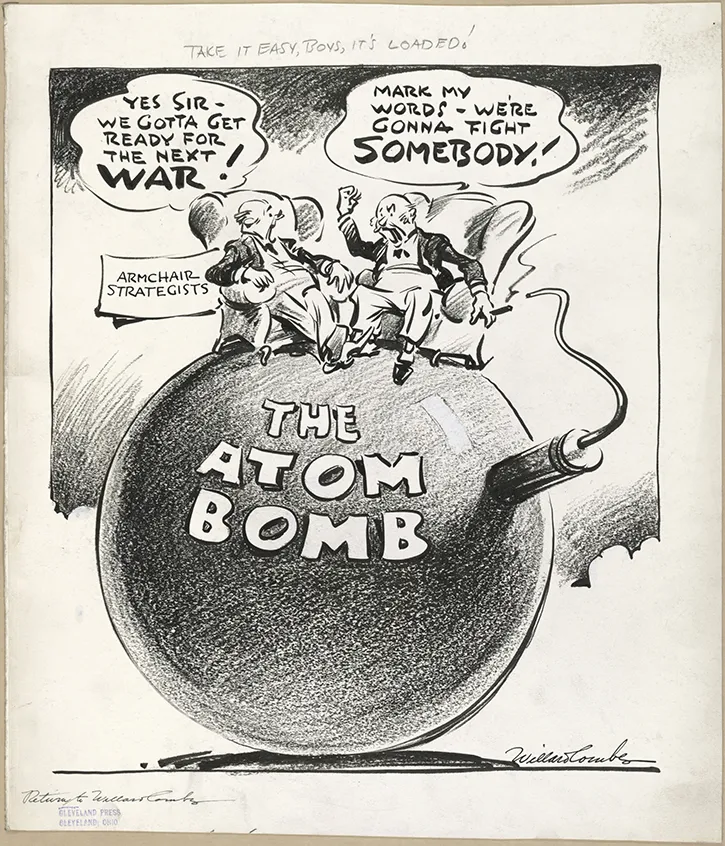
Political cartoon showing  two men labeled "airmchair strategists" sitting in armchairs on top of a classic cartoonish bomb. They discuss military preparedness and their willingness to fight. The man on the left says, "Yes sir - we gotta get ready for the next war!", and the man on the right says, "Mark my words - we're gonna fight somebody!".
1945 political cartoon by Willard Combes shows two "armchair strategists" discussing military preparedness and their willingness to fight, while sitting atop an atom bomb. After the detonation of the nuclear bombs in Japan, world leaders and scientists alike discussed the issue of their use in military force. Source: Library of Congress.
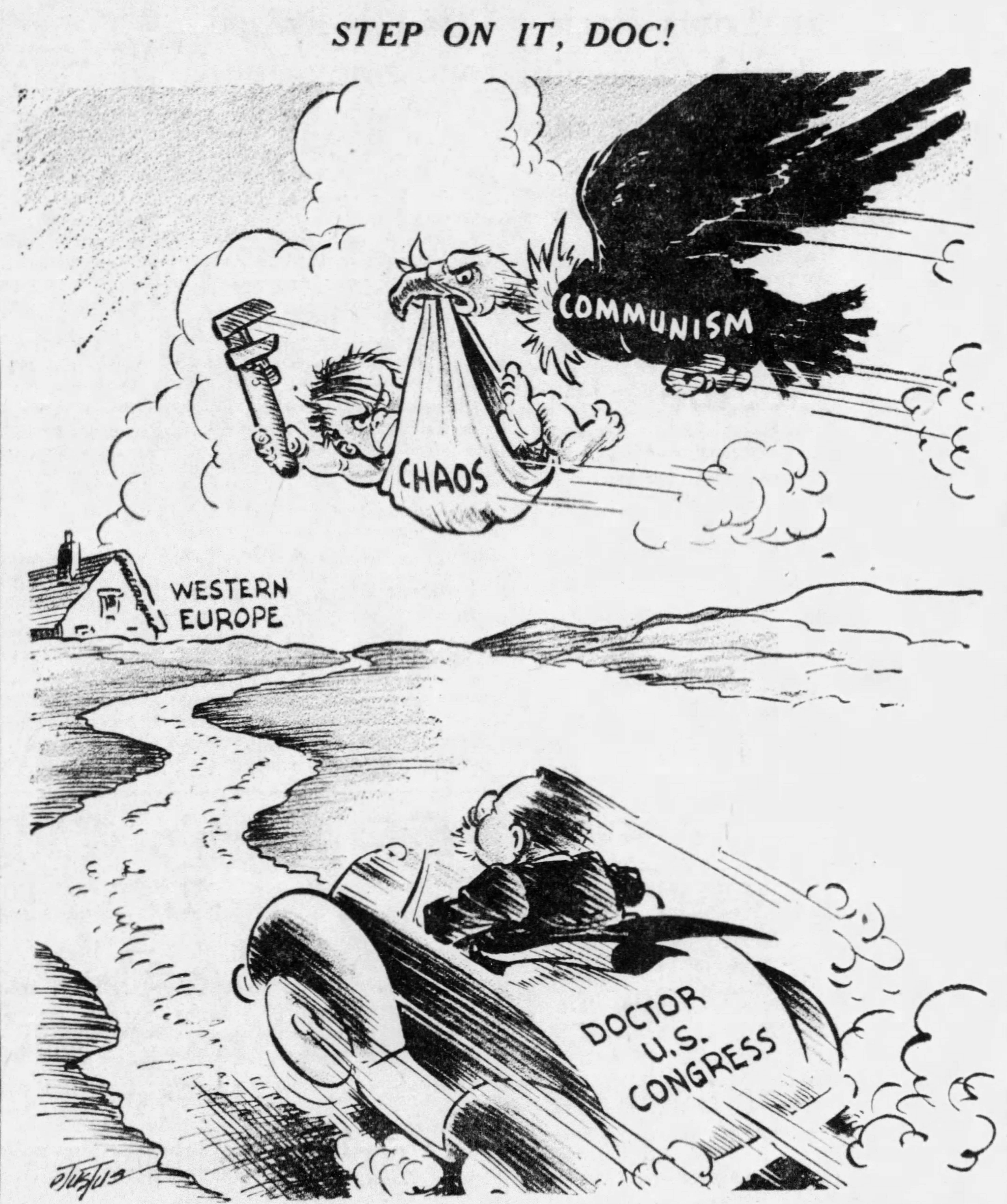
Political cartoon showing an eagle labeled "Communism" carrying a baby (frowning and holding a pipe wrench) labeled "Chaos" is flying towards a house labeled "Western Europe", while a car labeled "Doctor U.S. Congress" also speeds towards the "Western Europe" home.
Political cartoon by Roy Justus, published by the Minneapolis Star in 1947, shows a vulture labeled "Communism" swooping toward a battered Western Europe carrying a bundle of "Chaos." Racing to intervene is a car marked "Doctor U.S. Congress." Source: Star Tribune via Getty Images.


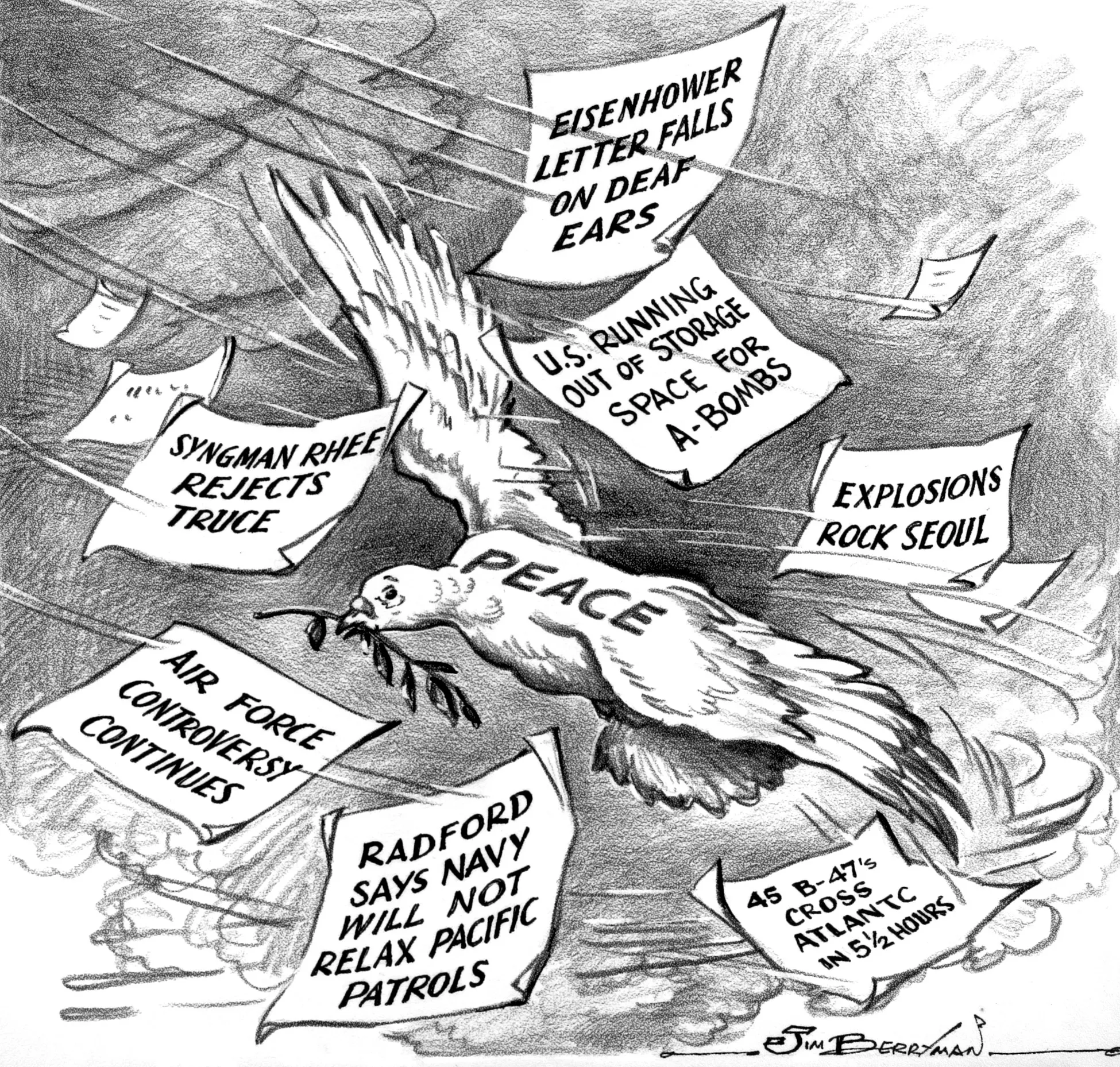
Cartoon showing a bird labeled "Peace" struggling to fly while papers around it fall from the sky. The papers reference events in which countries and leaders reject peace proposals of various sorts.
Cartoon from 1953 shows a bird labeled "Peace" struggling to fly as papers highlighting failed negotiations, expanding military arsenals, and international conflict swirl through the sky. Source: National Archives.
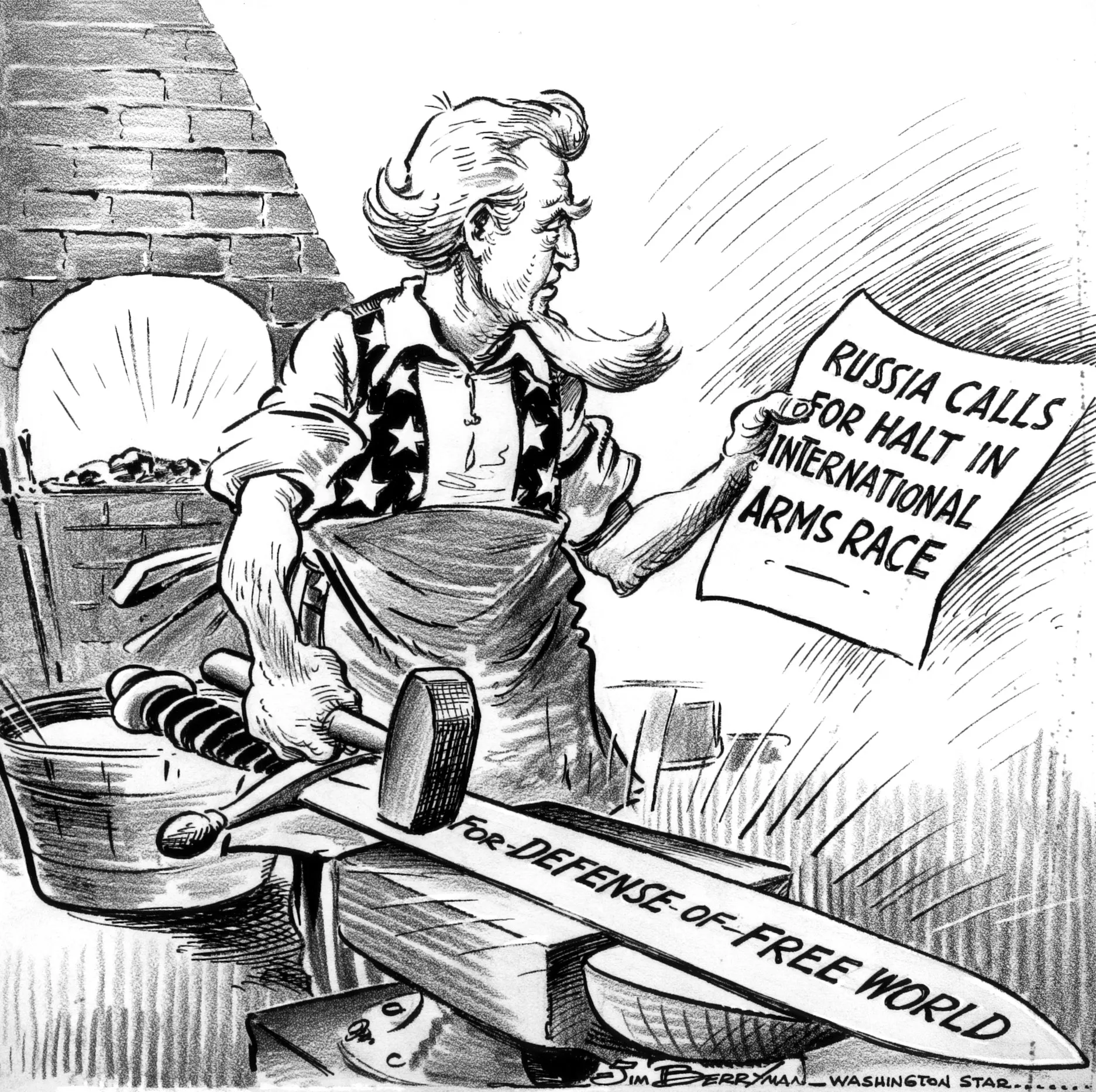
Political cartoon showing Uncle Sam reading a paper that says "Russia calls for halt in international arms race" as he works on forging a sword labeled "For defense of free world".
Cartoon by Jim Berryman in 1955 shows Uncle Sam considering a Soviet proposal as he forges a sword. The United States was wary of dropping its guard against anticipated trickery by the communist powers, and showed hesitation when considering the Soviet proposal for an international arms treaty calling for the destruction of all atomic and hydrogen bombs. Source: National Archives. 


To access the first, third, and fourth cartoons visit the following links: National Archives, Library of Congress, National Archives