Post-Cold War Engagement With China
This collection of resources facilitates critical analysis of a pivotal moment in U.S. foreign policy history. It contains a brief historical overview, a curated set of primary source documents, a short reading on the aftermath and legacy of the event, and a classroom discussion activity in which learners can synthesize their knowledge.
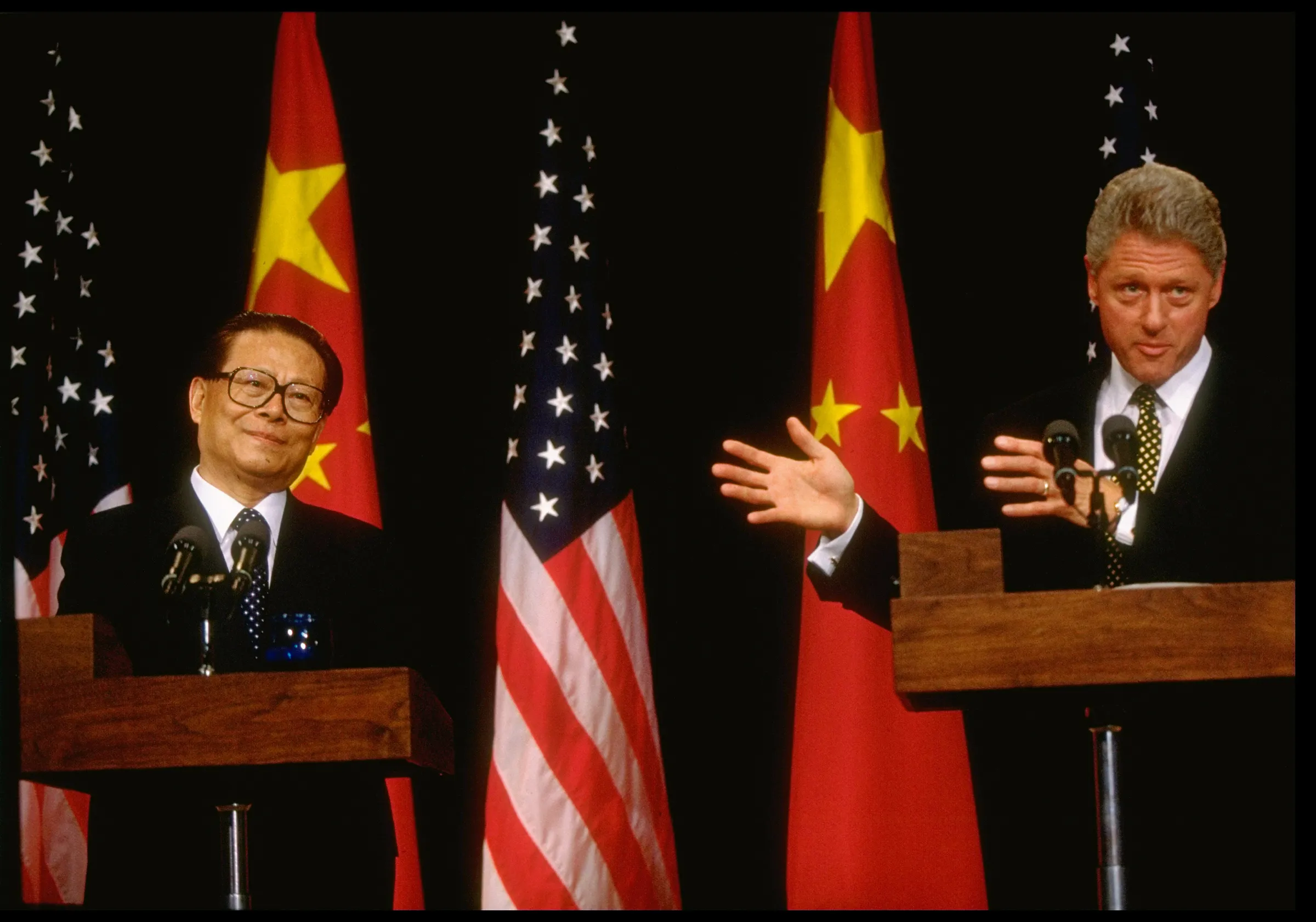
What factors shaped U.S. policy toward China after the Cold War?
During the Cold War, the United States and the Soviet Union vied for global influence.
Each represented a different form of government. And each championed a different economic model. The United States promoted democratic governance, free-market capitalism, individual rights, and the rule of law—what scholars often call liberal values. The Soviet Union, by contrast, promoted one-party rule, state-controlled economies, and collective rights.
But by the late 1980s, reforms were sweeping across communist countries in Eastern Europe, opening state-controlled economies for private businesses and trade and replacing authoritarian governments with democratically elected ones. In 1991, the Soviet Union broke apart, ending the Cold War.
The United States found itself in an extraordinary position. For decades, its foreign policy had been organized around competition with the Soviet Union. Now, almost overnight, the country’s main adversary had dissolved. The United States now stood as the world’s sole superpower.
Political theorists suggested that the Soviet collapse represented not just a victory for the United States but also the triumph of the liberal ideas for which it stood. With the collapse of communism in Europe, many observers felt that liberal ideas were destined to spread around the world.
Many U.S. policymakers shared that vision and looked to make it a reality.
Building a Post–Cold War Order
The United States looked to shape post–Cold War world according to its values in three broad ways.
Promoting Democracy: U.S. policymakers had long promoted democratic governance as both a moral good and a strategic interest. Democracies, the thinking went, were more stable, more peaceful, and more likely to be reliable partners. With authoritarian regimes collapsing across Eastern Europe and beyond, the United States moved to capitalize on the moment. The Clinton administration made “democratic enlargement” a core principle in its foreign policy, funding democracy-promotion programs, independent media, and civil-society groups across the globe.
International Cooperation: The network of institutions that the country had helped create after World War II—including the United Nations, International Monetary Fund (IMF), and NATO—had been designed to promote peaceful cooperation and stable governance. But Cold War rivalry had often constrained these institutions. The U.S.-Soviet rivalry frequently immobilized the United Nations, and cooperation through other organizations was often divided between competing U.S. and Soviet blocs.
With the Soviet Union gone, U.S. policymakers hoped those institutions could finally operate as their architects had intended. Free of gridlock, the United Nations could enforce international norms more effectively. Other institutions, like NATO, could expand to include formerly communist countries, setting the stage for closer relations and binding them to common rules that would lock in their democratic transformations.
Those hopes brought mixed results. The United Nations authorized responses to several international crises. Some, like the U.S.-led intervention in Iraq in 1991, were largely successful. Others, like in Bosnia, Rwanda, and Somalia, were hamstrung by unclear mandates and disagreement over when to intervene. NATO successfully expanded eastward, but at a cost. The expansion became a lasting source of friction with Russia, which saw NATO as a threat.

Economic Integration: The United States sought to bring formerly closed, state-controlled economies into the global economic system. It encouraged Russia and other former Soviet states to join postwar financial institutions like the IMF and World Bank. It also helped build a new framework for global trade, leading negotiations to upgrade the postwar General Agreement on Tariffs and Trade (GATT) into the World Trade Organization (WTO) in 1995. The WTO offered a more robust system of rules and enforcement mechanisms for an expanding global economy.
Policymakers believed open global markets would not only expand global prosperity but also promote cooperation and drive political change. If countries’ economies depended on international trade, they would have strong incentives to play by shared rules. And many in Washington, DC, believed trade with democracies would spread liberal values. As President George H.W. Bush remarked, “No nation on earth has discovered a way to import the world’s goods and services while stopping foreign ideas at the border.” Policymakers also hoped economic growth from trade could gradually build up a society with the resources and independence to demand reforms from its own government.
One of the most consequential tests of that theory would come from China.
The Case of China
With the Soviet Union dissolved, China was the most significant remaining communist state. Since the late 1970s, it had gradually relaxed state control over markets and opened its economy for private businesses and foreign investments. U.S. trade with China grew from roughly $2 billion in 1979 to nearly $100 billion by the late 1990s.
As China’s economy developed, it began to seek membership in the global trading system. It applied to join the GATT in 1986. It was never admitted to the group; however, after the formation of the WTO in 1995, membership became a central goal of Chinese policy.
In the United States, many policymakers and businesses were eager to expand trade with China. They hoped integrating China into the global trade system would not only benefit the U.S. economy but also give China a stake in maintaining global stability, making it less of a rival and more of a partner. Many also hoped trade would eventually weaken China’s authoritarian system.
But significant concerns remained. China’s economy was still heavily shaped by state control. Before supporting China’s accession, the United States and other WTO members demanded that the Chinese government implement a range of reforms, including lower tariffs, greater market access, and a reduced role for state-owned enterprises.
U.S. concerns weren’t just about China’s economic policies. Ongoing human rights abuses, restrictions on political and religious freedom, and tensions over Taiwan’s status all complicated the relationship. In 1989, China’s leaders violently suppressed pro-democracy protests in Beijing’s Tiananmen Square. Unlike similar movements in Eastern Europe later that year, the Tiananmen Square demonstrations and their fallout proved that China’s commitment to economic opening did not extend to political liberalization.
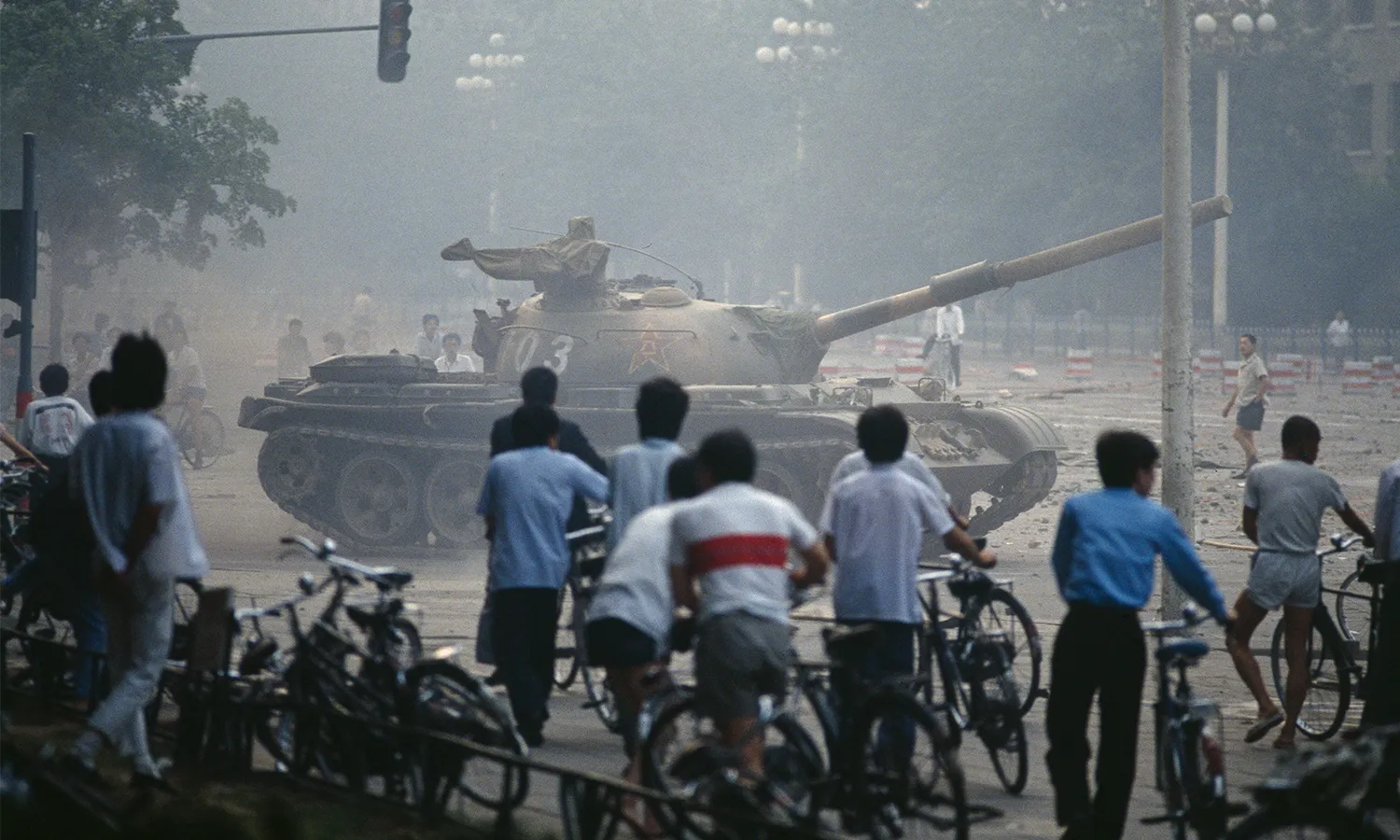
Amid those concerns, U.S. policymakers in the early 1990s held China at arm’s length. To leverage trade benefits for political reform, they linked the annual renewal of China’s most favored nation (MFN) trading status—which would grant it the same low tariff rates most U.S. trading partners enjoyed—to human rights improvements.
Clinton initially favored that strategy. But by 1994, facing pressure from the business community and seeing little progress on the conditions he had set, he reversed course. He dropped human rights conditions from MFN status and shifted toward a policy of growing engagement.
That policy extended to negotiating the terms under which China could be admitted to the WTO. In November 1999, the two countries reached a bilateral trade agreement that included sweeping Chinese commitments to lower tariffs, open markets, and reduce state intervention in commercial activity. Building on that agreement, Clinton urged Congress to grant China permanent normal trade relations, replacing the annual renewal process with permanent favorable trade terms. That was seen as a crucial step toward allowing China into the WTO, as WTO rules require members to extend the same trade terms to all other members.
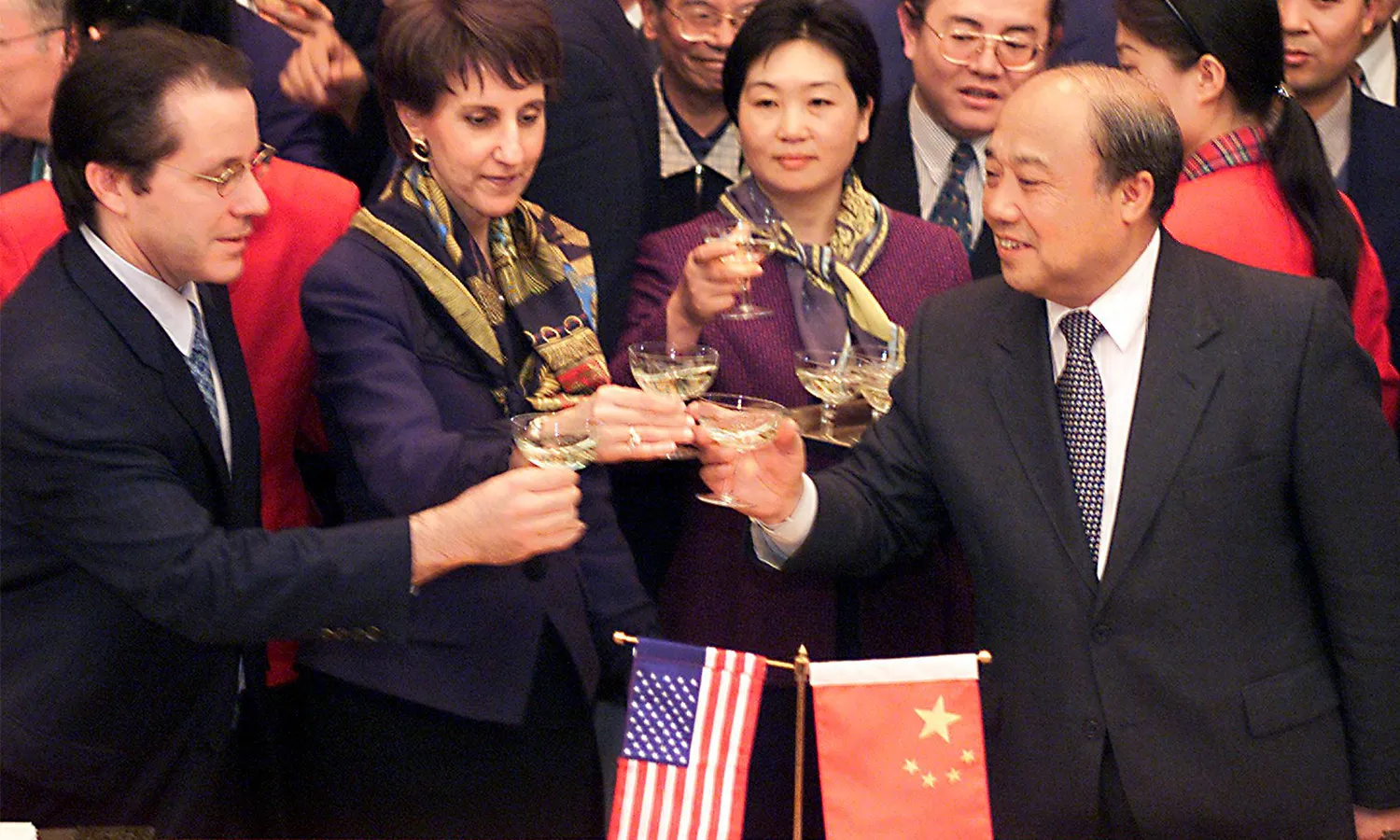
The Clinton administration argued that engagement would ultimately advance U.S. interests more effectively than isolating China would. WTO membership would bind China to international trade rules. Clinton also hoped economic integration could accelerate political reform. He didn’t expect that China would democratize overnight. But a growing middle class, exposure to international norms and institutions, and dependence on global markets would give the United States additional leverage to demand reforms and gradually put internal pressure on China’s political system. As Clinton put it, “The more we bring China into the world, the more the world will bring change and freedom to China.”
Not everyone was convinced. Labor unions worried that expanded trade would cost American manufacturing jobs. Human rights advocates argued that dropping conditions surrendered the United States’ best leverage. National security skeptics warned that economic integration could strengthen China’s military and technological capacity without producing political reform—yielding a stronger strategic competitor. Critics saw engagement as a gamble, trading concrete leverage for potential gains.
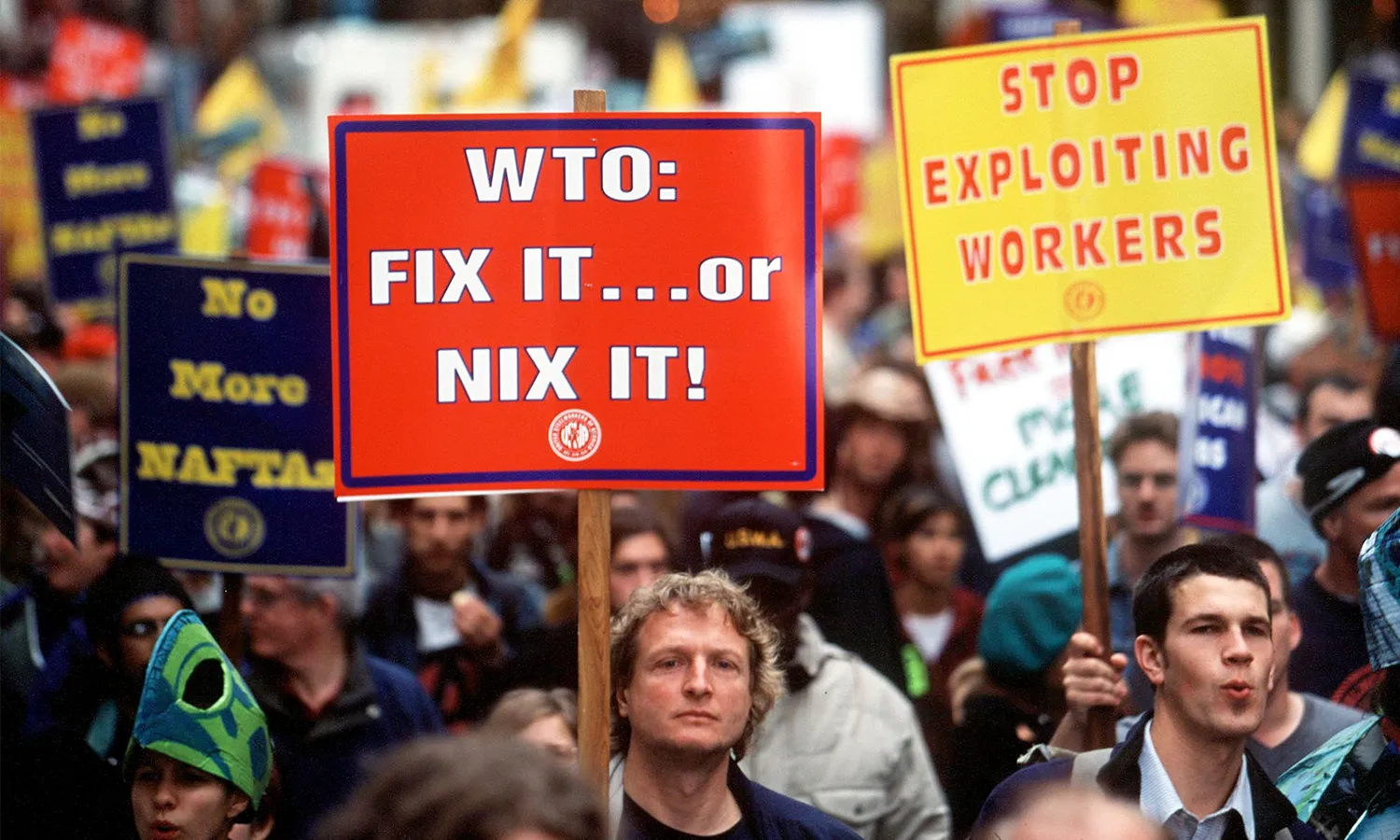
After intense debate, Congress approved permanent normal trade relations in 2000, and China officially joined the WTO in December 2001. Integrating the world’s most populous country into the global trading system was a landmark achievement. But whether it would pay off, and whether it would spur political change, remained to be seen.
On the following pages, we’ll explore primary sources related to post–Cold War engagement with China. As you explore those documents, consider the following questions:
- What assumptions about the relationship between economic openness and political reform shaped U.S. policy toward China in the 1990s? Do you find those assumptions persuasive?
- Why do you think President Bill Clinton and other proponents of engagement believed it would do more to change China than continued isolation or pressure? What were the strongest arguments on the other side?
- If you had been advising Clinton in 2000, would you have supported granting China permanent normal trade relations? What conditions, if any, would you have attached?