Clinton on China and the WTO, 2000
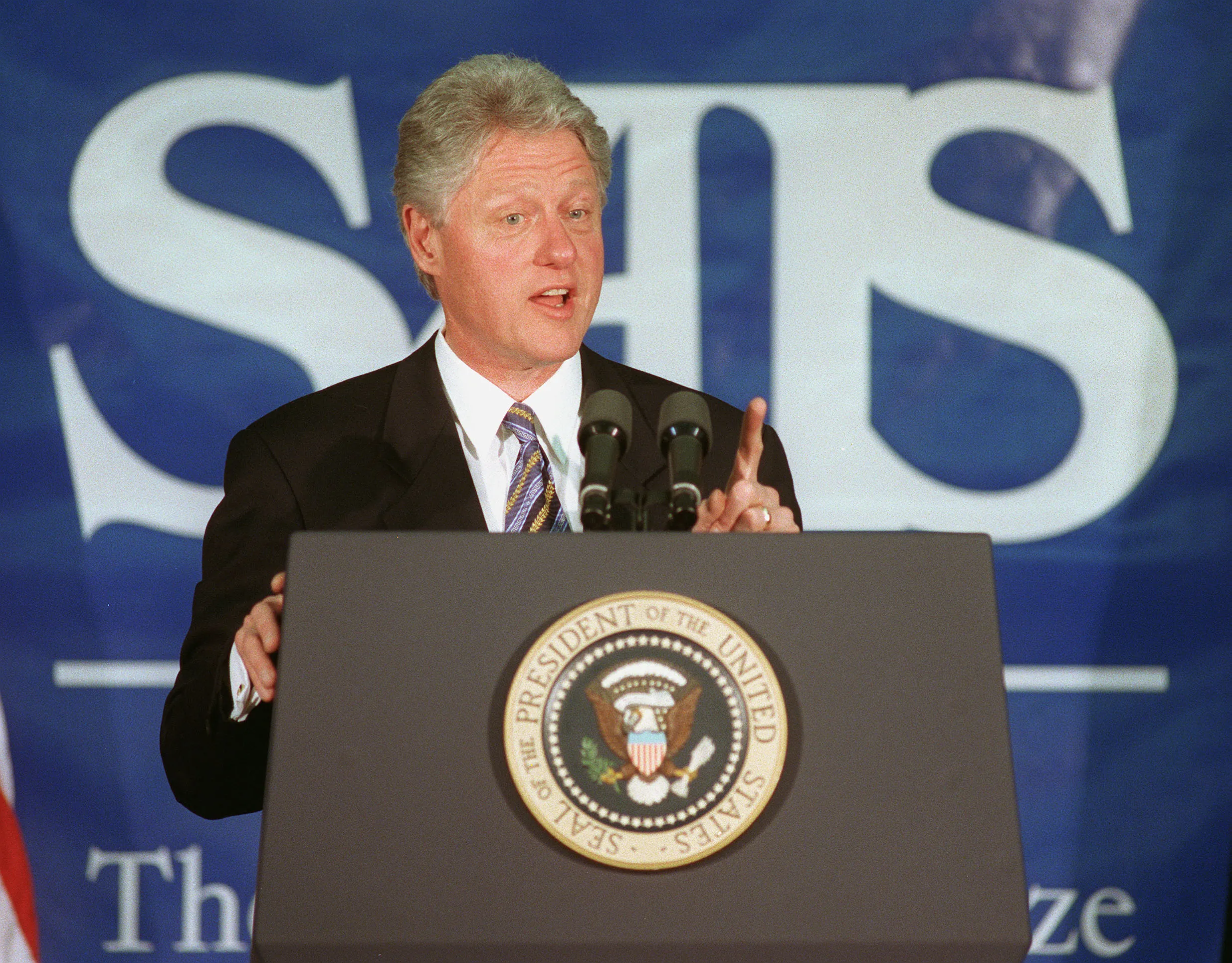
Context: Speaking at the Johns Hopkins School of Advanced International Studies, President Bill Clinton delivered the signature address making the case for granting China Permanent Normal Trade Relations and supporting its WTO accession. The speech articulated in its clearest form Clinton’s theory that economic integration would, over time, produce political liberalization in China.
Excerpt:
…
Now of course, bringing China into the W.T.O. doesn't guarantee that it will choose political reform. But accelerating the progress -- the process of economic change will force China to confront that choice sooner, and it will make the imperative for the right choice stronger. And again I ask, if China is willing to take this risk -- and these leaders are very intelligent people; they know exactly what they're doing -- if they're willing to take this risk, how can we turn our backs on the chance to take them up on it?
Now, I want to be clear. I understand that this is not in and of itself a human-rights policy. But still, it is likely to have a profound impact on human rights and political liberty. Change will only come through a combination of internal pressure and external validation of China's human-rights struggle. We have to maintain our leadership in the latter, as well, even as the W.T.O. contributes to the former.
…
In other words, we must continue to defend our interests and our ideals with candor and consistency. But we can't do that by isolating China from the very forces most likely to change it. Doing so would be a gift to the hard-liners in China's government, who don't want their country to be part of the world; the same people willing to settle differences with Taiwan by force, the same people most threatened by our alliance with Japan and Korea, the same people who want to keep the Chinese military selling dangerous technologies around the world; the same people whose first instinct, in the face of opposition, is to throw people in prison. If we want to strengthen their hand within China, we should reject the China-W.T.O. agreement.
Voting against P.N.T.R. won't free a single prisoner or create a single job in America or reassure a single American ally in Asia. It will simply empower the most rigid anti-democratic elements in the Chinese government. It would leave the Chinese people with less contact with the democratic world and more resistance from their government to outside forces. Our friends and allies would wonder why, after 30 years of pushing China in the right direction, we turned our backs, now that they finally appear to be willing to take us up on it. I find it encouraging that the people with the greatest interest in seeing China change agree with this analysis.
…
So if you believe in a future of greater openness and freedom for the people of China, you ought to be for this agreement. If you believe in a future of greater prosperity for the American people, you certainly should be for this agreement. If you believe in a future of peace and security for Asia and the world, you should be for this agreement. This is the right thing to do. It's an historic opportunity and a profound American responsibility. I'll do all I can to convince Congress and the American people to support it. And today I ask for your help.
Thank you very much. (Applause.) Thank you.
For the full text of the speech, visit The New York Times archive.