Overview of the Jay Treaty Debate
This collection of resources facilitates critical analysis of a pivotal moment in U.S. foreign policy history. It contains a brief historical overview, a curated set of primary source documents, a short reading on the aftermath and legacy of the event, and a classroom discussion activity in which learners can synthesize their knowledge.
What were the main factors that shaped U.S. foreign policy in the country’s early years of existence?
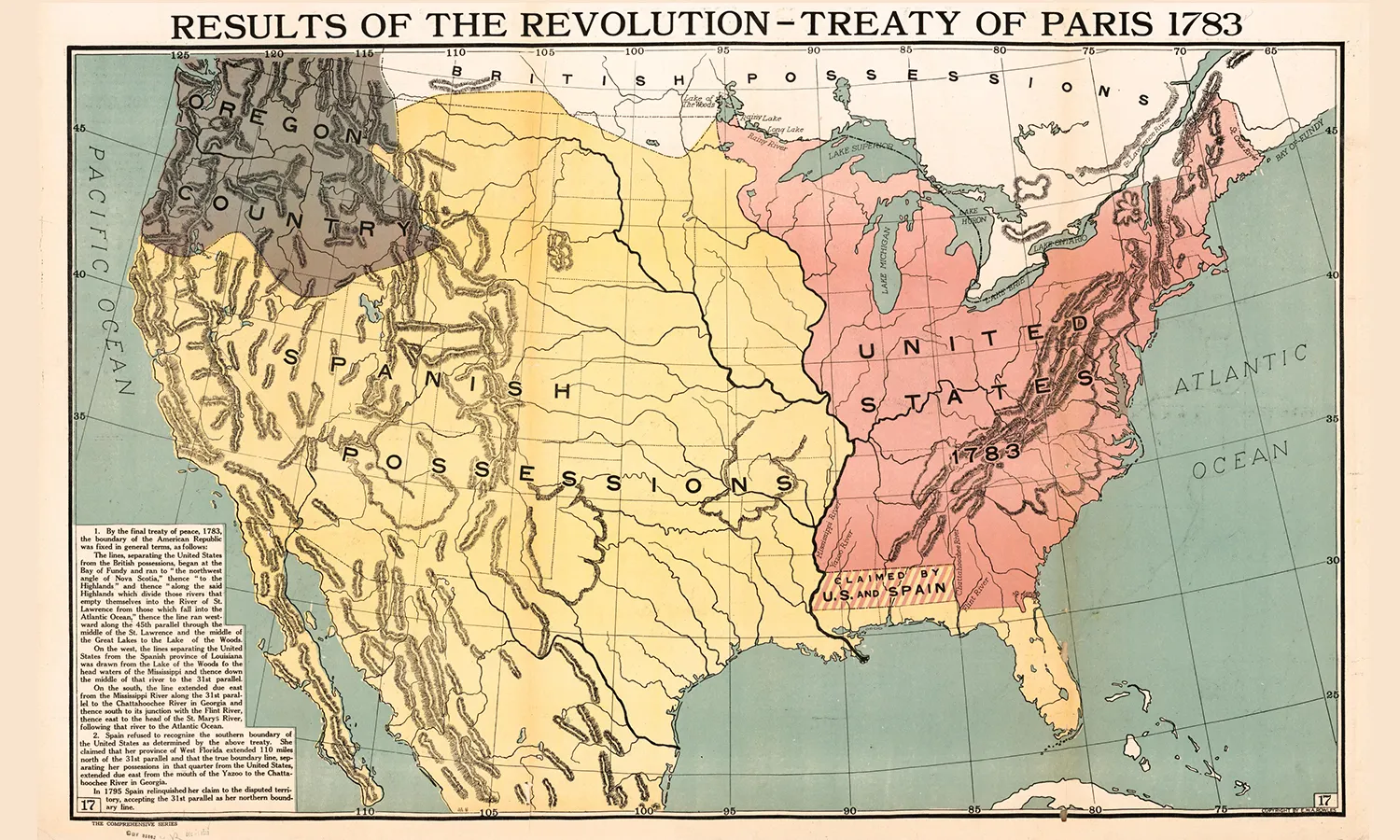
In 1783, the United States and Britain formally ended the American Revolutionary War with a peace treaty, cementing what Americans had declared seven years earlier: the United States was now an independent nation, free of British rule.
In the years following independence, the thirteen former colonies debated how to govern themselves. Their first attempt at self-governance under the Articles of Confederation created a weak national government, with important powers reserved for individual states. But that system proved ineffective against the challenges that the new nation faced. In 1789, the states adopted the U.S. Constitution and the now-familiar federal government structure.
The United States also set out to establish its place in a world still dominated by competing European empires. Determining how to relate to those empires, which foreign power to align with most closely, or whether to engage at all, proved defining questions of early U.S. foreign policy.
Events unfolding in Europe made those questions increasingly unavoidable.
Conflict in Europe Sparks Debate at Home
As the United States adopted its Constitution in 1789, revolution began in France. In 1792, the French public overthrew their king and established a republic. France was soon at war with other European powers, including Britain.
Americans were torn about how to respond. Two political factions were beginning to emerge in the new republic: the Federalists, led by Alexander Hamilton, and the Democratic-Republicans, led by Thomas Jefferson. Those blocs differed on political and economic issues like the strength of the central government and whether it should prioritize industry and commerce or agriculture. The French Revolution highlighted a divide on foreign policy as well: whether the United States should align more closely with Britain or France.
Many Democratic-Republicans wanted to support France. It had been a vital ally during the Revolutionary War, providing diplomatic recognition, military support, and funding to the American colonies. The treaty between the two countries did not expire at the end of the war. That meant, Democratic-Republicans argued, that the United States was duty bound to support France. Moreover, many Americans sympathized with the French cause and harbored lingering animosity toward Britain. The French Revolution invoked the same republican ideals that had inspired Americans in their pursuit of independence. Britain, meanwhile, upheld the monarchical values that the new republic had fought to shed.
On the other hand, Federalists favored reconciliation with Britain. They saw the French Revolution as having become too radical and argued that because the United States’ alliance had been with the French monarchy, it was not obligated to support the new French Republic.
On a more practical level, the United States also had to consider two fundamental national interests.
Security: Winning independence was one thing, keeping it was another. The country remained surrounded by European territories. And even a decade past the end of the Revolutionary War, Britain refused to vacate some of its forts on the American frontier until some prewar debts were settled. At the same time, the United States was militarily weak; state-controlled militias were its main source of defense. Policymakers in the early republic feared that if the United States were drawn into war with Britain, their hard-won independence could be at stake.
Economic Stability: Independence had come at a cost. Before the revolution, ordinary colonial Americans enjoyed a higher living standard than their British counterparts. But the United States emerged from the Revolutionary War in a deep economic depression. Trade with Britain, previously an integral economic lifeline for the colonies, had been severely disrupted during the war. And the new country was deeply in debt. By the time the French Revolution broke out, the U.S. economy was beginning to stabilize. The United States was expanding its commerce with other European countries, especially France, but Britain remained the country’s largest trading partner. With the economy still fragile, Federalists worried that disrupting that commercial relationship could be ruinous. Democratic-Republicans did not share that concern; reliance on trade with Britain, they argued, threatened American autonomy.
Ultimately, President George Washington sought to keep the United States out of the fray. In April 1793, he issued a proclamation declaring that the United States would remain neutral in the war between Britain and France. The United States would not side with either country, and Americans would continue to trade with both.
At home, the proclamation proved controversial. Washington faced widespread criticism for turning his back on the United States’ first ally and supporting commercial interests over revolutionary ideals. Internationally, staying neutral proved easier said than done.
Britain Tests American Neutrality
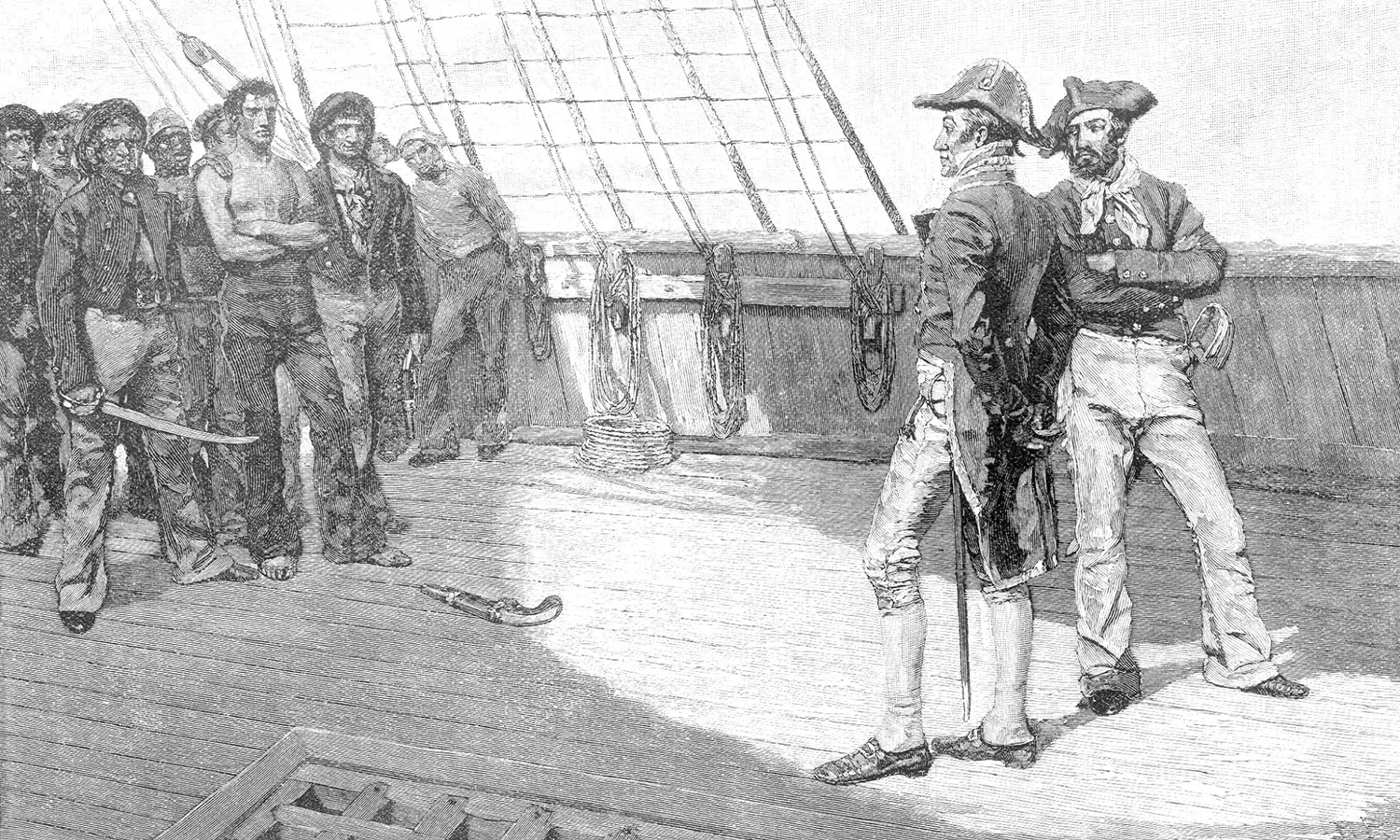
Britain showed little regard for Washington’s proclamation. British naval vessels began harassing U.S. merchant ships, seizing cargo destined for French ports and forcing American sailors into the Royal Navy to serve in Britain’s war effort (a practice known as impressment).
Americans were outraged. Not only was the United States suffering economically due to British policy, but the impressment of U.S. sailors also violated American sovereignty. Some members of Congress demanded an aggressive response to British offenses, including halting all trade with Britain or defending neutral merchant ships with armed force.
The Jay Treaty Averts War, but Stirs Controversy
Fearing that the United States was on a collision course with Britain, Washington dispatched Chief Justice John Jay to London in 1794 to negotiate a resolution that would avoid war.
Jay had several objectives for the negotiations, including
- securing British withdrawal from forts on the northwestern American frontier,
- obtaining compensation for confiscated American cargo,
- establishing a framework for peaceful trade with Britain, and
- stopping British interference in trade with France.
Months of negotiations finally produced a treaty. The Jay Treaty (formally known as the Treaty of Amity, Commerce, and Navigation) fulfilled its primary objective: war with Britain was—for the moment, at least—averted. But beyond that, the treaty achieved mixed results.
Britain agreed to withdraw from its forts in the Northwest Territories , and the two countries resolved disputed boundaries along the U.S. border with Canada. The United States agreed to pay off prewar debts, and Britain agreed to compensate American merchants for confiscated cargo. Fully settling those matters, however, would ultimately take years of arbitration.
The Jay Treaty also secured a more favorable trading status with Britain, reducing restrictions on commerce between the two countries. However, access to lucrative British ports in the West Indies, which Britain closed to American merchants after the Revolutionary War, remained limited.
Crucially, Britain refused to recognize U.S. neutral shipping rights. It would continue to disrupt U.S. trade with France and impress American sailors.
Those terms unleashed a firestorm of controversy in the United States. Democratic-Republicans were furious at what they saw as a further betrayal of France and an alignment with Britain. Even some Federalists criticized the deal, claiming the United States made major concessions and gained little in return. Opposition became so intense that protesters burned John Jay in effigy, and some critics went so far as to call for Washington's removal from office or even execution.
The Senate, which was dominated by Federalists, ultimately approved the Jay Treaty by the required bare two-thirds majority (after Britain agreed to amendments on certain trade provisions). But it remained controversial, hardening factional divisions and helping to solidify the emerging two-party system that would come to define American politics.
More broadly, the Jay Treaty highlighted enduring questions about how the United States should relate to European powers and what factors should guide U.S. foreign policy. Those questions would remain hotly contested in the decades to come.
On the following pages, we’ll explore primary sources surrounding the Jay Treaty. As you examine those documents, consider the following questions:
- Why was foreign policy an important question for the early republic?
- What steps did the U.S. government take to establish its foreign policy?
- What features made certain countries more promising allies than others?
- How did early Americans envision their country’s role and strength in the world?