Overview of Neutrality Acts
This collection of resources facilitates critical analysis of a pivotal moment in U.S. foreign policy history. It contains a brief historical overview, a curated set of primary source documents, a short reading on the aftermath and legacy of the event, and a classroom discussion activity in which learners can synthesize their knowledge.
Should the United States get involved in overseas wars?
In 1917, after Germany began attacking U.S. merchant ships, the United States departed from over a century of neutrality in European conflicts by entering World War I. American military and economic support proved instrumental in securing an Allied victory in 1918.
The war reshaped the international landscape. Nearly ten million soldiers died in combat. Europe’s economies were devastated from years of fighting. Meanwhile, the United States emerged comparatively unscathed. And its economy was supercharged from trading with the belligerents and arming its military. The United States, already the world’s largest economy, was now poised to become a superpower.
As the warring countries negotiated peace terms, policymakers debated what shape the postwar order would take. For Americans, determining what role the United States would play in that order became a crucial foreign policy question in the decades to come.
The Senate Rejects Wilson’s Internationalist Vision
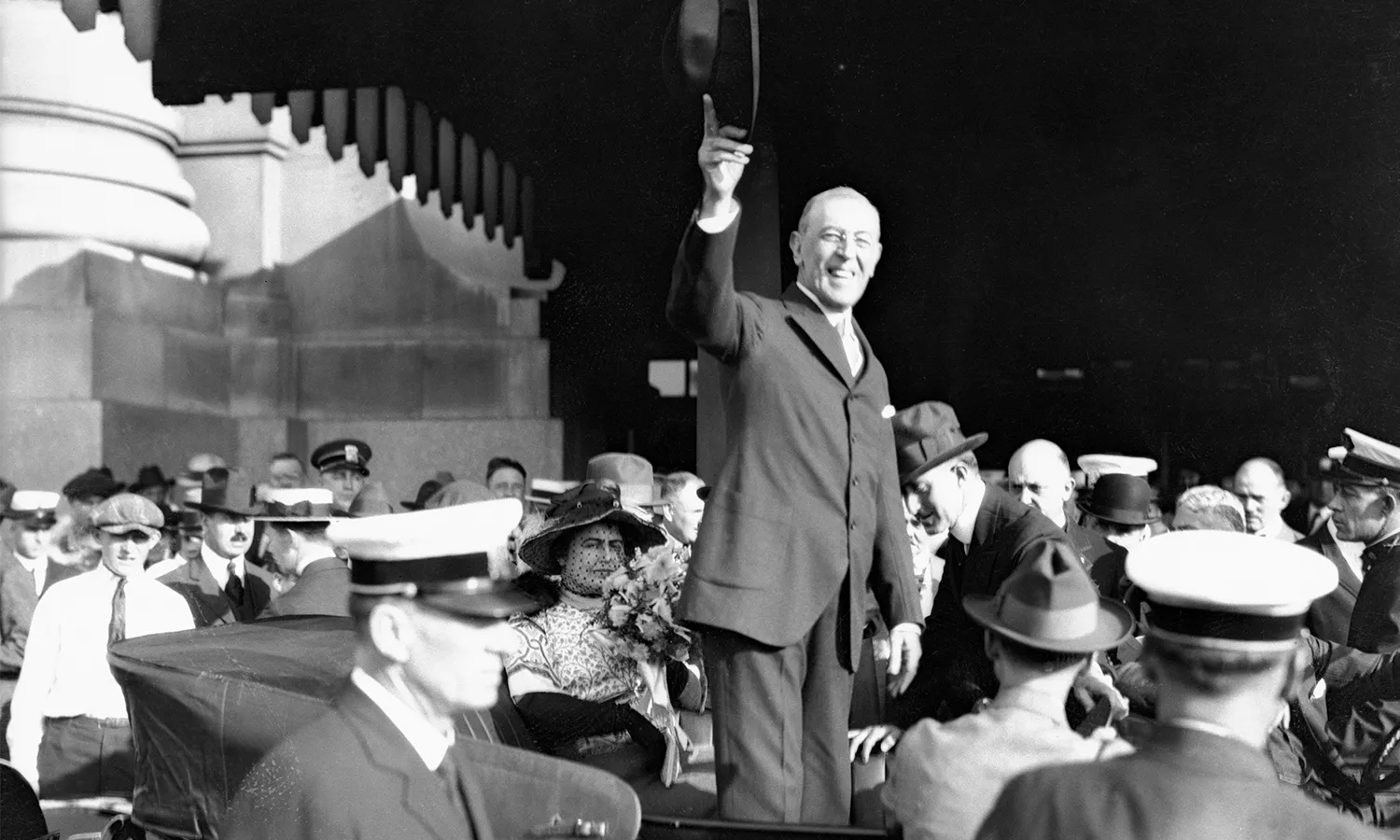
President Woodrow Wilson argued that U.S. participation in World War I would make the world “safe for democracy.” At the end of the war, Wilson saw an opportunity to form an international system defined by cooperation, self-determination, and peaceful resolution of disputes. At the core of Wilson’s vision was a League of Nations that would bring countries together to prevent future conflicts. Wilson negotiated to include the creation of that league into the Treaty of Versailles, which laid out the terms for the settlement of World War I.
But Wilson’s vision met opposition at home. The Senate rejected the Treaty of Versailles, keeping the United States out of the League of Nations. The main point of contention was the concept of collective security embedded in the treaty. It required League members to “respect and preserve” each other’s territorial integrity and sovereignty against external aggression. Many senators argued that provision could force the United States to enter wars against U.S. interests and without congressional approval.
The League of Nations went ahead, but the United States would not be a part of it.
U.S. Foreign Policy Pulls Back From Internationalism
In years following the Senate’s rejection of the Treaty of Versailles, Americans grew disillusioned with Wilson’s internationalist vision. Warren G. Harding, who voted against the Treaty of Versailles as a senator, won a landslide victory in the 1920 presidential election. He promised “a return to normalcy” marked by emphasis on domestic economic development, traditional cultural values, and minimal foreign entanglements.
U.S. leaders in the 1920s focused their international efforts on boosting U.S. economic growth and limiting the likelihood of future wars through arms reduction agreements, while avoiding binding international commitments or military alliances that could draw the United States into conflict.
The onset of the Great Depression in 1929 turned public attention increasingly inward. That downturn, which dragged on into the 1930s, was the most severe and prolonged in U.S. history. U.S. gross domestic product declined a staggering 29 percent between 1929 and 1933. The fallout was devastating. Long bread lines and large homeless populations proliferated across the country.
By the mid-1930s, the crisis at home dominated the focus of the public and policymakers alike. Yet growing instability abroad would force the United States once again to consider the possibility of involvement in foreign wars.
Trouble in Asia and Europe Puts the United States at a Crossroads
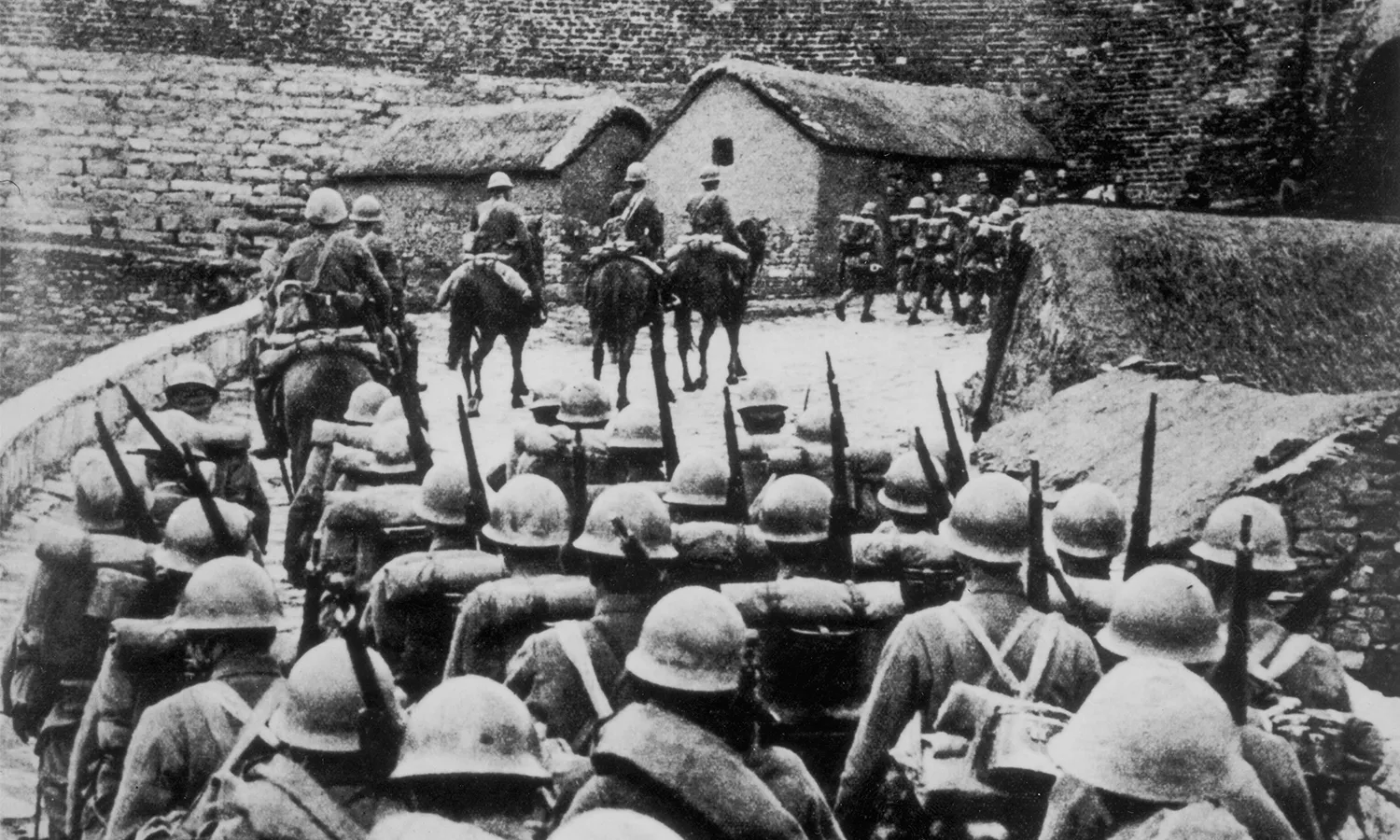
The fragile peace that had held since the end of World War I began to crack in the 1930s. Japan pursued imperial expansion in defiance of the League of Nations, invading the Chinese region of Manchuria in 1931 and declaring exclusive authority over East Asia. In Europe, fascist regimes rode economic turmoil and disillusionment with the postwar settlement to power. In Germany, Adolf Hitler’s Nazi Party took control and announced in 1935 that the nation would build up its military, no longer adhering to limitations imposed by the Treaty of Versailles. The following year, Italy under Benito Mussolini invaded Ethiopia.
As fascist aggression grew, so did concerns in the United States that war would soon return to Europe. Most Americans, however, firmly opposed becoming involved. They had come to believe that the U.S. entry into World War I had been a mistake. The bloodletting had not made the world safe for democracy as Wilson had claimed. Some critics went further, arguing that essential U.S. interests had never been at risk and that Wilson had led the country into war under pressure from bankers and arms manufacturers seeking to profit from it.
Congress Passes Neutrality Acts
With the risk of war in Europe rising, Congress began to debate legislation committing the United States to a policy of neutrality. The widespread suspicion that private business interests had pushed the country into World War I led lawmakers to draft bills that would restrict the United States from selling arms and providing loans to any country at war and would limit the president’s ability to entangle the United States in events overseas.
President Franklin D. Roosevelt, who had served as assistant secretary of the Navy in Wilson’s administration and shared his internationalist sentiments, initially encouraged legislation regulating the arms trade. But he quickly found himself at odds with Congress.
Lawmakers rallied around legislation that would embargo arms to sales to any country at war and deny the president the ability to modify the embargo. But Roosevelt and his advisors wanted the discretion to determine which countries should be subject to an embargo. They argued that a rigid law that treated aggressor nations and their victims equally would not be truly neutral. If a country under attack needed access to U.S. arms, but the attacking nation did not, rigid neutrality would benefit the aggressor. That situation described the looming war in Europe.
Lawmakers insisted on rigid neutrality, however. Congress passed the Neutrality Act in 1935. The act made it illegal to export weapons and related materials to foreign nations at war and prohibited Americans from traveling on the ships of warring nations. Despite his reservations, Roosevelt signed the bill. He feared that a veto would cost him support for his domestic New Deal agenda, and he calculated that he would have another chance to make his case in six months when the law expired.
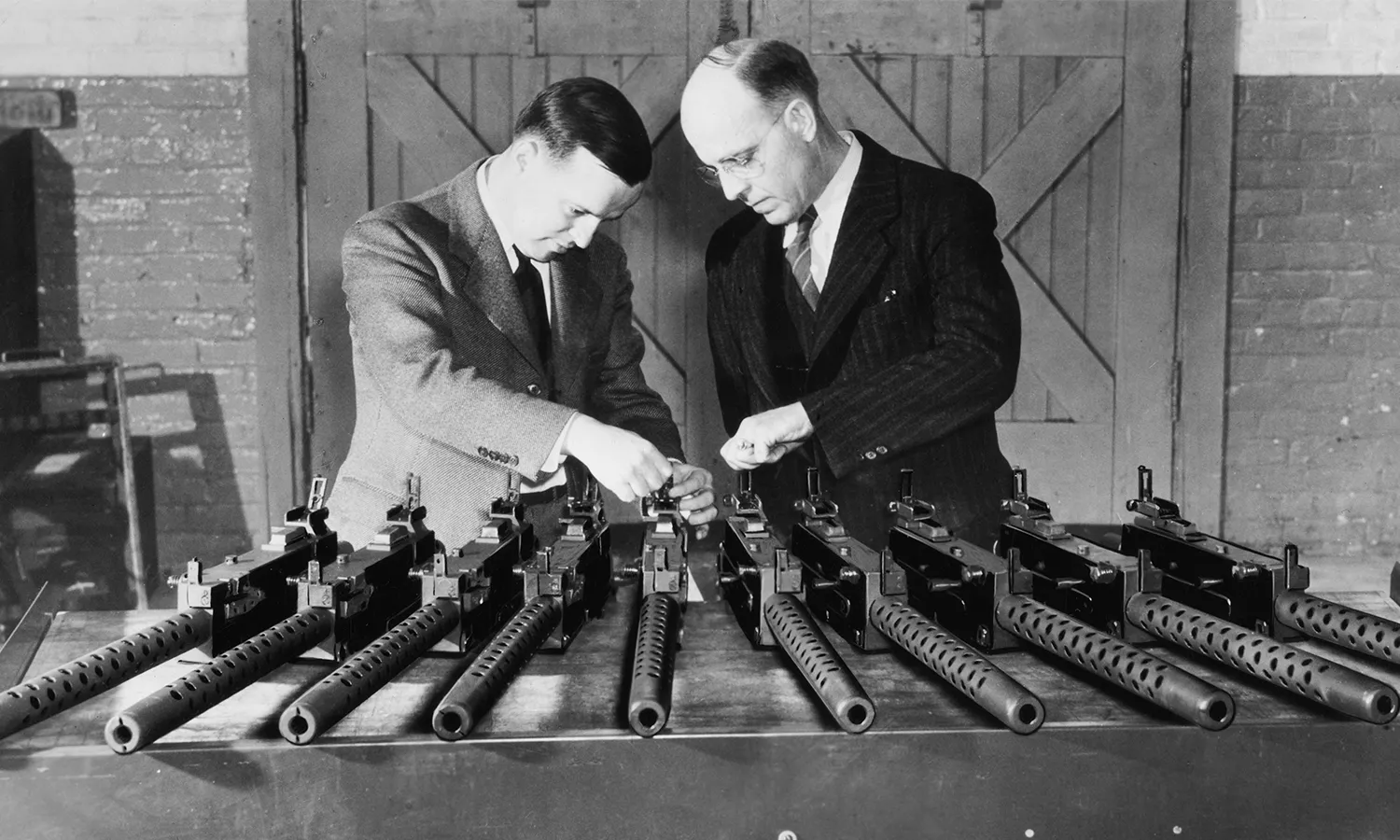
In early 1936, Congress passed a second neutrality act. Roosevelt gained some concessions. The new law extended the provisions of the original act for another fourteen months and prohibited loans to nations at war. However, it gave the president discretion to determine when an embargo should go into effect.
Although Roosevelt continued to privately urge lawmakers to repeal the neutrality acts,
Congress passed another new law in 1937 extending most of the earlier provisions and applying rigid neutrality to combatants in civil wars. The law also introduced a “cash-and-carry” provision that allowed belligerents to buy nonmilitary goods like steel and oil from the United States, provided they paid cash up front and transported their purchases on non-U.S. vessels. The argument for cash-and-carry was that it would allow U.S. producers to continue exporting their goods abroad while minimizing the chances that attacks on American merchant vessels would draw the United States into war, as had happened during World War I.
The cash-and-carry provision expired in May 1939. Months later, Germany invaded Poland, triggering the start of World War II. At Roosevelt’s urging, Congress repealed the arms embargo and reinstituted cash-and-carry. The move enabled the United States to support France and the United Kingdom while remaining officially neutral—because those two countries, unlike Germany, had both the currency reserves and shipping capacity needed to buy American goods.
Americans still had little appetite to enter the war. But the strict neutrality that the United States had embraced was slowly eroding.
On the following pages, we’ll explore primary sources surrounding the neutrality debate. As you examine those documents, consider the following questions:
- Was the Senate right to reject the Treaty of Versailles and, with it, U.S. membership in the League of Nations? What were the strongest arguments on each side?
- How did the economic crisis of the Great Depression shape American attitudes toward international involvement?
- To what extent should Congress restrict what the president can do in foreign policy?
- Roosevelt argued that the effect of treating all belligerent nations equally was not neutral. Do you agree with his reasoning? Why or why not?