Humanitarian Crisis in Sudan
Overview
A devastating civil war in Sudan has triggered one of the world’s worst humanitarian crises. How should the United States respond?
Students will be able to describe the geopolitical dynamics at play in Sudan.
Students will be able to analyze the civil war in Sudan and its regional and global implications.
Students will be able to evaluate strategies to address the conflict in Sudan and weigh their benefits and drawbacks.
The Situation
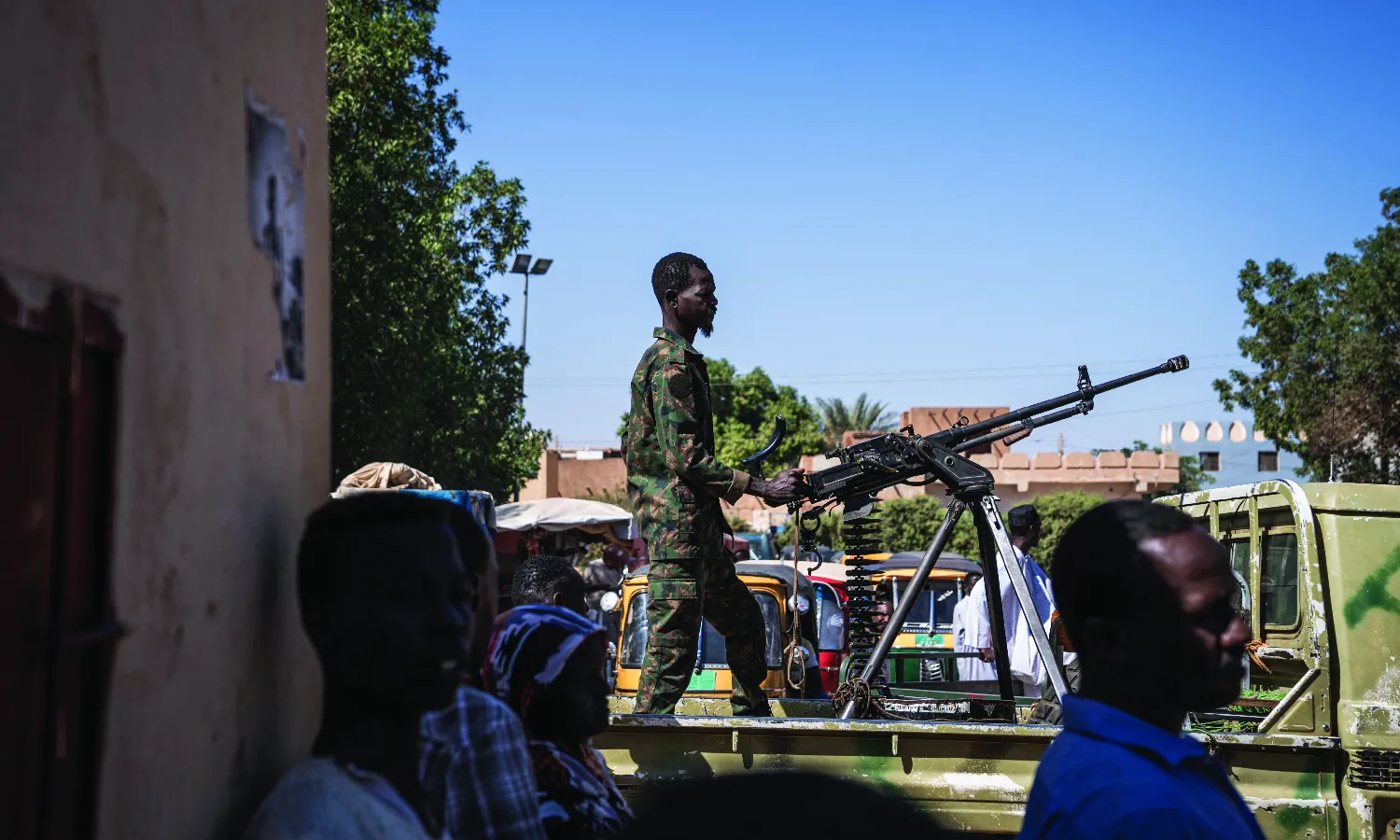
In April 2023, a civil war broke out in Sudan. The conflict pitted the Sudanese Armed Forces (SAF), the national military led by General Abdel Fattah al-Burhan, against the Rapid Support Forces (RSF), a paramilitary group led by military officer Mohamed Hamdan “Hemedti” Dagalo. The fighting engulfed Sudan’s capital, Khartoum. From there, it spread rapidly across the country, with catastrophic consequences for Sudan’s civilians.
Al-Burhan and Hemedti were once partners. They worked together to stage an October 2021 coup to prevent a planned transition to civilian rule. Initially aligned in their efforts to consolidate power, Burhan and Hemedti’s alliance began to fracture. The main sources of dispute were how to integrate the RSF into the regular army and who would lead the armed forces.
Several regional powers have taken advantage of the conflict, often backing one side or the other in return for access to Sudanese natural resources. The United Arab Emirates (UAE) has been accused of supplying the RSF with drones and other advanced weaponry. In return, the RSF pays the UAE using gold smuggled from Sudanese mines. Saudi Arabia has positioned itself publicly as a neutral mediator, but it is widely suspected of using Egypt to funnel support to the SAF. Russia, through its private military contractor known as the Wagner Group, has reportedly supported the RSF, also in return for gold. At the same time, Moscow has held talks with the SAF in pursuit of a Russian naval base on the Red Sea. Chad has also been drawn into the conflict. It hosts hundreds of thousands of refugees and, along with South Sudan, is a major route for weapons used by the Rapid Support Forces.
The war has triggered one of the world’s worst humanitarian crises. Famine has been declared in the largest displaced persons camp in the region of Darfur and in nine other areas. By late 2024, Sudan had the world’s highest number of internally displaced persons—over twelve million. More than twenty-five million Sudanese face acute food insecurity. Meanwhile, the country's education and health-care systems have collapsed. An estimated seventeen million children are out of school, and people with disabilities are struggling to access even the most basic services.
Both the RSF and SAF have committed widespread atrocities. The RSF has been involved in mass executions and the destruction of civilian infrastructure. The SAF has also targeted populated areas, bombed critical infrastructure, and engaged in extrajudicial killings. Both groups have perpetrated sexual violence widely, particularly against women and girls.
Despite the escalating violence and widespread human rights abuses, global attention to Sudan’s crisis remains limited. The country is effectively split in two. The SAF and RSF each control separate territories, and there is no sign of reconciliation. In January 2025, the United States publicly accused the RSF of genocide. However, since then, both the United States and the United Nations have been scaling back their engagement in Sudan. A UN peacekeeping operation in Sudan withdrew in 2023 at the request of the Sudanese regime, which cited tensions over increased fighting. The United States has reduced aid to Sudan since 2021, with a complete pause in aid starting in 2025. That pause is intensifying Sudan’s humanitarian collapse and leaving millions without critical support. Without meaningful international intervention, Sudan risks further descent into chaos.
Decision Point
Tens of millions of Sudanese face famine, displacement, and ongoing war crimes. In response, the U.S. president has convened a meeting of the National Security Council (NSC) to determine how the United States should respond to the crisis and support a pathway to peace. The United States has long been involved in supporting Sudan. U.S. diplomats helped to broker the 2005 Comprehensive Peace Agreement, which paved the way for South Sudan’s independence in 2011. The United States has also offered extensive humanitarian aid to Sudan since the 1980s. That legacy, in addition to the conflict’s extreme humanitarian needs and regional security implications, should inform NSC members’ assessments of how to respond to the crisis.
NSC members could consider one or more of the following options:
- Focus efforts on negotiating a ceasefire. The United States could work with neutral mediators. Those could include the African Union, United Nations, Intergovernmental Authority on Development, and regional leaders. Together, they could convene new peace talks and establish confidence-building measures between the SAF and the RSF. The United States could offer targeted incentives to encourage both sides to uphold a peace deal. Such incentives could include, for example, providing aid to groups that demonstrate genuine commitment to negotiations. Coordination with key external actors such as Egypt, Saudi Arabia, and the UAE, who have a strategic interest in the conflict, would be essential. However, that approach has significant limitations. Despite multiple previous attempts, ceasefire agreements have repeatedly collapsed due to weak enforcement mechanisms, deep-seated rivalries, and a lack of trust between the two sides. Whether additional U. S. mediation, even with greater pressure and incentives, could succeed where past efforts have failed remains unclear. Without a credible enforcement mechanism or genuine buy-in from both sides, renewed negotiations could again fail to stop the violence.
- Target the flow of international arms into Sudan. The United States could take the lead in launching a comprehensive investigation into companies and smuggling networks involved in supplying weapons to both the RSF and the SAF. Working multilaterally or through the United Nations, the United States could advocate for an arms embargo targeting those groups. The goal would be to disrupt the flow of weapons fueling the conflict. That approach could also be paired with targeted sanctions, including travel bans and asset freezes on key RSF and SAF leaders responsible for the ongoing violence. Although potentially effective, the strategy poses significant diplomatic and logistical challenges. Such an approach could only succeed with the cooperation of regional partners—several of whom are suspected of supplying arms to the conflict for their own interests. Persuading them to stop the flow of arms could prove difficult if they see such a move as against their interests.
- Expand humanitarian assistance. Drawing on its history of engagement in Sudan, the United States could scale up humanitarian aid to reassert leadership. Targeted support for food, health care, and education, especially for displaced people and children, could save lives and lay the groundwork for future steps toward peace. However, doing so would require carefully considering how to ensure aid could reach its intended destinations. Both parties have deliberately blocked aid as a strategy of war. Therefore, NSC members will need to discuss how they can leverage diplomatic channels to negotiate safe passage for humanitarian convoys. Simultaneously, U.S. diplomats could work to facilitate localized ceasefires that enable aid delivery.
- Launch a humanitarian intervention. The United States could advocate for the establishment of a new, robust peacekeeping force under a mandate from the United Nations, the African Union, or a joint mandate. Grounded in the international community’s Responsibility to Protect doctrine, such a mission would secure humanitarian corridors and protect civilians from mass atrocities. In tandem, the United States could play a leading role by providing financial support, military training, intelligence sharing, and logistical backing to the peacekeeping forces. That approach would allow for a meaningful intervention without requiring direct U.S. military involvement, while reinforcing U.S. commitments to civilian protection and multilateral action. However, major obstacles exist. China and Russia, who hold veto power at the UN Security Council, may oppose a new intervention. Also, past UN missions in Sudan faced criticism for limited effectiveness and slow responses to atrocities, raising concerns about whether a new force could meaningfully change conditions on the ground.
Additional Resources
- A Third Year of War: Dried-Up Aid Pulls Sudan Further Into Chaos Council on Foreign Relations
- The Abandonment of Sudan Council on Foreign Relations
Need guidance for how to run your mini simulation?
More Mini Simulations


