The Internet by the Numbers
In a world where internet access is increasing, digital divides remain.
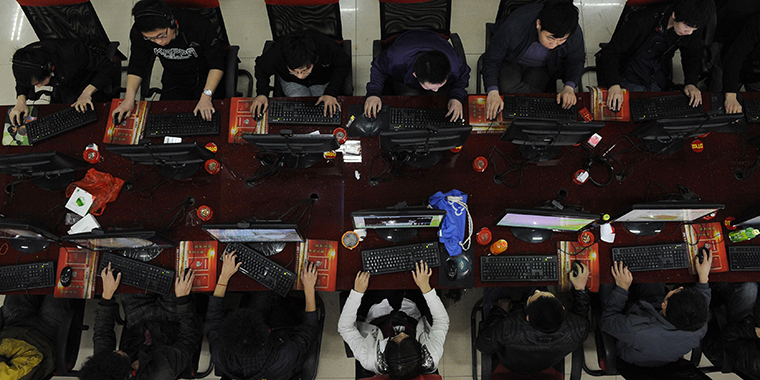
In less than two decades, the number of people with access to the internet has skyrocketed. In 2024, approximately 5.5 billion people used it worldwide, which represents 68 percent of the world's population—up from just 15 percent in 2005. Much of that increase is concentrated in the developing world.
The internet influences the world profoundly, in ways both beneficial and harmful. The rise of digital tools and the expansion of the internet has driven improvements in global health, education, national security and more. But the internet’s growth also carries risks such as, cyberattacks and the spread of false information. The growth of online space has also led some countries to clamp down on internet access threatening freedom of expression around the world. Explore those issues in the sections that follow.
Even though the internet seems like it’s everywhere, it’s not.
More people in developed countries enjoy internet access than people in developing ones. In approximately nine countries, less than 20 percent of the population uses the internet. To put that in perspective, 93 percent of the U.S. population has access to the internet.
In some countries, it can be hard to even turn on the lights, let alone log on to the internet. More than one in ten people around the globe lack access to electricity.
But many countries are catching up quickly. For example, the percentage of people in China using the internet shot up from 2 percent to 78 percent between 2000 and 2025; in India, use went from just 0.5 percent to nearly 60 percent of the population over the same period.
Developed countries with overall higher rates of internet use nonetheless have an urban/rural divide and several demographic divides. For example, in the United States, 99 percent of adults from households earning $70,000 or more a year use the internet, compared to 91 percent of those from households earning less than $30,000. And 99 percent of college graduates in the United States use the internet, compared to 93 percent of those without a postsecondary degree. Use the line chart below to explore the differences between, and within, education level groups. (To explore other metrics, check out the data on Pew Research Center.)
What’s more, globally, girls and women have less access to technology and the internet than boys and men. In the world’s least developed countries, a “digital gender gap” of 12 percent exists between men and women. Unequal access to mobile phones also persists in these countries, with a 16 percent difference in mobile phone ownership between men and women.
According to the U.S. National Telecommunications and Information Administration, as of 2023 about 15 percent of U.S. households didn't use the internet at home. Major reasons for that gap in internet use include the following:
- disinterest: over 55 percent of respondents reported the internet wasn’t necessary or interesting to them.
- cost: about 15 percent of households that didn’t use the internet at home pointed to the price tag as the problem.
- lack of infrastructure: close to 3 percent of the unconnected at home said they didn’t have internet availability in the area.
Importantly, even with expanding access to internet technology, countries can control how much access people have to content and tools online (“online freedom”). Policies governing online space range from extremely restrictive control to more open approaches. For more discussion on internet control and social media, see “Social Media: Revolutionizing Communication,” and for discussion on the internet in global politics, see “Should the Internet Respect National Borders?”
At least one fact is constant across regions: young people are driving internet use.
Globally, 79 percent of people aged fifteen to twenty-four use the internet, compared with 66 percent of all other age groups worldwide.
Access to the internet gives young people opportunities to learn new information, connect with friends and family, be civically active, and develop skills they need to succeed in an increasingly digital world. At the same time, the internet involves risks, including online attacks and the dissemination of false and dangerous information, which highlight the need for digital literacy skills.
However, disparities in internet access are significant among the global youth as well. In 2020, only 6 percent of young people in low-income countries had home internet access, compared to 87 percent in high-income countries. That means millions of children—most of them in developing countries—are deprived of the opportunities the internet provides.
The internet has transformed how people trade, make financial transactions, share ideas, and do so much more. In fact, the internet is so integral to economic development, and so central to every aspect of modern life, that bridging the digital divide has become an international priority: achieving universal, affordable access by 2030 is a target of the United Nations’ Sustainable Development Goals.
Learn More


