Aftermath of Annexation
What were the human, material, and moral costs of possessing overseas territories?
During the war, Filipinos had declared their independence and established a republic. Initially, Filipino independence leader Emilio Aguinaldo reportedly proposed remaining independent under a U.S. protectorate. When the United States moved to annex the islands, however, he quickly took up arms against U.S. control.
In February 1899, as Congress debated the peace treaty with Spain, fighting broke out between U.S. and Filipino forces. The Senate approved the treaty days later, by a narrow margin. The United States had ended its war with Spain—waged in support of Cuba’s independence—only to begin a new war against Filipino independence.
Unlike the conflict with Spain, this war dragged on for years. Filipino insurgents waged a brutal guerrilla campaign against American forces. The U.S. military responded with increasingly harsh tactics of its own, torturing suspected insurgents, burning villages thought to shelter guerrillas, and forcing civilians into detention camps where many died of disease.
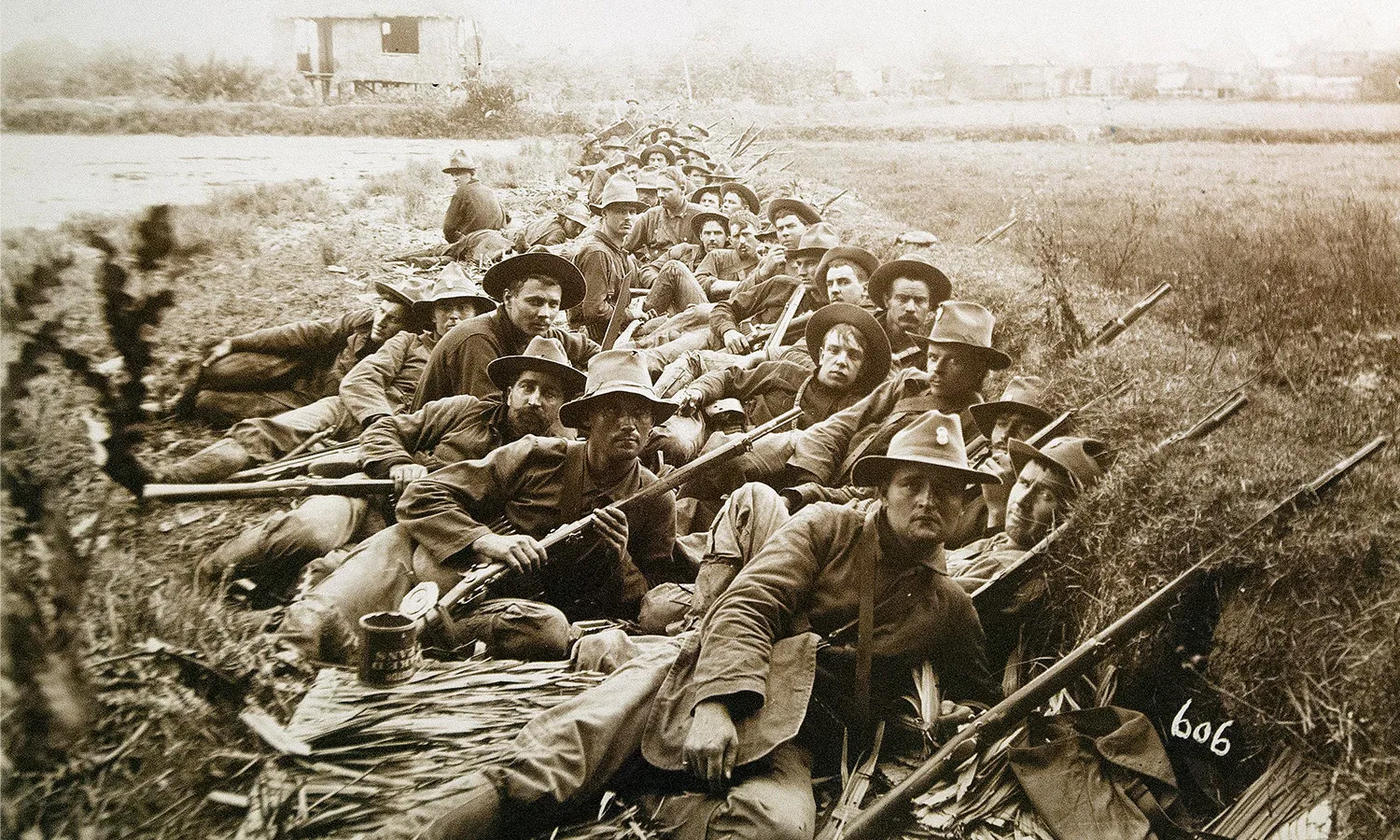
Reports of those tactics provoked outrage on the U.S. mainland. Anti-imperialists condemned what they called McKinley’s War. They criticized the administration for waging war without proper congressional authorization and accused the United States of betraying both the Filipino people and its own founding principles. In 1902, the Senate launched an investigation into the conduct of American forces in the Philippines. Testimony about atrocities and torture illustrated the grave costs to the American public of maintaining overseas territories.
The war officially ended in 1902, after American forces captured Aguinaldo. But scattered resistance continued for years. The conflict proved far costlier than the Spanish-American War: over four thousand American soldiers died, along with an estimated twenty thousand Filipino combatants. Historians estimate that at least two hundred thousand Filipino civilians perished.
Over the following decades, the United States governed the Philippines as a colonial territory. American officials described U.S. rule as preparing Filipinos for eventual self-rule. But Filipino participation in government expanded only gradually. In 1934, Congress passed a law promising the Philippines independence after a ten-year transition period. The Philippines gained full independence in 1946, after World War II interrupted the transition.
The United States’ other territories followed different paths. Guam and Puerto Rico became permanent U.S. territories. Their residents were eventually granted U.S. citizenship, though they do not have a vote in federal elections.
The Spanish-American War and the Philippine annexation that followed represented the United States’ first major step toward acting as a global power. It seemed to leave a bad taste for many; in the years that followed, U.S. policymakers showed little appetite to continue expanding U.S. overseas territory. Until World War II, many policymakers remained reluctant to wield significant U.S. influence beyond the Western Hemisphere.
Yet the war had also demonstrated that the United States could intervene in foreign conflicts, maintain a presence overseas, and shape the governments of foreign peoples in the name of their improvement. The question that Americans faced as they entered the twentieth century was increasingly less about whether the United States could act on the world stage than when and how it should.
On the following page we’ll provide a discussion activity about the annexation of the Philippines. Alongside that activity, consider the following discussion questions:
- What could have happened if the United States had not annexed the Philippines?
- How, if at all, did the annexation of the Philippines shape later debates about U.S. foreign policy and overseas intervention?
- Compare the foreign policy challenges the United States faced at the turn of the twentieth century to the challenges it faces today. What similarities or differences do you see?