William Jennings Bryan Campaign Speech 1900
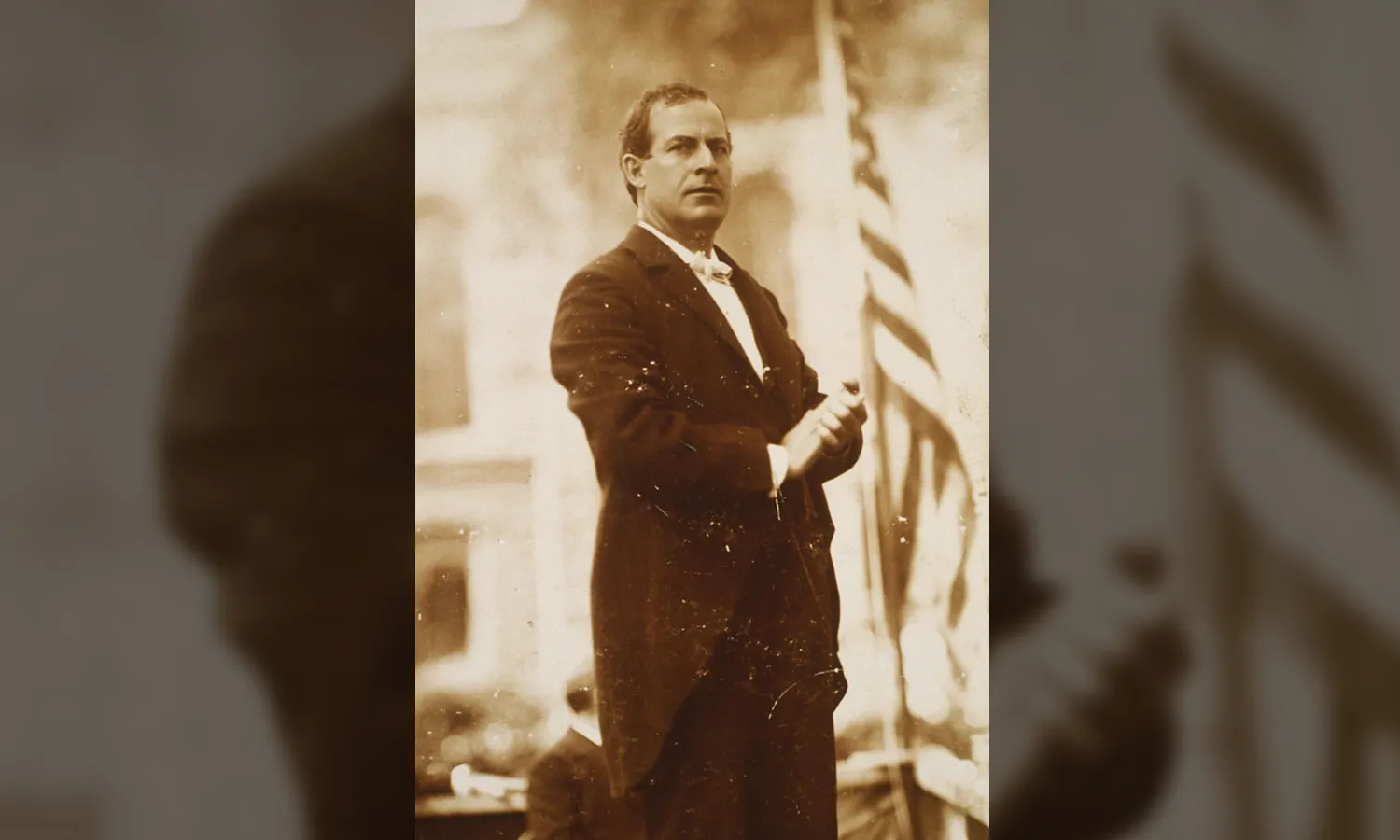
Context: William Jennings Bryan was the Democratic Party’s nominee for the 1900 presidential election. Anti-imperialism became a cornerstone of his campaign. After receiving his party’s nomination, Bryan gave a speech sharply criticizing McKinley’s policies toward the Philippines.
Excerpt:
If it is right for the United States to hold the Philippine Islands permanently and imitate European empires in the government of colonies, the republican party ought to state its position and defend it, but it must expect the subject races to protest against such a policy and to resist to the extent of their ability.
The Filipinos do not need any encouragement from Americans now living. Our whole history has been an encouragement not only to the Filipinos, but to all who are denied a voice in their own government. If the republicans are prepared to censure all who have used language calculated to make the Filipinos hate foreign domination, let them condemn the speech of Patrick Henry. When he uttered that passionate appeal, “Give me liberty or give me death,” he expressed a sentiment which still echoes in the hearts of men.
Let them censure Jefferson; of all the statesmen of history none have used words so offensive to those who would hold their fellows in political bondage. Let them censure Washington, who declared that the colonists must choose between liberty and slavery. Or, if the statute of limitations has run against the sins of Henry and Jefferson and Washington, let them censure Lincoln, whose Gettysburg speech will be quoted in defense of popular government when the present advocates of force and conquest are forgotten.
Some one has said that a truth once spoken, can never be recalled. It goes on and on, and no one can set a limit to its ever-widening influence. But if it were possible to obliterate every word written or spoken in defense of the principles set forth in the Declaration of Independence, a war of conquest would still leave its legacy of perpetual hatred, for it was God himself who placed in every human heart the love of liberty. He never made a race of people so low in the scale of civilization or intelligence that it would welcome a foreign master.
Those who would have this nation enter upon a career of empire must consider not only the effect of imperialism on the Filipinos, but they must also calculate its effects upon our own nation. We cannot repudiate the principle of self-government in the Philippines without weakening that principle here.
Lincoln said that the safety of this nation was not in its fleets, its armies, or its forts, but in the spirit which prizes liberty as the heritage of all men, in all lands, everywhere, and he warned his countrymen that they could not destroy this spirit without planting the seeds of despotism at their own doors.
Even now we are beginning to see the paralyzing influence of imperialism. Heretofore this nation has been prompt to express its sympathy with those who were fighting for civil liberty. While our sphere of activity has been limited to the western hemisphere, our sympathies have not been bounded by the seas. We have felt it due to ourselves and to the world, as well as to those who were struggling for the right to govern themselves, to proclaim the interest which our people have, from the date of their own independence, felt in every contest between human rights and arbitrary power.
For more information about William Jennings Bryan's campaign speech, or to access the complete speech, visit Voices of Democracy.