Trade as Foreign Policy
When local concerns drive national trade policies, there are global consequences.
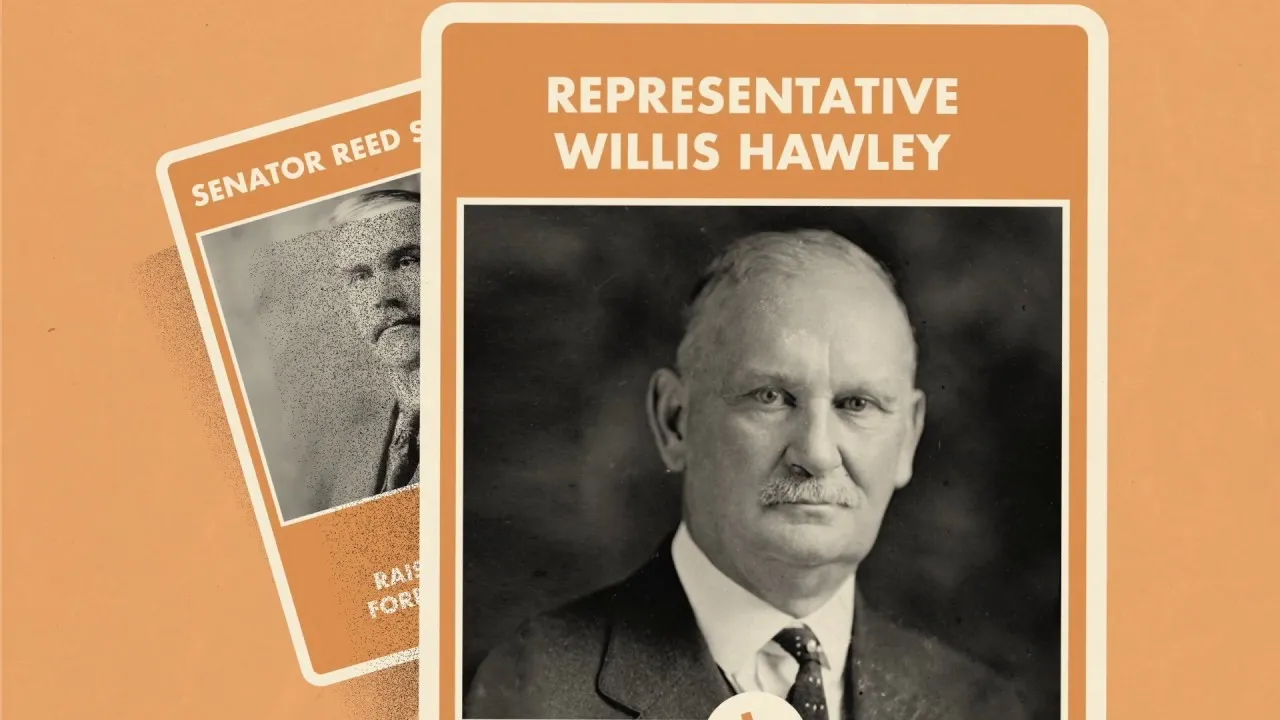
Now a notorious example of a shortsighted trade strategy, the 1930 Smoot-Hawley Tariff Act, which raised U.S. tariffs on twenty thousand imported goods, was framed as a piece of domestic legislation. But when it affected producers in Canada, Cuba, Europe, and elsewhere, it set off an international trade war, underlining the connection between global trade and international relations.
Transcript: A Look at the Smoot-Hawley Tariff
Trade wars: they don’t involve missiles, tanks, or guns, but they can cause a lot of damage. The U. S. learned this the hard way in the early 1930s with the Smoot-Hawley Tariff Act. Up until that time, the U.S. used tariffs, which are taxes on goods produced or grown abroad that are sold in the U.S., as a protectionist policy, or a policy aimed at shielding domestic industries from foreign competition. Tariffs increase the cost of foreign goods, making American goods relatively cheaper and therefore more attractive to customers.
When farmers in the U.S. started struggling financially in the late 1920s, their representatives in Congress tried to help them with tariffs. Senator Reed Smoot of Utah and Representative Willis Hawley of Oregon sponsored a tariff bill that was originally meant to only raise tariffs on foreign agricultural products to specifically help American farmers. But as the bill moved through Congress, other lawmakers tried to help their constituents who worked in other industries, like manufacturing and mining. By the time it passed through Congress, the bill was calling for 890 different tariffs to be raised on a huge variety of items, from clothespins to oil drums to bottle caps, raising tariffs by an estimated 20 percent on average.
Opposition quickly formed. More than one thousand American economists signed a petition urging President Hebert Hoover not to sign the bill. They claimed that raising so many tariffs so high would be a major mistake. They predicted that it would harm most Americans once other countries started retaliating with their own tariffs, which would make American products more expensive and thus less competitive in foreign markets. Hoover ignored their warning and signed the bill.
International outrage was swift. Some countries, including Spain, Mexico, and Canada, struck back with increased tariffs on American goods. This hit American farmers hard because exports to Canada had been a major part of their business. For example, before the tariffs, the United States was selling nearly twelve million eggs to Canada per year, but after Smoot-Hawley, that number plummeted by almost 99 percent to 170,000. Other American industries were hurt too. U.S. automobile, iron, and steel exports dropped by over 80 percent, eliminating hundreds of millions of dollars worth of sales.
The U.S. wasn’t just harmed economically, though. There were also major foreign policy consequences. For example, Smoot-Hawley’s tariffs on imported sugar crushed the Cuban economy, which depended on sugar sales. Cuban anger over the tariffs helped revolutionaries overthrow their U.S.- friendly government, and they replaced it with one that sought more independence from the U.S. Another consequence was that countries responded to the U.S. tariffs with their own protectionist policies against not just the U.S. but, often, everyone else as well. This reduced the total amount of international trade and deepened the Great Depression, which may have helped set the stage for World War II. But before that conflict began, Americans had changed their minds about tariffs.
Franklin D. Roosevelt won the presidency in 1932, promising to lower tariffs as a way to fight the Great Depression. By 1934, Congress passed the Reciprocal Trade Agreement Act recognizing that tariffs shouldn’t just be considered a domestic economic tool but are also an important device for foreign policy and balancing international trade. With this bill, Congress gave the president authority to negotiate and lower tariffs with other countries. In the following decades, U.S. presidents from both parties used this authority to make international agreements that generally reduced tariffs, helping to build our modern global trade system. Almost all countries are now connected by trillions of dollars in exports and imports, supporting jobs and businesses around the world, so the dangers posed by trade wars today have even greater potential for political destabilization and economic hardship on a global scale.