Overview of the Overseas Expansion Debate
This collection of resources facilitates critical analysis of a pivotal moment in U.S. foreign policy history. It contains a brief historical overview, a curated set of primary source documents, a short reading on the aftermath and legacy of the event, and a classroom discussion activity in which learners can synthesize their knowledge.
What factors led the United States to annex the Philippines in 1898?
By the end of the nineteenth century, the United States had become a major power. Its boundaries extended from sea to sea. As the country expanded, some Americans began to look beyond the North American continent.
In Hawaii, American planters and missionaries had developed a presence for decades, coming to dominate the islands’ sugar industry. Elsewhere in the Pacific, Americans had claimed uninhabited islands as strategic outposts for defense and trade.
After the Civil War, some policymakers envisioned acquiring new territories in the Caribbean and Pacific. But most Americans had little appetite for such expansion at the time. The Senate approved the purchase of Alaska in 1867 but rejected proposals to purchase islands in the Caribbean and Pacific over the following years. Critics objected to the idea of an overseas empire, arguing that the United States had been founded in opposition to such colonialism. Others resisted the idea of incorporating people of other cultures and religions into the country. Many were simply uninterested; amid post–Civil War reconstruction and westward settlement, they felt the country’s priorities lay at home.
In the following decades, however, the conversation began to shift. An industrial boom in the 1870s and 1880s made the country an economic powerhouse, and mass immigration helped swell the U.S. population by more than 60 percent over those two decades. Against that backdrop, many Americans began to argue it was time to start behaving like a great power, competing for global influence and spreading the benefits of American civilization to supposedly backward cultures abroad. The United States grew more assertive on the world stage, pressing its interests in disputes from Latin America to the Pacific. Congress funded an ambitious naval modernization program, transforming the U.S. Navy from a coastal defense force into a fleet capable of projecting power overseas. Expansionists continued to argue that the United States should acquire overseas territories to serve as refueling stations, naval bases, and gateways to foreign markets.
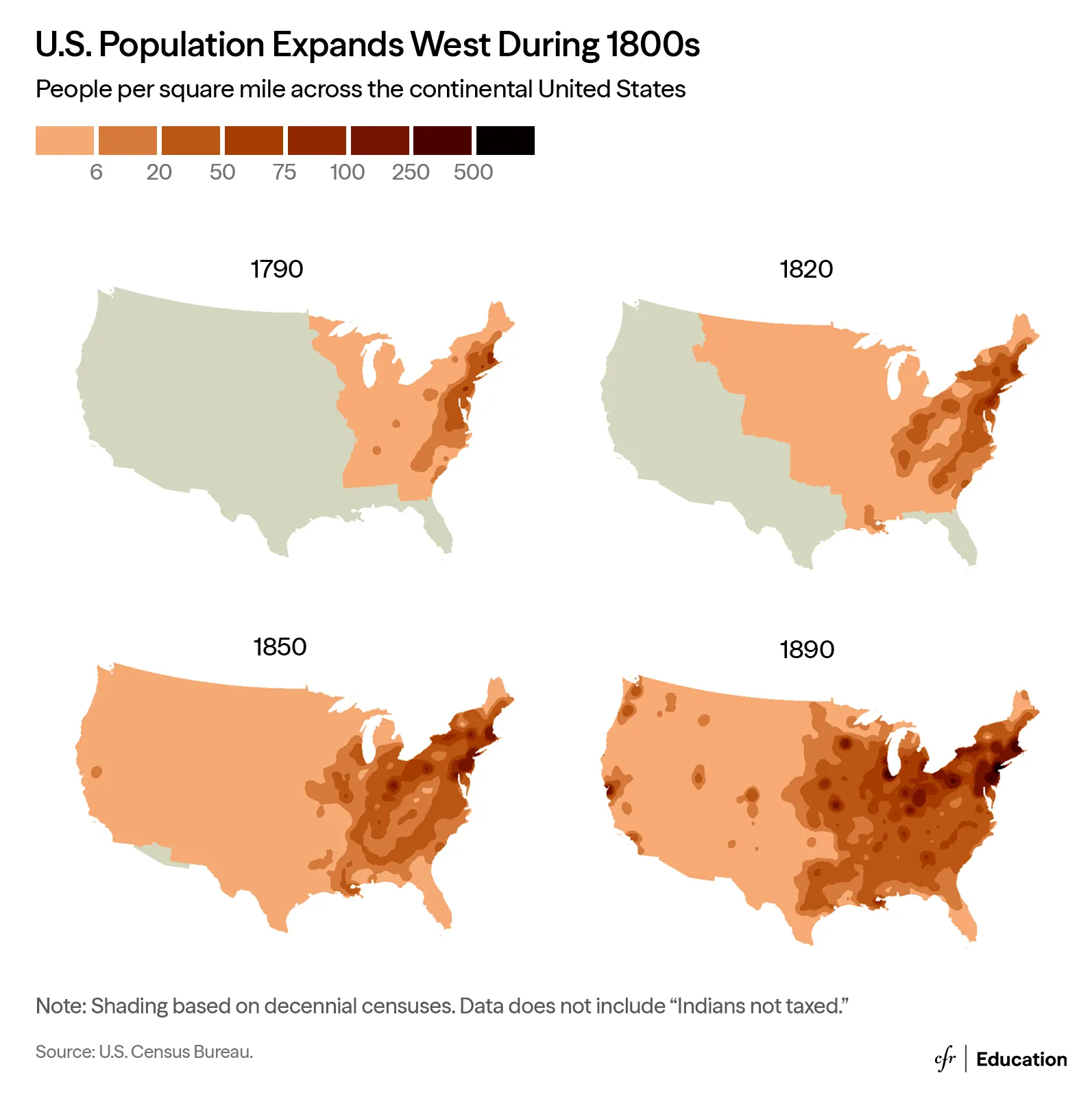
Emerging anxieties reinforced those arguments. By the 1890s, there was no longer unsettled land in the American West, and an economic depression in 1893 raised uncertainty about the future. Westward expansion and industrial development had powered growth for a century. Some observers began to worry that the formula had reached its limit. Meanwhile, European powers were aggressively expanding their empires in Africa and Asia. Americans grew concerned that those powers would soon turn their attention to Latin America, where the United States had long sought to keep them out, or to the Pacific—where U.S. interests were growing.
Still, opposition to overseas expansion remained strong. When an option to annex Hawaii arose in 1893—after a group of American planters helped overthrow Hawaii’s monarchy—Congress and President Grover Cleveland declined.
In 1898, however, a crisis in Cuba forced the question to the forefront once more.
The Road to War in Cuba
After centuries, Spanish colonial rule over Cuba was weakening. An uprising in 1868 failed after ten years of fighting. But in 1895, revolutionaries challenged Spanish rule again. Spain sent over one hundred thousand soldiers to crush the revolt.
As the war unfolded, calls for the United States to intervene on behalf of Cubans intensified. Spain’s tactics shocked Americans. To deny the revolutionaries support, Spanish authorities forced hundreds of thousands of Cuban civilians into overcrowded camps, where disease and starvation killed tens of thousands. American newspapers published vivid accounts of the suffering, and many readers came to sympathize with the Cuban cause.
Policymakers also had strategic concerns. For decades, the United States had opposed any expansion of European colonial rule in the Western Hemisphere under the Monroe Doctrine. What was the point of such a policy if the United States stood by while a European power subjugated an island just ninety miles from the U.S. mainland?
With major European powers aggressively scrambling for territory in Africa and Asia, some strategists worried that instability in Latin America could present an opportunity for those powers to grab a foothold in the Western Hemisphere. Germany, which maintained a naval presence in the Caribbean, was a particular concern. If the United States intervened in Cuba, it could dismantle a mainstay of European influence in the Americas and signal to rival powers that the Monroe Doctrine remained in force. Inaction, on the other hand, risked leaving an opening for another power to step in.
Another group of politicians and commentators, sometimes called jingoes, saw the crisis as an opportunity to prove American strength on the world stage. Figures like Assistant Secretary of the Navy Theodore Roosevelt and Senator Henry Cabot Lodge welcomed the prospect of war, not only to expel Spain from the Americas but also to demonstrate that the United States was a great power.
President William McKinley initially opted for a diplomatic approach, pressuring Spain to reach a quick resolution. He also sent the battleship USS Maine to Havana Harbor—to protect U.S. interests, warn Spain, and deter a possible German intervention.
Then, in February 1898, an explosion sank the Maine, killing 266 sailors.
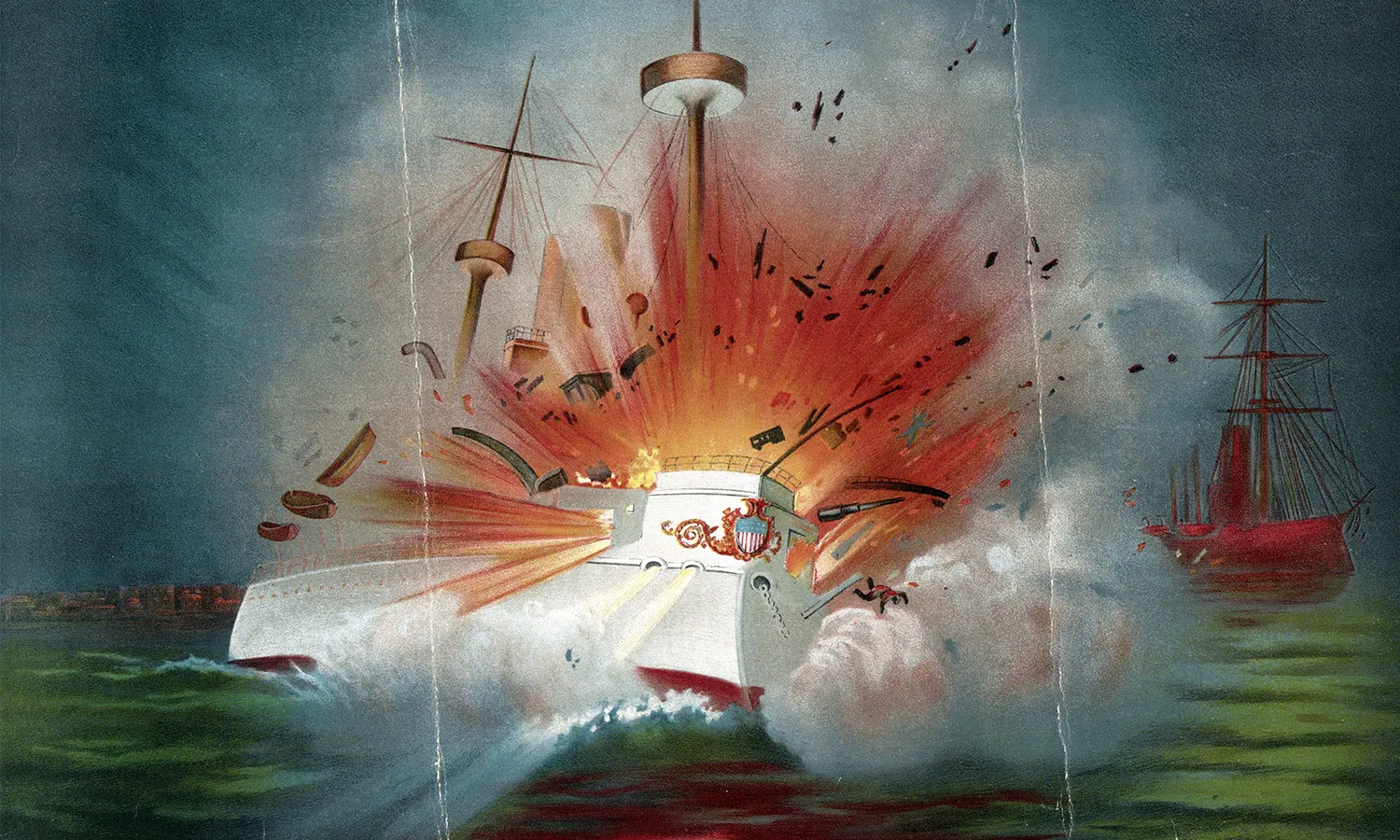
Though the cause remained unclear, American newspapers blamed Spain. And in the following months, reports from Cuba continued to reinforce the horrors of Spanish conduct. Calls for war intensified, and Congress authorized McKinley to use military force. After the United States initiated a naval blockade, Spain declared war.
Lawmakers tried to limit the war’s scope with an amendment pledging that the United States’ aim was to liberate Cuba, not annex it. But it said nothing about Spain's other territories—Puerto Rico, as well as the Pacific islands including Guam and the Philippines.
Victory Inflames Debate Over Expansion
The war was quick.
Cuban insurgents attacked Spanish positions as U.S. ships bombarded coastal defenses. U.S. and Cuban forces then advanced toward Cuba’s capital, Havana. U.S. troops also seized Puerto Rico and destroyed Spain’s Caribbean fleet.
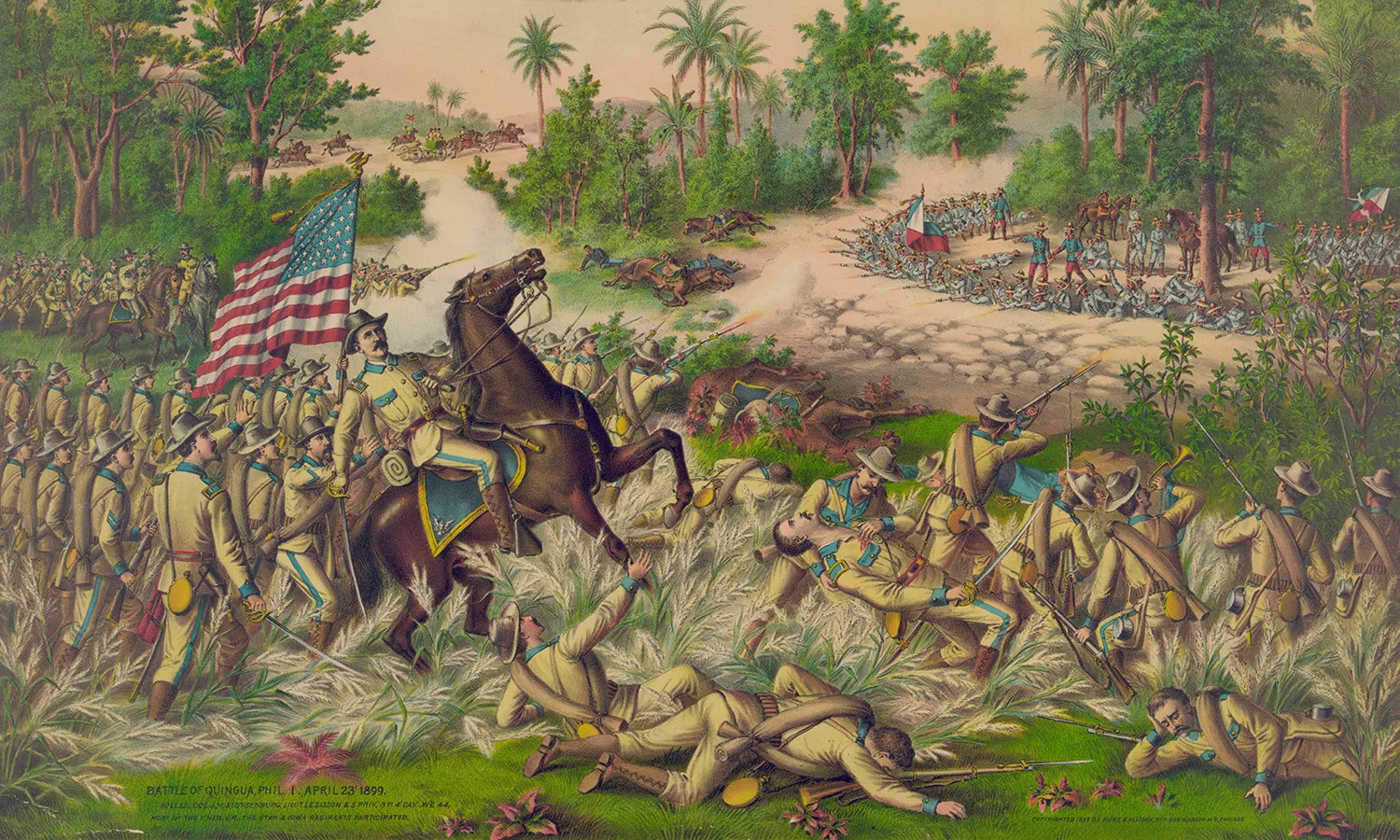
The United States fought in the Pacific too, to prevent Spain’s Pacific fleet from attacking the U.S. West Coast or joining the fight in the Caribbean. U.S. forces quickly occupied the island of Guam. In the Philippines, where rebels were also fighting Spanish rule, U.S. naval forces destroyed Spain’s Pacific fleet. American and Filipino soldiers later captured the capital, Manila.
Spain sued for peace within four months. Now, the United States faced a choice. Few Americans had envisioned acquiring territory as a goal of the war. But as peace negotiations began, the United States now occupied several Spanish territories. What should it do with them?
Hesitation about acquiring new territories had eroded during the war. Policymakers had earlier dismissed the annexation of Hawaii, but the conflict demonstrated its strategic value as a naval outpost. In July 1898, lawmakers voted to annex the islands.
But Americans still disagreed about what to do with Spain’s colonies, especially the Philippines. Of all the occupied Spanish territories, the Philippines was the largest and most distant from the American mainland. As with Cuba, its people had been fighting for independence. To many Americans, annexing the Philippines symbolized an embrace of European imperialism—and they opposed that idea. Many condemned annexing the Philippines on moral grounds. The United States had fought a revolution against imperial rule; how could it now become an empire itself? Other opponents of annexation raised practical concerns: colonies would require costly military commitments and entangle the country in distant conflicts. Some also opposed expansion on racial grounds, claiming that annexing nonwhite populations would undermine American society.
Some Americans did support annexation, arguing that the Philippines would expand U.S. geopolitical standing and open doors to Chinese markets. Others framed annexation as a moral duty to “civilize” and Christianize the Filipino people. (Although most Filipinos were already Catholic, many Protestant Americans at the time did not consider Catholics truly Christian.)
But many citizens who ultimately supported annexation did so because they found the alternatives far worse.
Returning the islands to Spain was out of the question; the country had just fought a war over the brutality of its colonial rule. Likewise, giving the islands to some other power—possibly Germany or Japan—risked sparking a war if other powers contested the decision. And many Americans thought that Filipinos were not ready to govern themselves. That view partly reflected American racial sentiments, but also a practical reality that the Philippine independence movement at the time had not consolidated support among all Filipinos. Independence could mean civil war, which could in turn invite European intervention.
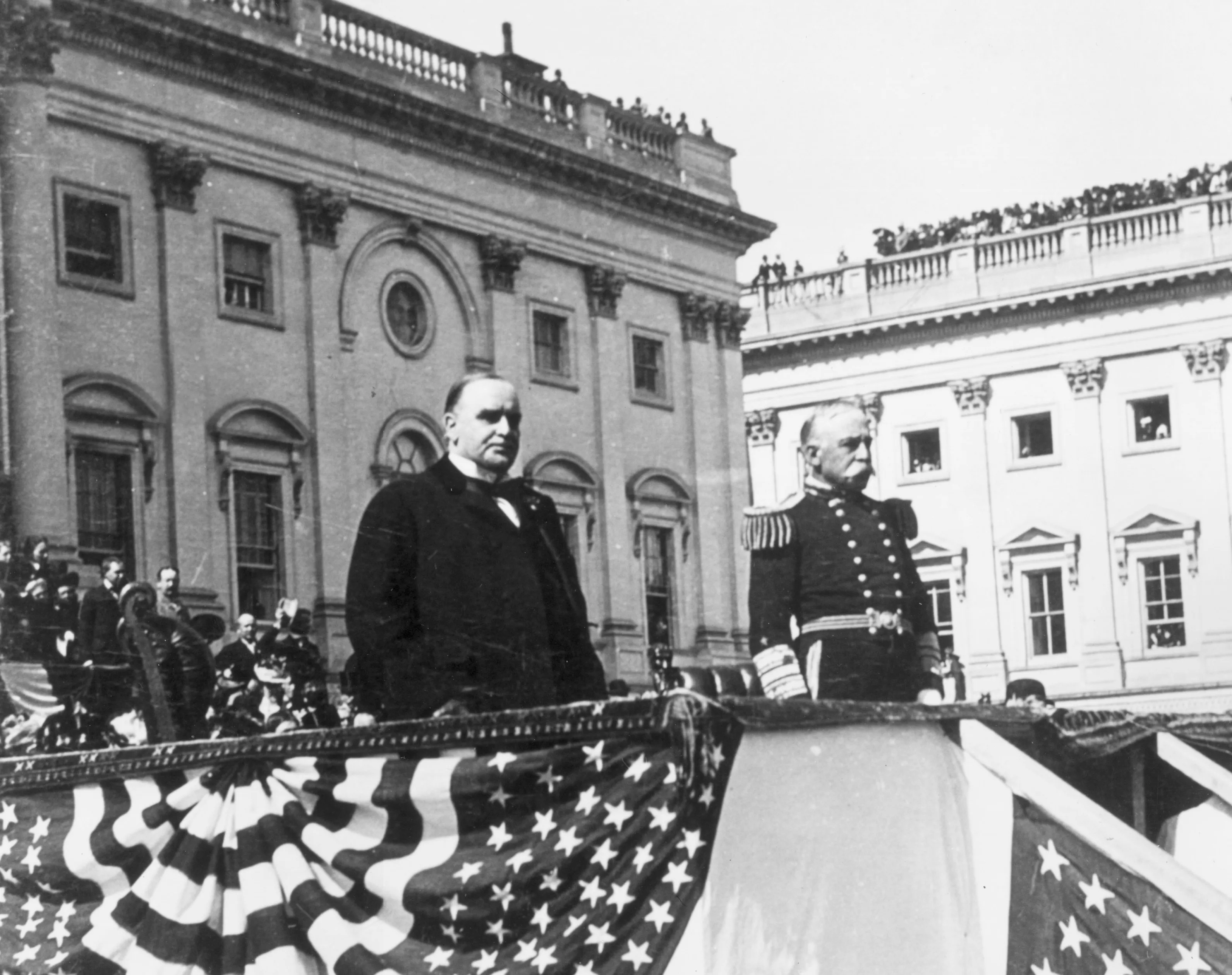
McKinley expressed sympathy toward anti-imperialist arguments. He reportedly said to a friend that he wished U.S. forces had just sailed away from the Philippines after they destroyed the Spanish fleet. But ultimately, he and his administration concluded that annexation was the best of bad options.
In the final peace treaty with Spain, the United States upheld its commitment not to annex Cuba. But negotiators demanded that Spain cede Guam, the Philippines, and Puerto Rico in their entirety.
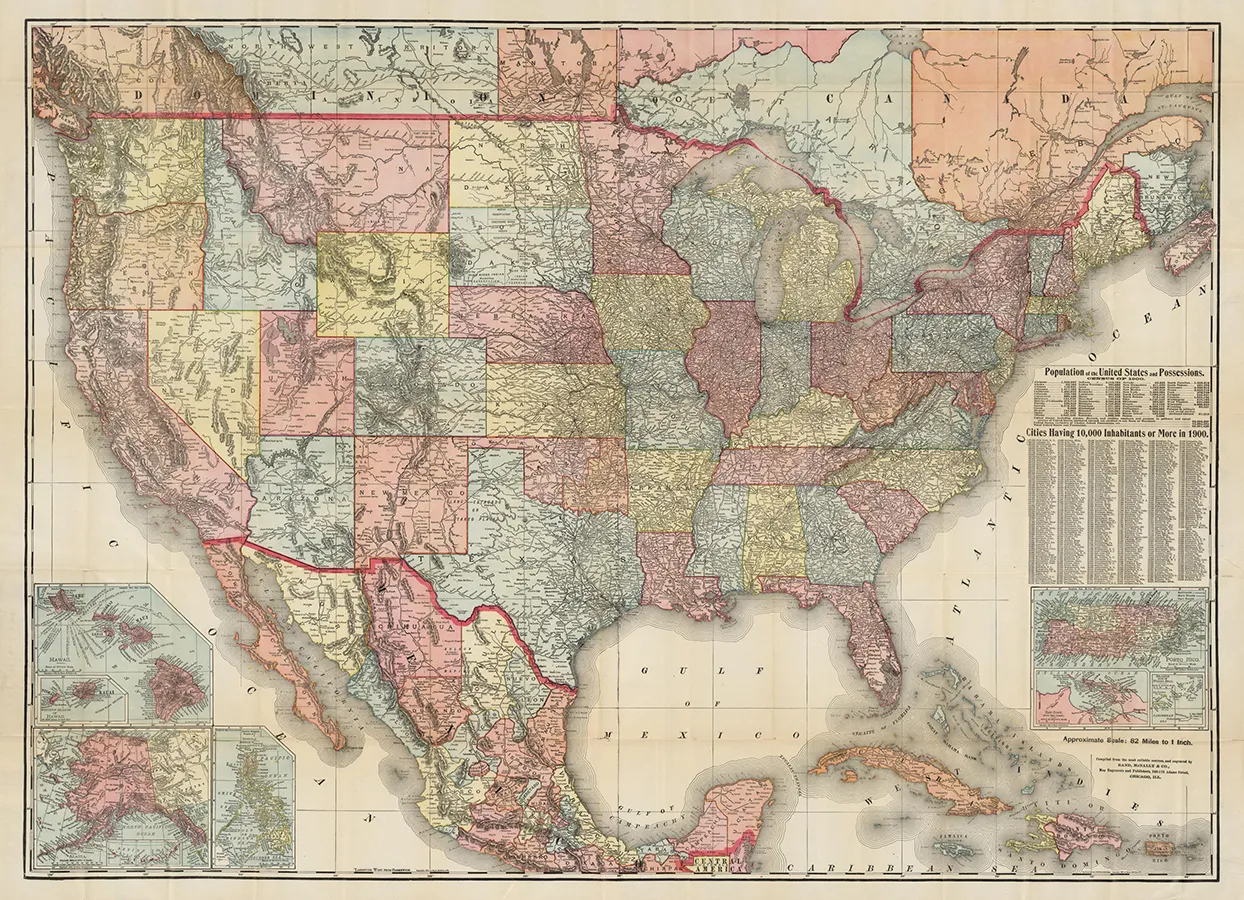
The United States began the war as a continental power. By the end, it controlled territories stretching from the Caribbean to the Pacific.
On the following pages, we’ll explore primary sources related to the annexation of the Philippines. As you explore those documents, consider the following questions:
- What factors do you think contributed most strongly to the decision to acquire overseas territories?
- How did the Spanish-American War change the debate over whether the United States should annex such territories?
- Why do you think policymakers decided against annexing Cuba but in favor of annexing the Philippines?
- Do you agree with McKinley’s reasoning that annexation was the best of bad options? What would you have recommended?