What was China's "Century of Humiliation"?
The People’s Republic of China only came into being as a country in 1949. However, Chinese culture and various Chinese political entities go back millennia.
Chinese inventions, including the compass, fireworks, paper, and printing, changed the course of human history. Before Italian explorer Christopher Columbus crossed the Atlantic Ocean in 1492, fifteenth-century admiral Zheng He sailed the Ming dynasty’s massive naval armada from East Asia to East Africa. Meanwhile, thanks to successive dynasties' place at one end of the Silk Road—an ancient global trade network—and ravenous European demand for Chinese goods like silk, tea, and porcelain, China became the world’s largest economy. By 1820, China accounted for nearly one-third of global production.
By the mid-twentieth century, however, China’s economy and political system were in tatters. What went wrong? Let’s explore the events that took place during what many in China have branded its “century of humiliation.”
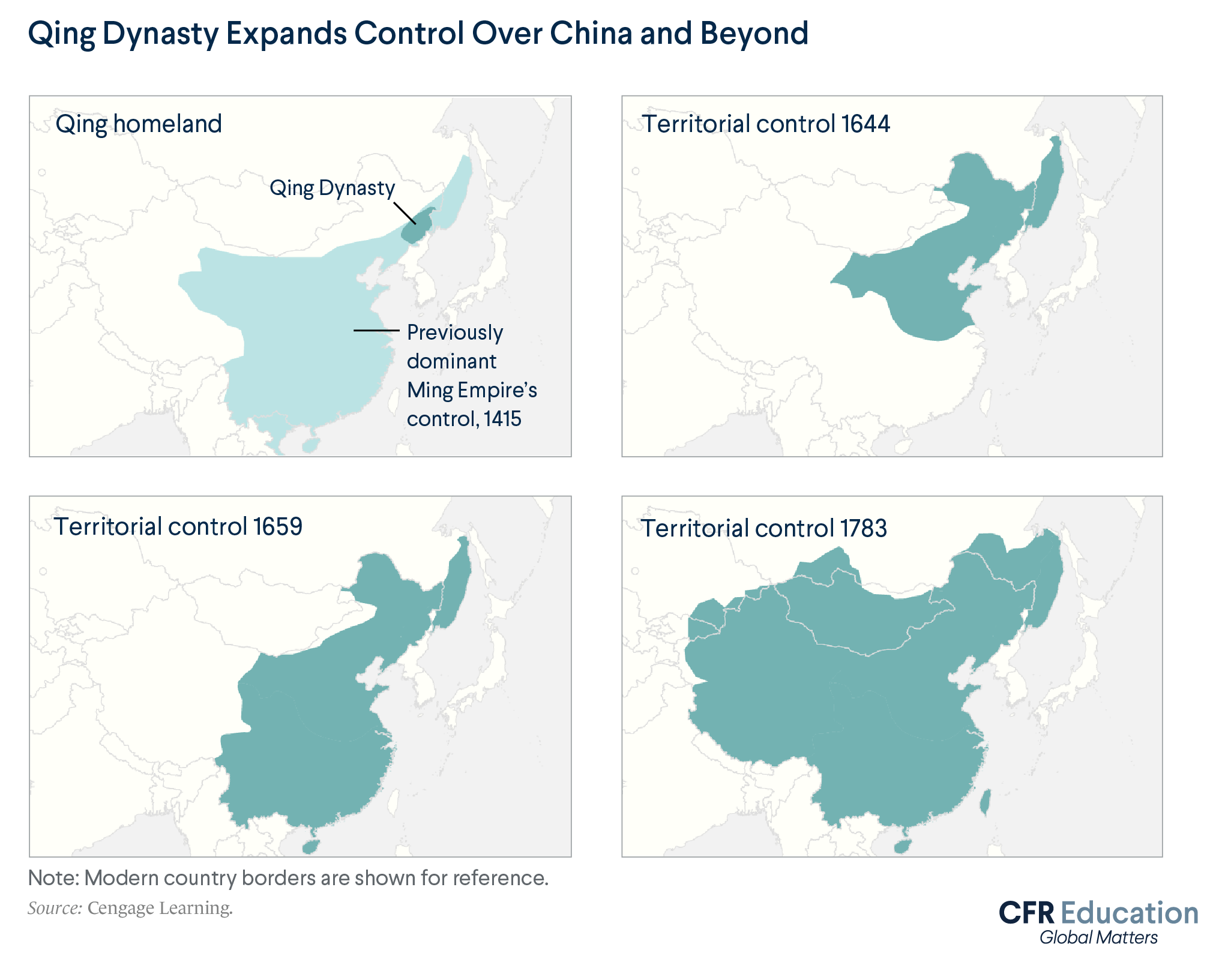
The Qing empire collapses: In the 1790s, the Qing dynasty ruled over much of what is now known as China. Its leaders had doubled the size of China’s previous territory and population to create a stable, wealthy nation. At the height of the Qing dynasty, China was home to more than three hundred million people.
But problems were on the horizon. As the empire’s population grew, ordinary people struggled to feed themselves and millions died in famines. Meanwhile, elites enjoyed the spoils of corruption. As a result, there was little reform of the government and military. Conquered regions on the fringes of the empire stirred restlessly.
Then, in 1839, a decisive conflict set off a series of foreign incursions. The United Kingdom—worried at how fast British silver was flowing out of the country to buy tea and porcelain—had long attempted to entice China to import more of its wares. But the Chinese market wouldn’t bite—that is until the British began selling opium. Concerns in China mounted over rising consumption of the drug and the sudden reversal of trade fortunes. As a result, Chinese officials seized and destroyed twenty thousand chests of opium at the port of Canton (now Guangzhou). The British, eager to force favorable trading conditions with China, now had the fight they were looking for.
Although Chinese forces outnumbered the British ten to one, they were quickly outmaneuvered and outgunned by the British Navy. This loss was not the Qing empire’s last. The First Opium War, as it came to be called, was followed by a second. Further conflicts with Western powers followed. Then, Japan invaded and colonized the Qing dynasty province of Taiwan in 1895. Territory was lost, and foreign powers, including France and Germany, set up shop in ports where they had previously been forbidden from trading. These foreign powers enjoyed extraterritoriality on Chinese soil, meaning their citizens were not subject to Chinese laws—a humiliating blow to the Qing empire.
These incursions weakened the Qing empire and fueled domestic resentment. Anti-government sentiment ultimately erupted in the mid-nineteenth century with internal insurgencies that left between twenty and seventy million people dead.
Then, in 1900, Westerners and Chinese Christians became targets of a movement called the Boxer Rebellion, which was suppressed not by the Qing government—which at first encouraged the attacks on foreigners—but by a coalition of foreign countries. After the conflict subsided, those countries demanded 450 million silver taels (equivalent to eighteen thousand tons of silver) in financial damages. The conflict and its resolution revealed the Qing empire’s inability to control affairs within its borders.
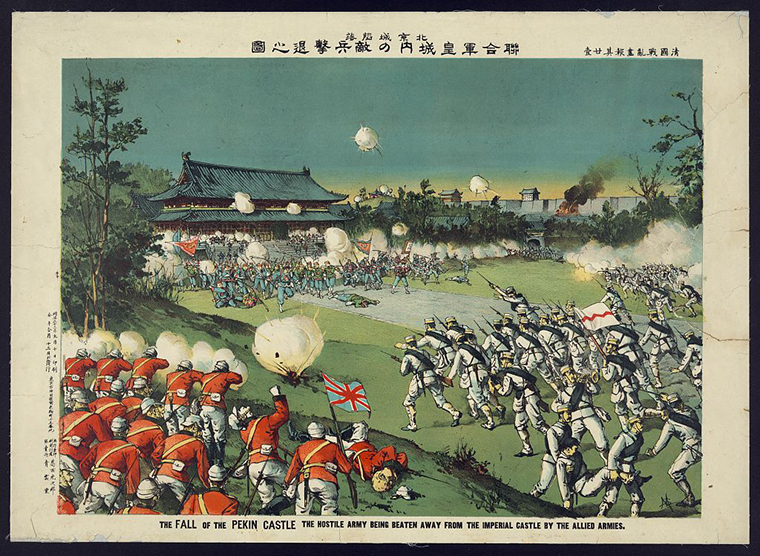
Nearly bankrupt, militarily outmatched, and politically unpopular, the centuries-old Qing empire collapsed in 1911. Sadly, darker days were ahead. In the following decades, tens of millions would perish due to famine, poverty, and conflict.
Internal division and Japanese occupation: Soon after the Qing dynasty disintegrated, the former empire splintered into fragments controlled by regional warlords. Amid the political turmoil, two rival factions emerged eager to lead the country: the Nationalist Party, formed in part by anti-Qing revolutionaries, and the Communist Party, which took inspiration from Russia’s 1917 revolution. During the 1920s, the larger Nationalist Party absorbed the small-but-growing Communist Party. This so-called United Front conquered dozens of regional warlords on a campaign known as the Northern Expedition.
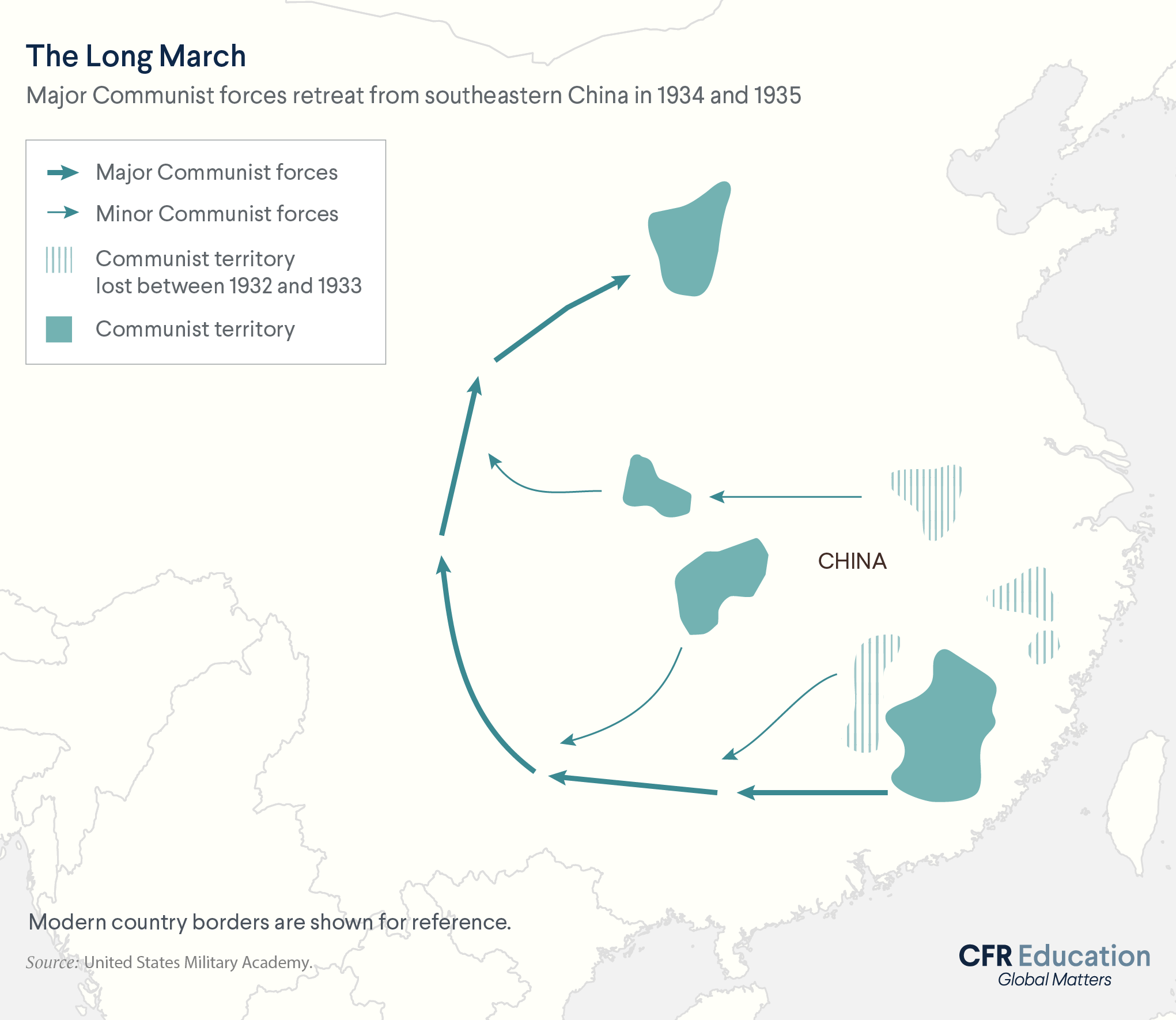
The marriage of convenience between the Communists and Nationalists, however, would soon break up. Fearing a Communist power grab, Nationalist leader Chiang Kai-shek pursued a violent purge of Communist Party members in 1927. As a result, a wider civil war soon followed. In 1934, the Nationalist threat forced the Communists’ Red Army to flee its stronghold in southeastern China on a grueling, six-thousand-mile retreat known as the Long March. Of the one hundred thousand troops who began the journey, only an estimated twenty thousand survived.
Although this bloody rivalry was far from over, the Nationalists faced another problem: in 1931, Japan invaded Manchuria—a region in northeast China that served as the country’s industrial base. The Communists and Nationalists briefly formed another alliance, but the weakened Communists did not offer the Nationalists much help to repel the invaders. The Japanese would soon control much of China’s eastern seaboard. (By contrast, the Communists took advantage of this time to prepare for a future fight with the Nationalists.) During the conflict, Japanese forces employed brutal tactics—especially during the Nanjing Massacre—including live burials and widespread sexual violence. Between 1937 and 1945, up to twenty million Chinese people are estimated to have been killed. Another ninety million were internally displaced.
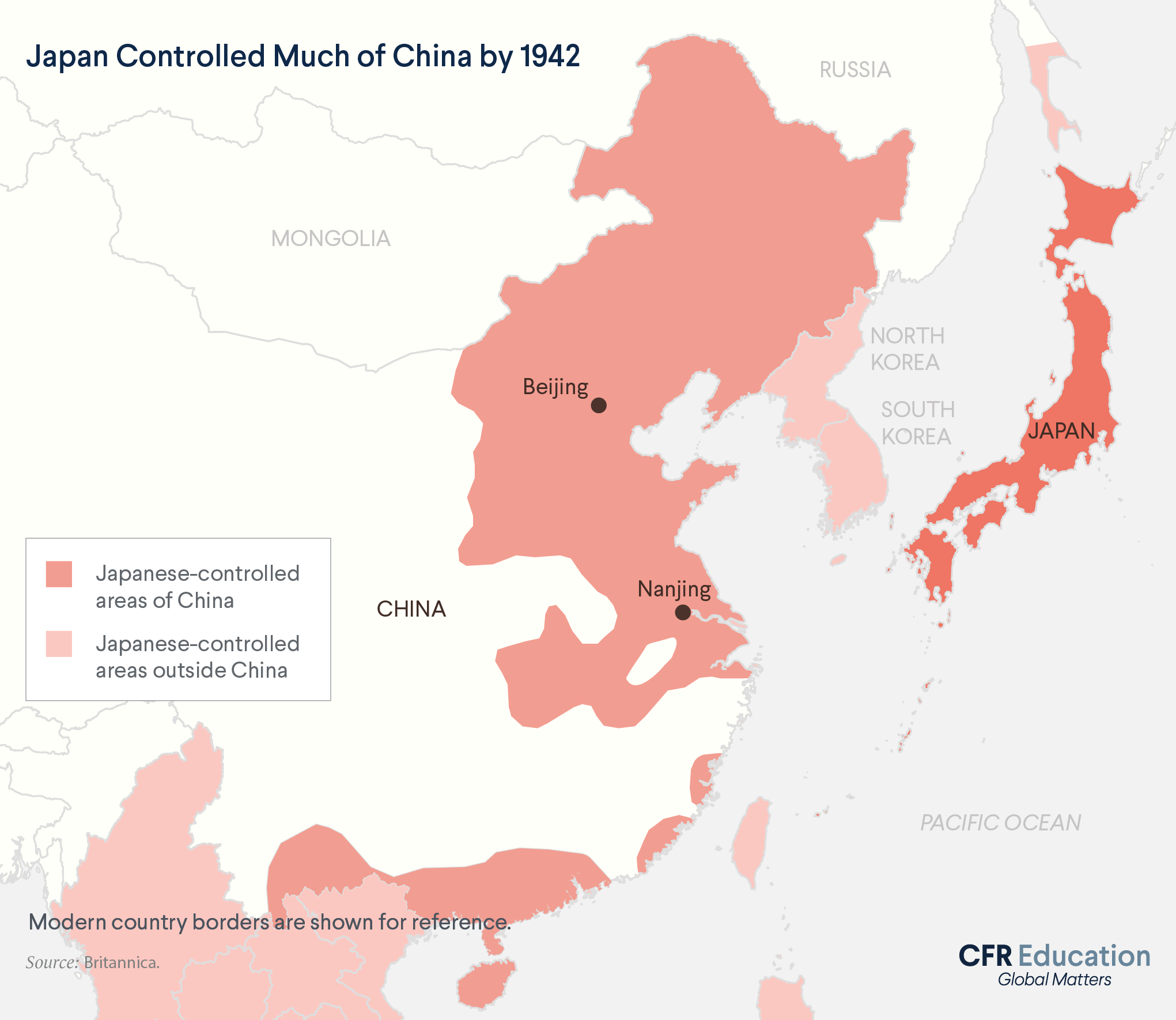
Japan only withdrew from China in 1945 after its defeat in World War II. Still, China would not know peace for long. The Communists and Nationalists quickly resumed their civil war, with the Communists eventually prevailing. In 1949, the Communists—led by Chairman Mao Zedong—took control of the government and declared the founding of a new country known as the People’s Republic of China. Meanwhile, the Nationalists fled to the island of Taiwan, which Japan had been forced to forfeit as part of the peace settlement. Despite this loss, the newly formed United Nations and many countries (including the United States) continued to recognize the exiled Nationalists as the legitimate government of China.