What Is Economic Inequality?
Explore how severe inequalities and disparities in wealth and income can harm individuals, countries, and the global economy, and how some governments implement policies to reduce inequality.
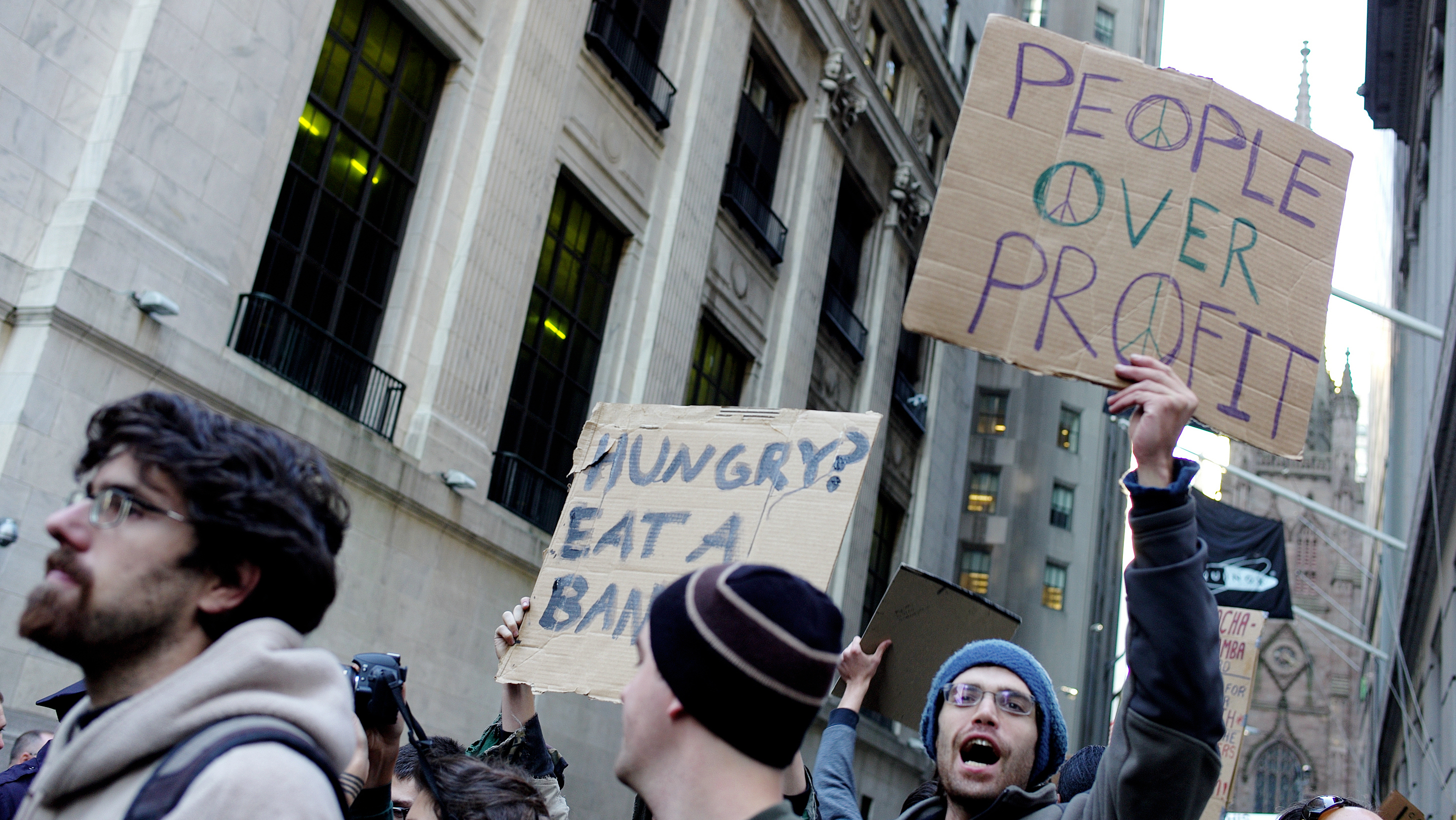
In 1965, CEOs of American companies earned, on average, twenty times more than their typical employee. By 2023, that ratio had soared to 290 to 1.
This divide is one indicator of economic inequality, an issue that affects the United States more than almost any other developed country in the world.
But the United States is hardly alone. More than 70 percent of the world’s population lives in countries where economic inequality has widened since 1990.
Institutions like the United Nations have prioritized reducing economic inequality given that it can fuel democratic backsliding, influence migration, hamper economic growth, and exacerbate health crises. However, no one-size-fits-all solution exists to address this problem. And not everyone agrees inequality is a major cause for concern in the first place.
In this resource, we’ll explore how inequality is measured, how it plays out within and among countries, and how governments can respond.
Defining economic and income inequality
Economic inequality refers to the disparity in wealth (one’s total assets) and income (the money one receives from activities like work or investment) between people. The higher the disparity, the greater the inequality.
It’s an issue as old as civilization itself. Experts believe that Augustus—the emperor of Rome from 31 BCE to 14 ACE—controlled one-fifth of the Roman empire’s immense wealth, while Mansa Musa—the ruler of Timbuktu from 1280 to 1337 ACE—owned almost half the world’s gold.
How is inequality measured?
A common tool economists use to approximate a country’s average income level is gross domestic product (GDP) per capita, which measures the amount of money the typical person contributes to the economy each year. In the United States, this figure stood at around $83,000 in 2023.
Such averages, however, can be misleading. Clearly, not every American earns this same amount in a country with both extreme wealth and poverty. Similarly, imagine a hypothetical ten-person company with an average income of $109,000. This figure does not reveal much if the CEO makes $1,000,000 while the nine other employees each earn $10,000 per year.
As such, economists use another tool to capture income inequality: the Gini coefficient. A Gini coefficient of zero means a country’s income distribution is perfectly equal, with everyone earning exactly the country’s GDP per capita. A Gini coefficient of one, on the other hand, means just one person controls the entire country’s economy—making it extremely unequal.
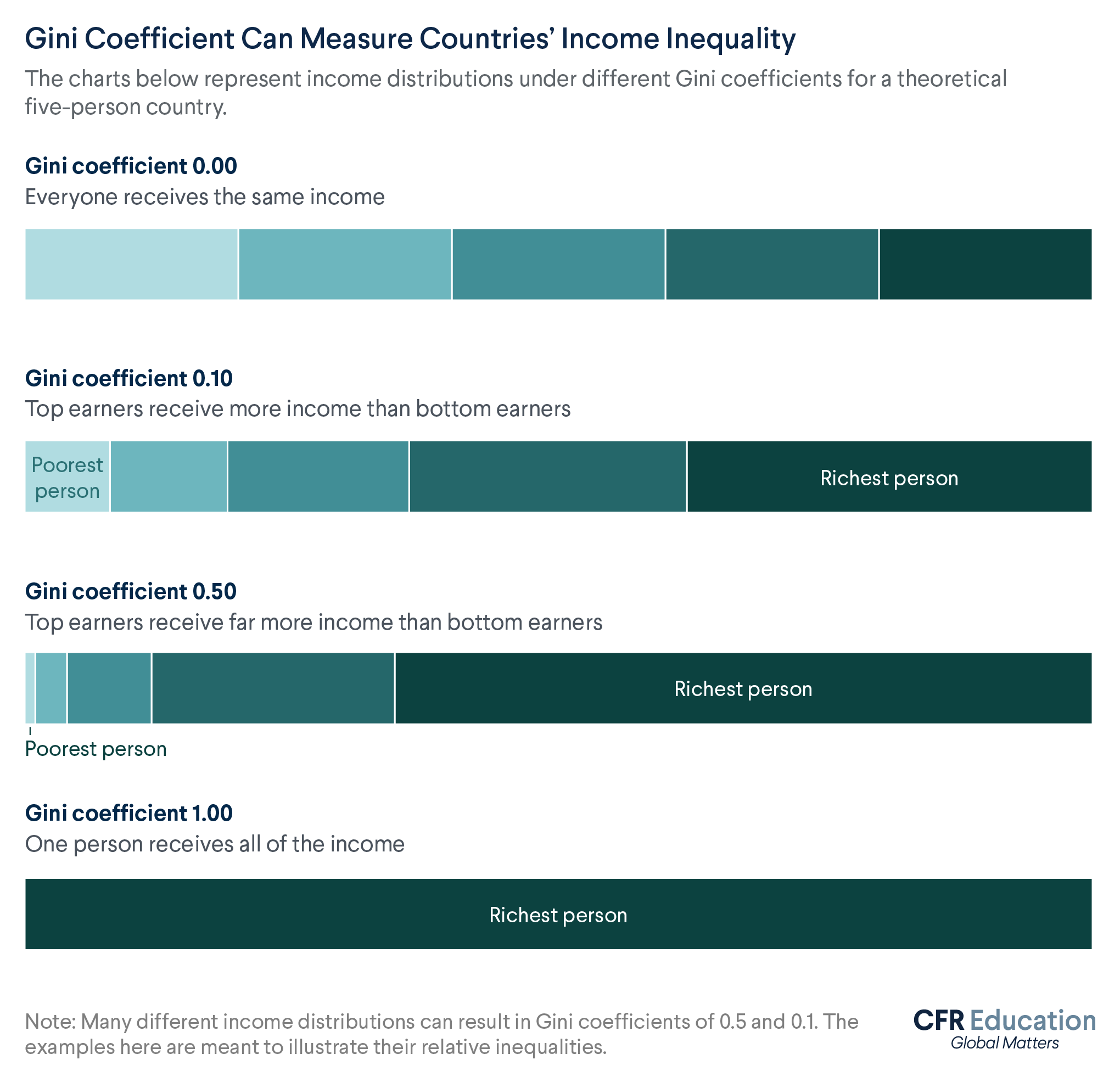
The Gini coefficient is a useful estimation of a country’s economic inequality, but it is hardly perfect. As an annual snapshot, it fails to account for future earnings. For example, it categorizes medical students with debt as low-income despite their potentially substantial future earnings as doctors. Additionally, some countries’ economic data can be irregular and unreliable. Nevertheless, economists rely on the Gini coefficient to provide a high-level overview of a country’s inequality.
Why is inequality bad for development?
Many economists argue that some inequality is healthy for society. Higher incomes can incentivize entrepreneurs to take risks and start new businesses, which can spur nationwide growth.
However, most economists agree that too much inequality harms both individuals and entire societies. The United Nations made reducing inequality within and among countries one of its seventeen Sustainable Development Goals in 2015 because “inequality threatens long-term social and economic development, harms poverty reduction and destroys people’s sense of fulfillment and self-worth.”
Consequences of inequality
Let’s explore four consequences associated with significant inequality.
Endangers democratic norms: Greater inequality corresponds with wider social and political rifts in society. This polarization can weaken democratic institutions and deteriorate trust in government. Some argue that the longer a country is ruled democratically, the better it can perform among different factors of governance and development indicators.
Research from civil liberties watchdog Freedom House shows that inequality and authoritarianism reinforce each other, as people who find themselves unable to improve their economic situations can believe the deck is stacked against them and support autocratic overhauls to democratic systems.
Influences migration: Inequality between countries affects the global movement of people. Millions of migrants come from developing countries, often moving to pursue better economic opportunities abroad. The departure of a country’s highly educated or skilled individuals—a phenomenon known as brain drain—can challenge that country’s development, further perpetuating the inequality that drove emigration in the first place.
Limits opportunities and slows economic growth: Inequality restricts educational and professional opportunities for low-income individuals. In the United States, for instance, gaining admission to competitive universities is often easier for wealthier students who attend private high schools from which colleges recruit and who can afford college preparation courses and advisors. Lower-income students, on the other hand, frequently lack such advantages and can struggle to afford a university education even if admitted. The average cost of attending a private four-year college in the United States was $58,628 in 2023, exceeding the country’s median personal income of $42,220 that year.
Educational disparities exacerbate economic inequality, with high school graduates earning 40 percent less than those with a bachelor’s degree. At a national level, that lost potential can slow economic growth.
Exacerbates health crises: Lower income individuals often struggle to access health services due to their high costs or lack of availability in under-resourced communities. Many struggle to afford health insurance, and even those with insurance may face high costs for doctor visits, treatments or medicine. In the United States, people with lower incomes are much more likely to skip or delay needed health care due to cost concerns. This is in part why people with lower relative incomes tend to have worse health outcomes across many measures, from life expectancy to rates of chronic illness.
Economic inequality around the world
Economic inequality does not look the same worldwide. Some countries are more equal than others. Certain countries are witnessing their inequality increase faster than in other countries.
Regional patterns, though not exact, have emerged over time. Since the World Bank began tracking inequality in the 1970s, many European countries have kept relatively low Gini coefficients, while countries in sub-Saharan Africa and South America typically have struggled more with inequality.
To explore the consequences of higher and lower rates of inequality, let’s look at how this issue manifests in three different countries.
United States
Gini coefficient 2022: (0.413)
Although the United States has the world’s highest GDP, income inequality has risen steadily for decades. Between 1978 and 2018, CEO compensation increased by 900 percent, while worker compensation rose by only 12 percent. Experts argue that this gap has contributed to political polarization and sparked demonstrations within the United States. In 2011, for instance, the Occupy Wall Street movement protested in cities around the country following reports that just 1 percent of Americans controlled 40 percent of the country’s wealth. Such inequality has made many Americans suspicious of free trade agreements, which have grown the global economy but also resulted in the outsourcing of many jobs.
South Africa
Gini coefficient (2014): 0.63
South Africa has one of the world’s highest Gini coefficients, making it the most unequal country on earth. The legacy of apartheid, a system through which white South Africans controlled the country’s government and economy from 1948 to 1994, continues to drive economic inequality between white and Black South Africans. In 2023, the government found that Black South Africans held just 17 percent of the country’s top management jobs despite making up around 80 percent of the population. In recent years, South Africa has seen a spike in demonstrations against the country’s rampant inequality, with protesters frustrated over corruption and problems accessing basic necessities like clean drinking water. Such inequity threatens the country’s still-fledgling democratic institutions.
Finland
Gini coefficient (2021): 0.277
Finland has one of the world’s lowest Gini coefficients, making it among the most equal countries on earth. According to the European Union, less than 7 percent of Finland's workers in 2022 were considered low-paid, which is about half the rate for the entire EU. That same year, the highest-earning decile (or tenth) of Finns made around six times more than the lowest-earning decile. For comparison, the richest decile of Americans made over 16 times as much as the lowest-earning decile that year. In 2025, Finland was ranked the happiest country on earth for the eighth straight year, with experts identifying the country’s history of equality as a major driver of contentment.
How can governments reduce inequality?
Although organizations like the United Nations encourage reducing inequality worldwide, economists differ over how best to achieve this aim.
Some experts argue that smart and deliberate government programs are required to tackle inequality. Others believe excessive government interference in the economy can backfire by slowing overall growth and even widening the income gap.
Let’s explore a few policies that can potentially reduce economic inequality.
Progressive Taxation: Rather than tax all people at the same rate, progressive taxation has higher income earners pay higher tax rates. This policy provides the government with more revenue, allowing it to put that money toward programs that can benefit lower-income earners. However, opponents of progressive taxation argue that it unfairly burdens the rich and disincentivizes making more money.
Direct Payments: Governments can give their citizens cash. A common form of this policy is unemployment benefits, where the government provides money to citizens who recently lost their jobs. Sometimes, governments may give cash to people more broadly as a way to stimulate their economy during downturns. However, critics of direct payments argue that such programs can be unreasonably expensive and that they can disincentivize motivation to work if citizens rely too much on the government for support.
Public Services: Governments can invest money in public services such as anti-poverty programs, health care, childcare, and access to quality education. Stronger social safety nets can pull people out of poverty and reduce economic inequality. However, detractors contend that such programs can also prove costly and lead to an overreliance on government services.
Labor Rights: Strengthening labor rights—including the ability to form unions—can improve the economic conditions of the working class and decrease inequality. Unions are particularly powerful advocates for higher pay and better benefits for workers. However, critics argue that unions can artificially raise labor costs for companies, putting them at a disadvantage with foreign competitors and hurting the overall economy.
Removing Barriers to Entry: To perform some jobs, prospective workers first have to pay fees or possess certain educational or training requirements. For example, becoming a hairstylist in many places in the United States requires a cosmetology license, which can cost over $10,000 and many hours of training. By eliminating such barriers, people can have easier access to jobs that can improve their economic positions. However, proponents of regulations maintain that they exist to protect citizens—for example, by ensuring that people receive medical care and other services from licensed and qualified professionals.

What is the future of economic and income inequality?
The world has become much richer in recent decades. Between 1981 and 2022, the percentage of the global population living under extreme poverty plummeted from 43 percent to just 9 percent. Millions of people are leading wealthier lives, but the majority of them have also experienced an increase of inequality, which could threaten their economic growth, health outcomes, and democratic institutions.
Check your understanding: