How Should the United States Interact With the Taliban?
Overview
The United States has tried to avoid legitimizing the Taliban since it regained power in Afghanistan. But that approach has certain drawbacks. Should the United States change the way it interacts with the Taliban going forward?
Students will describe the key points of U.S.-Taliban relations.
Students will analyze the pros and cons of withholding legitimacy as a foreign policy tool.
Students will evaluate how to balance interests and values in making a foreign policy decision.
The Situation
One of the most basic decisions in diplomacy is whether to acknowledge a country or government as legitimate. International legitimacy can be of great value, especially when a government is new or when its power is contested. For such countries, it can mean the difference between consolidating power and establishing cooperative relationships or facing international isolation and challenges to their authority.
A country such as the United States can grant legitimacy to another government in various ways. One step is simply making a formal statement recognizing that government as legitimate. Conducting formal diplomatic relations, such as by opening an embassy or holding public meetings with government officials, can also lend legitimacy. Conversely, the United States can withhold legitimacy. If a group came to power undemocratically or violated human rights, the United States could refrain from legitimizing actions, perhaps as a negotiating tactic to push for reforms. However, that does not always mean the United States refrains from conducting diplomacy with such governments. U.S. diplomats frequently interact with governments they deem illegitimate, but without the formality and publicity of official meetings and without involving high-ranking government officials.
Acknowledging or denying a group’s legitimacy can come with practical and political trade-offs. Diplomatically isolating a hostile government, or one that runs counter to U.S. values, can weaken it and provide negotiating leverage. Adopting a firm stance toward such a government can also be politically popular. On the other hand, isolating other governments can leave the United States without a stable and predictable way to pursue its interests. It can also create openings for U.S. competitors to expand their influence.
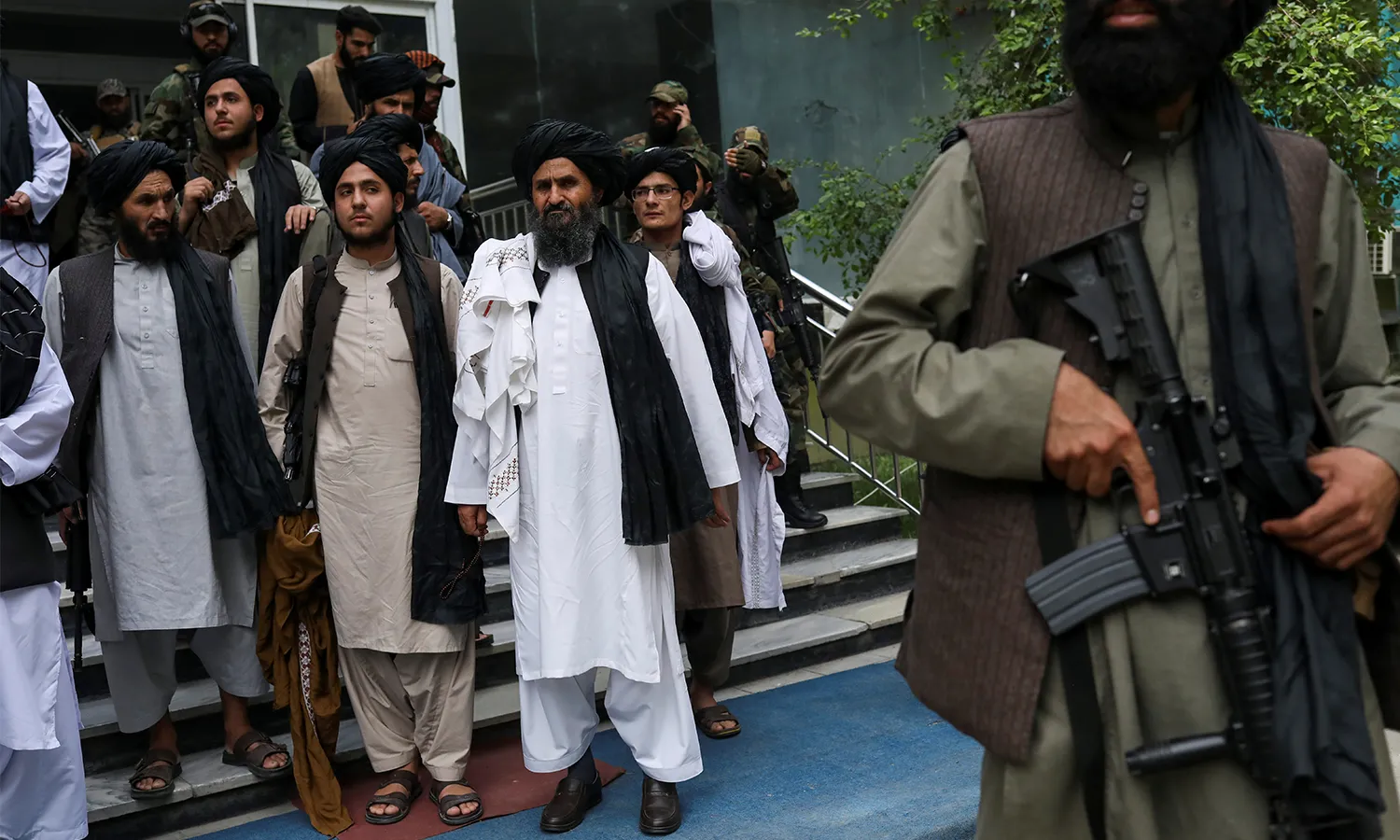
Afghanistan offers a prime example of those trade-offs. In 2021, the Taliban—an Islamic fundamentalist group toppled by the United States in 2001— regained power. To help cement its control, the Taliban sought to establish regular diplomatic relations with other countries and cultivate international legitimacy. The United States, however, did not recognize the new government. It closed its embassy and refused to schedule high-level meetings. The United States also pushed other countries to treat the Taliban similarly. Washington sought to isolate the Taliban in part to influence the group to be more respectful of human rights—especially women’s rights. The United States also wanted to push the Taliban to refrain from supporting terrorist organizations within its borders. The hope was that isolation could be a bargaining chip to prompt the Taliban to respect international human rights norms and comply with U.S. counterterrorism priorities.
Unfortunately, the United States’ lack of recognition has done little to sway the Taliban. Human rights infringements, including the repression of women, have continued. Furthermore, some countries are beginning to break ranks with the United States and are recognizing the Taliban to some degree. In 2022, the Chinese foreign minister visited Afghanistan, and China has allowed the Taliban to set up a diplomatic mission in Beijing. In July 2025, Russia became the first country to establish full diplomatic relations. Several of Afghanistan’s neighbors have engaged with the Taliban as they have worked on various issues together. Those countries have typically been willing to offer some legitimacy to further their interests. Russia wants Taliban assistance in controlling a terrorist group, the self-proclaimed Islamic State in Khorasan, that has attacked Russian civilians in the past. China sought Taliban help in quelling Uyghur militants based in Afghanistan who opposed the Chinese government. Turkmenistan and Uzbekistan sought Afghan cooperation in building a gas pipeline to India.
At the same time, a degree of U.S. engagement with Afghanistan has continued, with limited results. U.S. diplomats have sought to quietly push the group on counterterrorism and human rights issues through informal channels, meetings in third countries, and intermediaries. On some issues, such as counterterrorism and releasing U.S. hostages, that informal diplomacy has seen a measure of success. On other matters, such as U.S. human rights interests, informal engagement has yielded little, if any, progress.
Before the Trump administration curtailed foreign assistance in early 2025, the United States also continued to provide aid to Afghanistan, seeking to alleviate humanitarian suffering. Although the United States provided that aid directly to Afghan civilians through various nongovernmental organizations, Taliban restrictions blocked or slowed some of its distribution. The Taliban are also widely believed to divert a portion of incoming foreign aid to support their own operation.
Against that backdrop, some analysts have questioned whether withholding recognition and formal diplomacy provides meaningful leverage or simply hinders pragmatic engagement. On one hand, steps such as high-level official meetings, sending diplomats to Afghanistan, or even opening an embassy could facilitate stronger counterterrorism cooperation and better direct the flow of foreign aid if it resumes. On the other hand, although the Taliban have signaled they are open to increased cooperation with the United States and that they wants U.S. recognition, they have not expressed willingness to adopt reforms in exchange. Whatever results (if any) came from expanding cooperation with the Taliban would be at the cost of tacitly accepting policies the United States condemned and fought for decades.
Decision Point
The United States’ policy of diplomatic isolation toward the Taliban has yet to bear fruit. The Taliban have shown little improvement in respecting human rights or curtailing terrorist activity within their borders. Humanitarian conditions in many parts of Afghanistan remain dire. Meanwhile, a U.S.-led consensus on isolating the Taliban has begun to crack. Certain countries have offered the Taliban some recognition.
The president has convened the National Security Council to review U.S.-Taliban relations. The president is open to somewhat increasing engagement. Maintaining or decreasing the level of engagement are also options. Advisors will have to weigh U.S. commitments to upholding human rights norms against the possibility that greater engagement could help the United States further some of its interests in the region.
NSC members should consider the following policy options:
- Adopt a policy of formal engagement with the Taliban. That policy could entail holding official meetings, establishing a U.S. diplomatic presence in Kabul, or even formally recognizing the Taliban government. Increasing formal engagement could allow the United States to better pursue humanitarian assistance and push the Taliban on counterterrorism issues. It would not be guaranteed to do so, however, and could be seen as legitimizing the Taliban and all it stands for.
- Continue informal engagement. This option involves continuing to withhold formal diplomatic cooperation until the Taliban offers concessions, while maintaining unofficial dialogue on key issues. It could also involve resuming the delivery of humanitarian aid. The policy makes a clear statement about U.S. values while still allowing the United States at least a limited avenue to pursue its interests. It could be losing its teeth, however, as other countries warm to the Taliban.
- Ramp up isolation. This option could include continuing to withhold humanitarian aid, limiting even informal diplomatic engagements, and pressuring other countries to withhold or roll back their engagement. Such a strategy provides the clearest message about U.S. values. However, it risks leaving a diplomatic and economic vacuum that U.S. adversaries, such as China and Russia, are poised to fill. Withdrawing aid would also undoubtedly lead to suffering among Afghan civilians—suffering that stems in part from the U.S. war in the country.
Need guidance for how to run your mini simulation?
More Mini Simulations


