What Is Globalization?
Explore examples of globalization to understand the benefits and challenges of our increasingly interconnected world in this video.
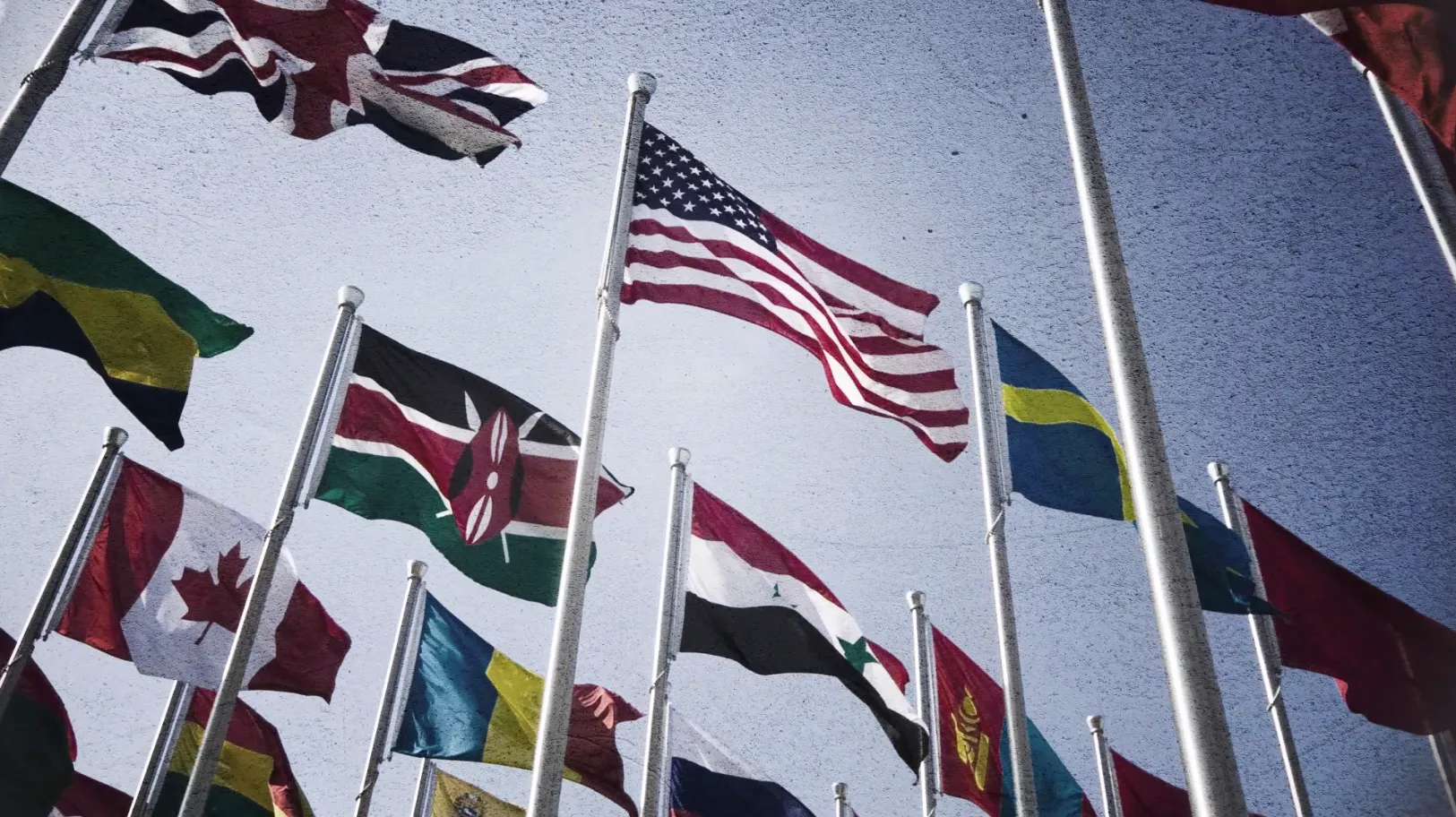
What are the effects of globalization?
We live in an interconnected and interdependent world. The interdependence of the world’s economies, cultures, and populations—known as globalization—touches every part of our lives, from the products we buy to the food we eat to the ways we communicate with one another. Globalization is also tied to some of the other biggest issues we face in the modern era, including climate change, trade, terrorism, and the spread of deadly diseases.
The intertwining of countries and markets all over the world has both benefits and downsides, so policies that support integration have both proponents and detractors. No matter which side you’re on, globalization is simply a reality of modern life; therefore, it’s important to understand how it affects us and the choices we make.
Transcript: What is Globalization? Understanding Our Interconnected World
Every day, we knowingly or unknowingly experience globalization—the worldwide movement of people, ideas, money, goods, data, drugs, weapons, computer and biological viruses, greenhouse gases, and more.
This isn’t new. People and goods have always moved around the world. The Silk Road, a network of trade routes stretching from the Mediterranean Sea to East Asia, facilitated the spread of fabrics, spices, art, weapons, technology, ideas and disease over thousands of years.
What is new, however, is the scale, velocity, and range of these flows across borders. Think about the speed at which an infectious disease like Ebola or Zika can spread around the world.
Or the reach of a financial contagion like the crisis of 2008.
Look at your smartphone and think about the global coordination it took to produce.
The interconnectedness of the modern world allows ideas, behaviors, styles, products and news to spread more quickly and broadly than during any other period of history.
But globalization’s effects are complex. What represents an upside for some people might represent a downside for others.
Technology, for example, allows billions of people to contact friends and access news from around the world.
International supply chains—the networks that turn raw materials into finished items—produce and distribute goods more quickly and cheaply than ever.
But the pace of technological innovation has also led to the automation of manufacturing processes, which eliminates jobs.
Trade is another example. Between 1970 and 2015, global exports and imports of goods each multiplied more than 50 times.
More imports lead to increased consumer choices and reduced prices, and more trade can strengthen ties between trading partners and promote peace, security, and growth.
But more trade opportunities and technological advances mean many corporations choose to shift their operations to countries where the labor and natural resources are cheaper.
And the individuals and companies that can take advantage of international resources experience outsized gains, which widens the growing gap between the rich and the poor.
The effects of globalization—both negative and positive—are a reality. No one can opt out entirely. But governments have many options for responding.
They can choose how open or closed they want to be toward trade, investment, visitors, immigrants, refugees, internet traffic, and more.
Governments can also contend with globalization through collective rather than national responses. A set of international institutions and other arrangements has emerged to manage globalization.
Although some countries view globalization as a threat to local identity, culture, or social and political norms, no country can be entirely self sufficient.
The challenge is for individual governments—and the world collectively—to promote globalization’s benefits while effectively helping the individuals and countries that globalization hurts the most.