People and Society: Sub-Saharan Africa
Learn how culture, demographics, and social trends shape everyday life in the region.

Sub-Saharan Africa is one of the world’s most diverse regions, with over one billion people living in forty-nine countries. In Cameroon alone, a mix of Muslims, Christians, and adherents of local religions speak over two hundred languages and belong to roughly two hundred fifty ethnic groups.
Sub-Saharan Africa is also home to the world’s youngest and fastest-growing population. Those statistics indicate great economic potential but also great challenges, as governments and cities struggle to keep pace with growth.
For many young people across the region, life looks much different today than it did a generation ago. Over the past few decades, people have been living longer, healthier lives. For example, in Malawi, life expectancy rose from forty-four years in 2000 to nearly sixty-three years in 2014. Other important advances have been made: polio has been virtually eradicated, more children are receiving vaccinations for infectious diseases like measles every year, and health and education continue to improve, especially for women and girls.
People across the region have also gained access to transformative technologies. Nearly 90 percent of sub-Saharan Africans now have an active cell subscription, and some estimate that more sub-Saharan Africans have access to cell phones than electricity. Telemedicine is helping make up for a lack of trained health-care professionals in rural areas. Business owners and farmers use their phones to buy solar energy and trade crops. And mobile money transfers have given people across the region access to capital for the first time.
Internet and social media use has also been transformative. In 2016, for instance, Zimbabweans took to Facebook, Twitter, and WhatsApp to broadcast their frustrations about their president’s thirty-five-year rule, using #ThisFlag. Social media gave Zimbabweans a way to build an opposition movement in a country where the government had cracked down on virtually all forms of dissent.
Those developments make sub-Saharan Africa a rapidly changing place.
What else defines life in the region?
Here are ten things that highlight the everyday experiences of many sub-Saharan Africans.
1. The World’s Most Diverse Region
Ethnicity refers to a group of people united by cultural features—like language and belief—that are connected to a shared history and ancestry. Many countries in sub-Saharan Africa are considered the most ethnically diverse in the world. They include Tanzania, with more than one hundred ethnic groups, and Democratic Republic of Congo (DRC), with more than two hundred ethnic groups. The region’s ethnic diversity can sometimes lead to divisions or violent conflict. But most sub-Saharan Africans coexist peacefully. When ethnic diversity causes conflict, it is often accompanied by other factors—like government policies, resource scarcity, and political instability. Sub-Saharan Africa’s ethnic diversity is accompanied by linguistic diversity. There are seven thousand languages spoken across the world. About two thousand of them are found in sub-Saharan Africa. South Africa alone has eleven official languages. In Nigeria, people speak more than five-hundred languages. Linguistic diversity can also create political, societal, and economic challenges, especially if many people in the same country can’t understand each other. To account for that issue, many countries use one or multiple official languages to conduct government business.
2. Home to More and More Christians and Muslims
Ethnic diversity means religious diversity as well. Many people in the region practice traditional Animist religions. However, Christianity and Islam dominate. Roughly 60 percent of sub-Saharan Africans identify as Christian and roughly 30 percent identify as Muslim. In fact, the region makes up an increasingly large portion of the world’s Christian and Muslim populations. By 2060, 40 percent of the world’s Christians will live in sub-Saharan Africa, along with 27 percent of the world’s Muslims. Those religions are divided geographically. For instance, the northern parts of sub-Saharan Africa (including the Sahel) are mostly Muslim. Meanwhile, central and southern Africa are mostly Christian. In certain countries in the middle, like Nigeria, the population is made up of both Christians and Muslims. Conflict in some places involves religious violence. In Nigeria, the extremist group Boko Haram has targeted Christians. They have also imposed strict religious law in some areas, making it illegal to convert to Christianity. But many experts warn against defining such clashes as purely religious. Conflict also arises over land and water use, and between people whose identities differ in non-religious ways.
3. The Average Person Is Under Thirty
By 2050, one in four people in the world will be African. That’s because the continent has the highest relative population growth rate. What explains that growth? Infant mortality rates declined significantly between 1960 and 2024. At the same time, life expectancy increased from forty-three years to sixty-six years. A fast-growing population means that people increasingly tend to be young. In sub-Saharan Africa, 70 percent of all people are now under the age of thirty. Those massive demographic shifts will pose challenges for the region but also provide opportunities. By 2035, sub-Saharan Africa will be home to more working-age people (ages fifteen to sixty-four) than all other regions combined. A common narrative about those young people is that they are increasingly politically active. Having grown up long after colonial independence, the “born free” generation no longer finds solidarity with ruling parties with anti-colonial legacies. Instead, issues like inflation and unemployment have led them to protest and speak out. Some experts, however, contest that narrative. They maintain that, like young people around the world, Africa’s youth are less likely than their elders to vote and engage in politics.
4. Many Face Precarious Living Situations
In 2024, over forty-five million sub-Saharan Africans—nearly 4 percent of the region’s population—lived outside their home. Most of them were displaced by conflict and repressive governments. Roughly three-quarters were internally displaced, meaning they left their homes but remained in their home country. In some countries, an even higher number of people were forced to migrate. In Somalia, for instance, a quarter of the country has been displaced due to conflict, drought, and floods. Most displaced Somalis now live in neighboring countries like Ethiopia and Kenya. Daily life often takes place within refugee camps. Many people have lived in foreign camps for over five years (and some for their entire lives), a situation called protracted displacement. Roughly 80 percent of refugees around the world live in a protracted situation. Life in refugee camps is frequently precarious. Because of conflict, instability, and events like droughts, food and aid to refugees is at times disrupted. Aid disruptions have exposed the nearly one million refugees living in Ethiopia to further harm and have been associated with more early-childhood marriages, child labor, crime, and sexual violence.
5. More Are Moving to Cities
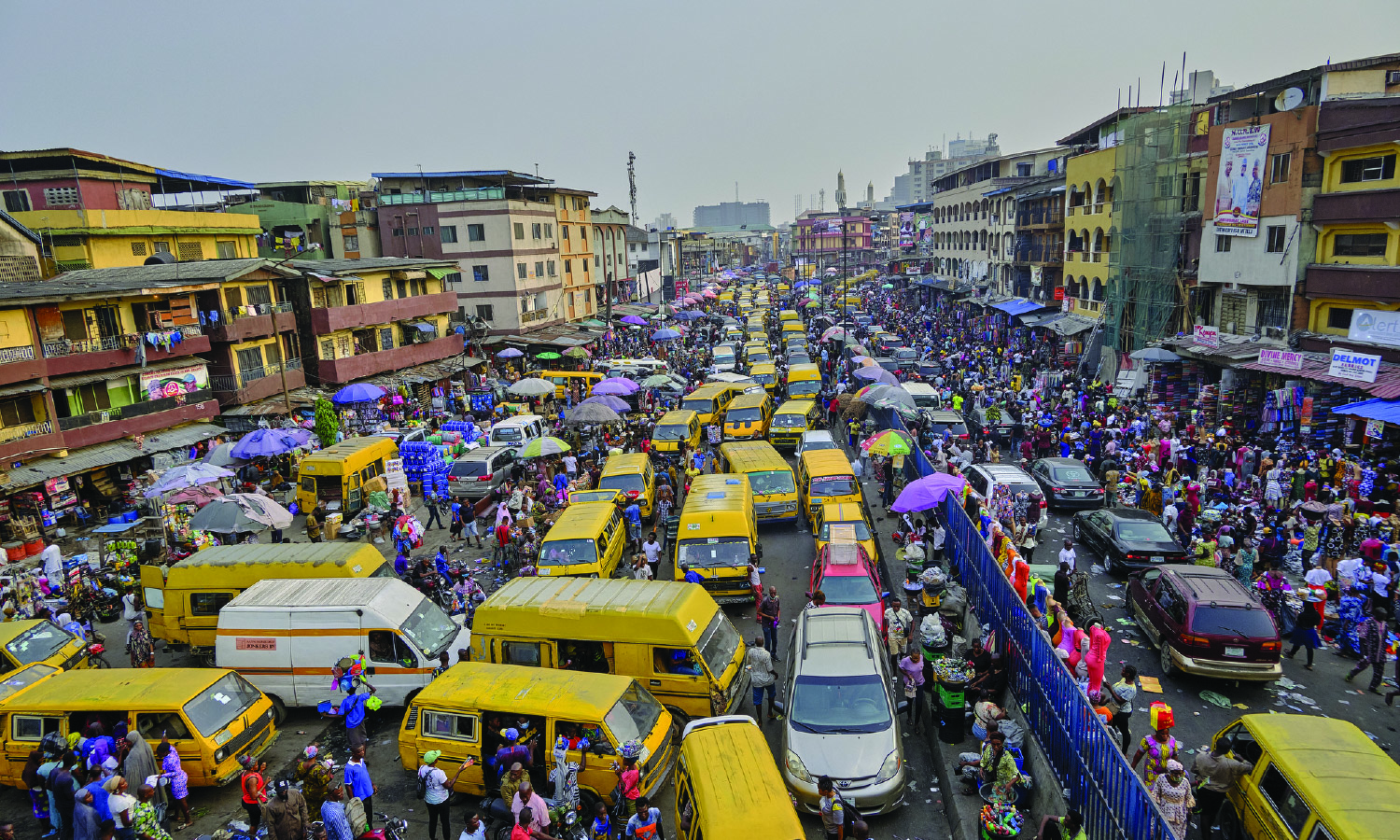
Migration is not always forceful, nor brought on by conflict. Many people move for better jobs and a more stable income. Opportunities are often in cities. Sub-Saharan Africa is home to two of the largest cities in the world by population: Lagos (sixteen million) in Nigeria and Kinshasa (seventeen million) in DRC. DRC, in fact, is expected to have an urban population of 126 million by 2050. Those urbanization trends, while already prominent in West Africa, will become more common across Africa. Right now, more Africans live in rural places than in cities. But experts expect that tendency to begin reversing around 2033. By 2050, as much as 60 percent of the continent could be living in cities. Rural-to-urban migration has brought some economic prosperity to many in the region, as they leave farming for better jobs in cities. But not everyone seeking those jobs has found them, and many African cities have become crowded and expensive. Many people don’t even live in the heart of the city. Instead, roughly 60 percent live in informal settlements. Those homes are often vulnerable to floods and the effects of climate change.
6. Legal Protections Grow for Women But Not LGBTQ+ Groups
Gender equality is progressing at different rates across sub-Saharan Africa. In some countries, harmful practices such as early marriage and female genital mutilation significantly harm girls’ health and well-being. In other countries, women hold significant leadership roles. For example, in Rwanda, female representatives consistently make up over 50 percent of the legislature. Many sub-Saharan African countries are leading reform efforts. In 2022, several countries enacted progressive laws to increase gender equality. They included laws protecting women against domestic violence (Ivory Coast), sexual harassment at work (Republic of Congo), and workplace dismissal while pregnant (Senegal). Other marginalized groups have far less legal protection. In sub-Saharan Africa, twenty-six countries criminalize homosexuality. Penalties for same-sex relationships include fines and even the death penalty. Those anti-LGBTQ+ policies often result from a mixture of colonial practices, current politics, and the influence of Islam and Christianity. Some experts have even criticized various U.S. evangelical organizations for missionary work that reinforces intolerance.
7. School Enrollment Is Essential for Development
Sub-Saharan Africa is the youngest region in the world. With so many young and working-age people, many economic incentives exist for investing in education. But only roughly seven out of ten children in the region go to school. And the completion rate for primary school is about 65 percent, compared to the global average of 87 percent. Experts say federal funding is part of the problem. They recommended countries spend at least 4 percent of gross domestic product (GDP) on education. Sub-Saharan countries fail to reach that number; in fact, they may need to double it to increase enrollment. Despite those setbacks, sub-Saharan Africa has seen substantial progress in education. Completion rates for primary and secondary school have risen by at least 15 percent since 2000. Not all gains are equal, however: at higher education levels, boys’ enrollment is still higher than girls’. That disparity is potentially harmful because gender parity across education is important for social and economic development. Education doesn’t just benefit individual women either: in sub-Saharan Africa, places with higher average education levels for women also have smaller family sizes. That means educated women are actively influencing social trends.
8. West African Music Takes the World Stage
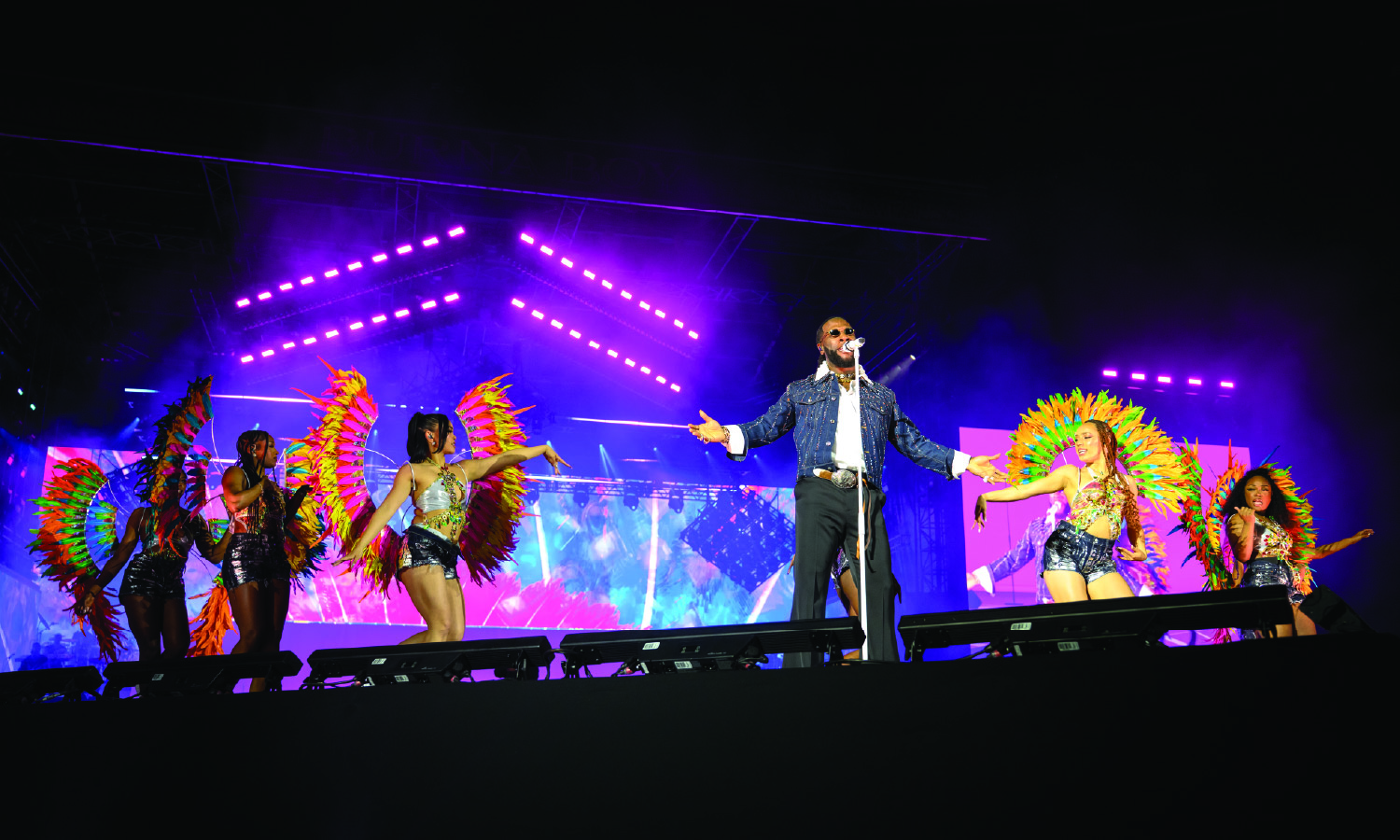
In 2024, four Nigerian singers were nominated for Grammy awards: Ahmed Ololade (Asake), Damini Ebunoluwa Ogulu (Burna Boy), David Adedeji Adeleke (Davido), and Oyinkansola Sarah Aderibigbe (Ayra Starr). Those artists play a genre of music called Afrobeats. Afrobeats has become a catchall term for West African pop music. Some place Afrobeats’ origin in 1960s Nigeria, where artists combined local Yoruba music with western jazz and funk. In the 1990s, hip hop became another influence. These days, Afrobeats is a global phenomenon. In fact, more people outside Africa now stream the music than inside Africa. How did Afrobeats get so popular? Experts believe social media has helped amplify African music, as nearly fifteen million Instagram users are from western Africa. Young stars from Nigeria to South Africa can now reach millions around the world. And that reach is expected to grow. In 2021, music-streaming revenues across Africa totaled roughly $93 million. By 2026, some experts estimate, they could be over $300 million.
9. A Growing Global Fashion Site
Pop music isn’t the only regional art form gaining international attention. African fashion has also become increasingly popular. African designs are appearing in famous fashion shows across Europe. Vibrant colors and fabrics are driving international demand for those styles. So is a growing interest in African culture. Afrobeats stars are partnering with major fashion houses and streetwear brands, exposing more people to African design. Such attention could be a boon for the region’s economy. A recent UNESCO report highlighted sub-Saharan Africa as a potential global leader in fashion. More than two-thirds of African countries produce cotton, and the region is a big textile exporter and importer. If it invests in production, Africa’s earnings from its fashion industry could triple over the next decade. Experts anticipate that, during that same decade, demand for high-end African fashion will increase by 42 percent. And it’s not just an international market that’s growing. Africa’s urban middle class is becoming more populous—and that means more consumers. It also means more designers. Many young people across the region are now using social media to break into the fashion space by starting their own brands.

10. South Africa: A Rugby Dynasty
South Africa is perhaps the rugby capital of the world. The country has the world’s top-ranked men’s team. They’ve won more championships than anyone else. And the sport is extremely popular: over half of sports fans in South Africa follow rugby. So why is rugby such a big deal? The Springboks, South Africa’s rugby team, have long been a source of national pride. But the team’s history also reflects the divided history of the country. Rugby was introduced by British colonists during their occupation in the 1870s and was seen as a sport for the white and wealthy. South Africa’s team developed a culture rooted in white nationalism: under apartheid law in 1948, they prohibited people of color from joining. In the 1960s, growing anti-apartheid movements sought to ban the team from playing in international events. Even after apartheid ended in South Africa, support for the country’s rugby team was contentious. But President Nelson Mandela saw the Springboks as a way to unite the country. He wore the team’s controversial green colors, encouraging all South Africans, regardless of race, to unite in support. Although some people still see white supremacist legacies in the team, Mandela’s gesture became a symbol of the nation’s transition away from apartheid.

Learn More


