Economics: The Americas
The economic landscape of the Americas is dominated by the United States, which accounts for nearly a third of the region’s billion-plus population and three-quarters of its economic output.

The United States dominates the economic landscape of the Americas, accounting for nearly a third of the region’s billion-plus population and three-quarters of its economic output.
Farther south, Latin America has experienced significant economic growth over the last twenty years. But there is room for improvement: most economies still rely on commodities, like soybeans and oil, that are vulnerable to shifts in global prices.
With the major exception of the United States, Canada, and Mexico—which have been economically integrated since the 1990s—intraregional trade in Latin America still lags behind other regions.
Here are ten additional themes and developments that help tell the story of the region’s various economies.
1. The U.S. Economy Dominates the Region
In the Americas, the United States is the dominant economic power. Worth nearly $30 trillion in 2025, it is the world’s largest economy and accounts for roughly a quarter of global gross domestic product (GDP). The services sector—which includes the finance and insurance industry, technology and media firms, and health-care companies—is the largest sector of the U.S. economy, making up over 70 percent of U.S. GDP, a characteristic shared by another regional economic heavyweight: Canada. Canada’s economy specializes in mining and manufacturing as well as services, making its economy more diverse. Still, the United States outpaces Canada and the region’s other biggest economy, Brazil, by over $20 trillion. That outsize role makes the United States a critical market for Latin American countries. Eleven of Latin America’s twenty countries have signed free trade agreements with the United States. Further, around 40 percent of Latin America’s total exports go to the United States.
2. High Trade Between North American Neighbors
In 1994, the United States, Canada, and Mexico entered into the North American Free Trade Agreement (NAFTA). The agreement eliminated most tariffs between the three countries and encouraged economic integration. At the time, NAFTA represented the largest trade area and would soon account for almost a third of the world’s GDP. The free trade agreement also highly benefited North American economies. In the decade after NAFTA was signed, trade between North American countries expanded significantly, and each country’s economy grew by at least 30 percent. However, not every policymaker favored NAFTA. Despite overall economic growth, NAFTA eliminated some jobs across the region that could no longer compete with cheaper imports. In 2019, President Donald Trump claimed the agreement hurt U.S. jobs and manufacturing. As a result, in 2020, the three countries renegotiated NAFTA, renaming it the U.S.-Mexico-Canada Agreement (USMCA). The agreement incorporated new digital and environmental protections and updated manufacturing requirements in the auto industry. Like its predecessor, the USMCA has helped expand trade and increase jobs. However, recent challenges to this trilateral partnership—namely new U.S. tariffs—threaten to disrupt North American trade relations.

3. Low Trade Between Latin American Neighbors
With the exception of the United States, Canada, and Mexico, countries in the Americas do not frequently trade with each other. Quotas and bans limiting certain imports—and poor infrastructure slowing the delivery of exports—present challenges to intraregional Latin American trade. Regions that prioritize intraregional trade are considered to be more economically efficient (saving money by taking advantage of nearby markets) and, politically, more peaceful and cooperative (to trade, countries need to communicate). In East Asia, for example, intraregional trade has proven to be a source of growth: as regional integration has increased, so have global exports and incomes. Latin America created trade blocs with hopes of achieving similar results, notably Mercosur (which includes Argentina, Bolivia, Brazil, Paraguay, and Uruguay) and the Pacific Alliance (which includes Chile, Colombia, Mexico, and Peru). In the 1990s, trade among Mercosur bloc members increased fivefold. However in later decades, members’ financial challenges hampered the bloc, as did policies that protected members’ domestic industries but impeded competition within the bloc. In 2024, just over 14 percent of Latin America’s exports went to other countries in the region, while in East Asia the rate was about 60 percent.
4. Many Economies Are Trapped in the Middle
Economists consider much of Latin America to be stuck in the “middle income trap.” The term describes countries that experience promising economic growth but at unsustainable levels, leaving them in the middle and unable to reach high-income status. That is what happened in Latin America. In the 2000s, several developments—including a commodity price boom, a surge of remittances (money sent by family members living and working abroad), and access to foreign financing—helped fuel economic gains in countries like Argentina, Brazil, Colombia, Mexico, and Peru. But those gains did not lead to higher wages. Further, Latin American economies have not shifted away from commodities and manufacturing to more enriching service-oriented industries. Unable to compete with poor economies in manufactured goods or with wealthy economies in innovation, many Latin American countries are trapped in the middle, where the average annual income per person is roughly $10,000. To transition to high-income status, experts say middle-income countries need to invest in education and vocational training, improve governance, reduce gender gaps, and diversify their economies instead of relying on a few product types.
5. Latin America’s Risky Reliance on Commodities
Latin America is home to abundant natural resources, including much of the world’s forests and oil reserves. Consequently, about half of the countries in Latin America and the Caribbean depend on exports of commodities such as coffee, copper, iron ore, and soybeans. During the early 2000s, the sale of those commodities to China helped fuel Latin America’s rapid economic growth and an expanding middle class in countries such as Brazil. But overly relying on commodities or a single industry rather than developing a diverse economy, like that of the United States, can be dangerous. When the price of a commodity crashes, it can bring down an entire economy with it. By the 2010s, for instance, oil sales made up 95 percent of Venezuela’s export revenues. Starting in 2014, a combination of unstable oil prices and government mismanagement created a severe economic crisis, and Venezuela essentially lost its sole source of income.
6. How Economies Impact Climate Change
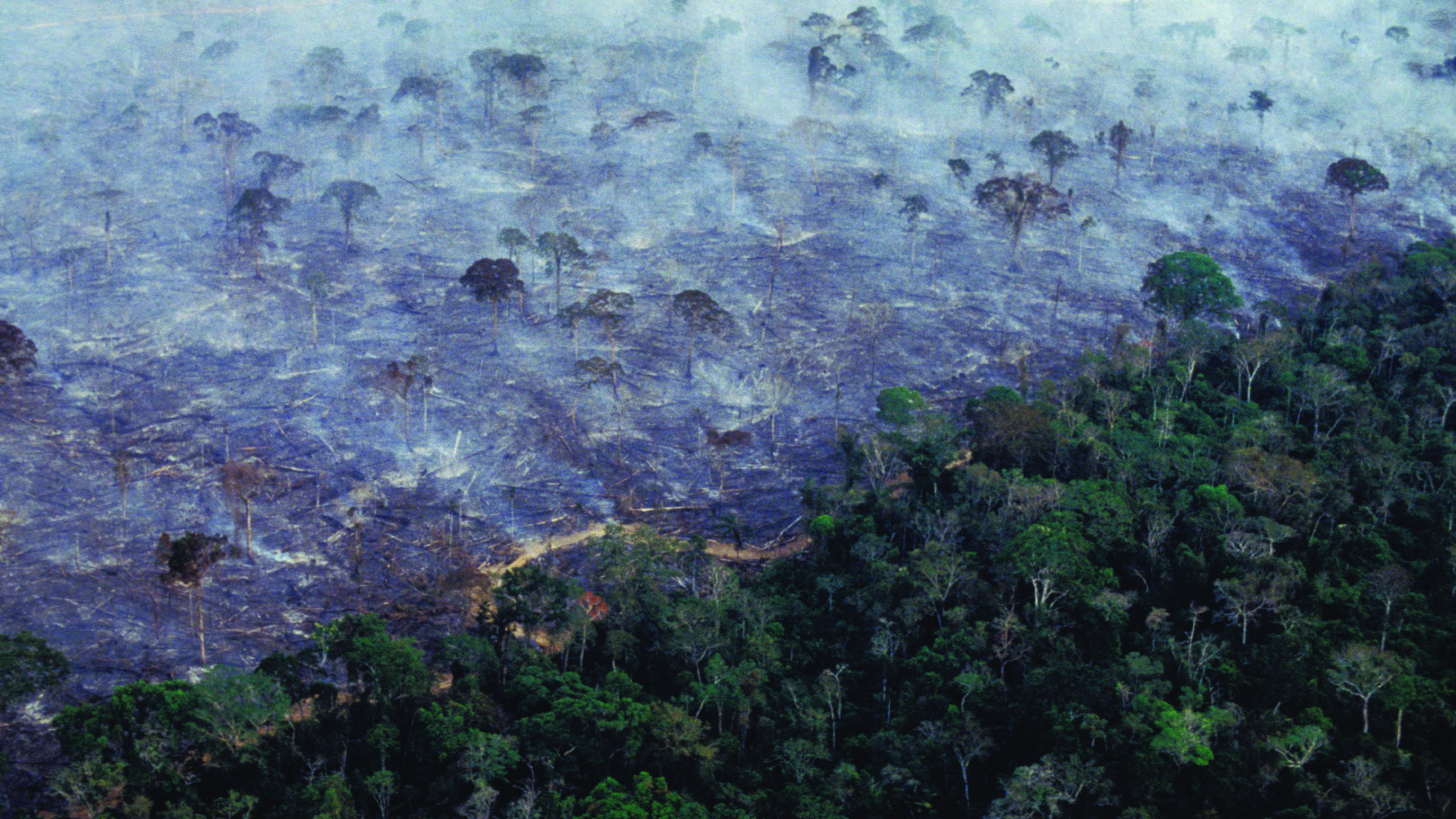
The Amazon Rainforest defends the world against climate change, absorbing billions of tons of carbon from the atmosphere. However, deforestation risks turning the Amazon into a carbon emitter because burning trees releases carbon and reduces absorption. Brazil is home to over half of the Amazon —and is also responsible for much of the deforestation. Between 1985 and 2022, Brazil burned or cut down an area larger than Ireland, Portugal, and Spain combined to help clear its land and grow its economy. Brazil is the world’s largest beef exporter, making cattle ranching an enormously profitable business in the country. But cattle ranching requires a lot of land. To expand their businesses and increase profits, ranchers clear forested land, often without authorization from the government. Other land-intensive industries, including mining (both legal and illegal) have also driven deforestation. But Brazil is now working to reduce deforestation by cracking down on illegal clearing and investing in conservation efforts; it has committed to end deforestation entirely by 2030. The country also has economic incentives to protect the Amazon, as some economists estimate that adopting sustainable approaches could actually grow Brazil’s economy and add jobs.
7. How Climate Change Impacts Economies
Many Latin American countries whose economies depend on agriculture and tourism are particularly threatened by climate change’s effects, such as more frequent floods, droughts, and rising sea levels. In 2024, climate-related disasters cost Latin America over $10 billion in losses. Caribbean countries like the Bahamas, where 80 percent of the country is within one meter of sea level, are particularly vulnerable to events like coastal flooding. Without efforts to address climate change, climate damage could cost the Caribbean region 20 percent of its GDP by 2100. In addition to challenges, however, climate change presents economic opportunities. By 2040, the market for low-carbon emission (green) investments in Latin America and the Caribbean will be worth $1 trillion—and some countries are already adopting practices designed to be more sustainable, environmentally and financially. Between 2010 and 2016, Uruguay invested $7 billion in energy infrastructure and now produces over 90 percent of its electricity from renewable sources. Costa Rica, which produces 99 percent of its electricity from renewable sources, converted 26 percent of its territory to natural reserves, protecting the country’s biodiversity while creating a thriving ecotourism industry.
8. The Region Emerges From Global Pandemic
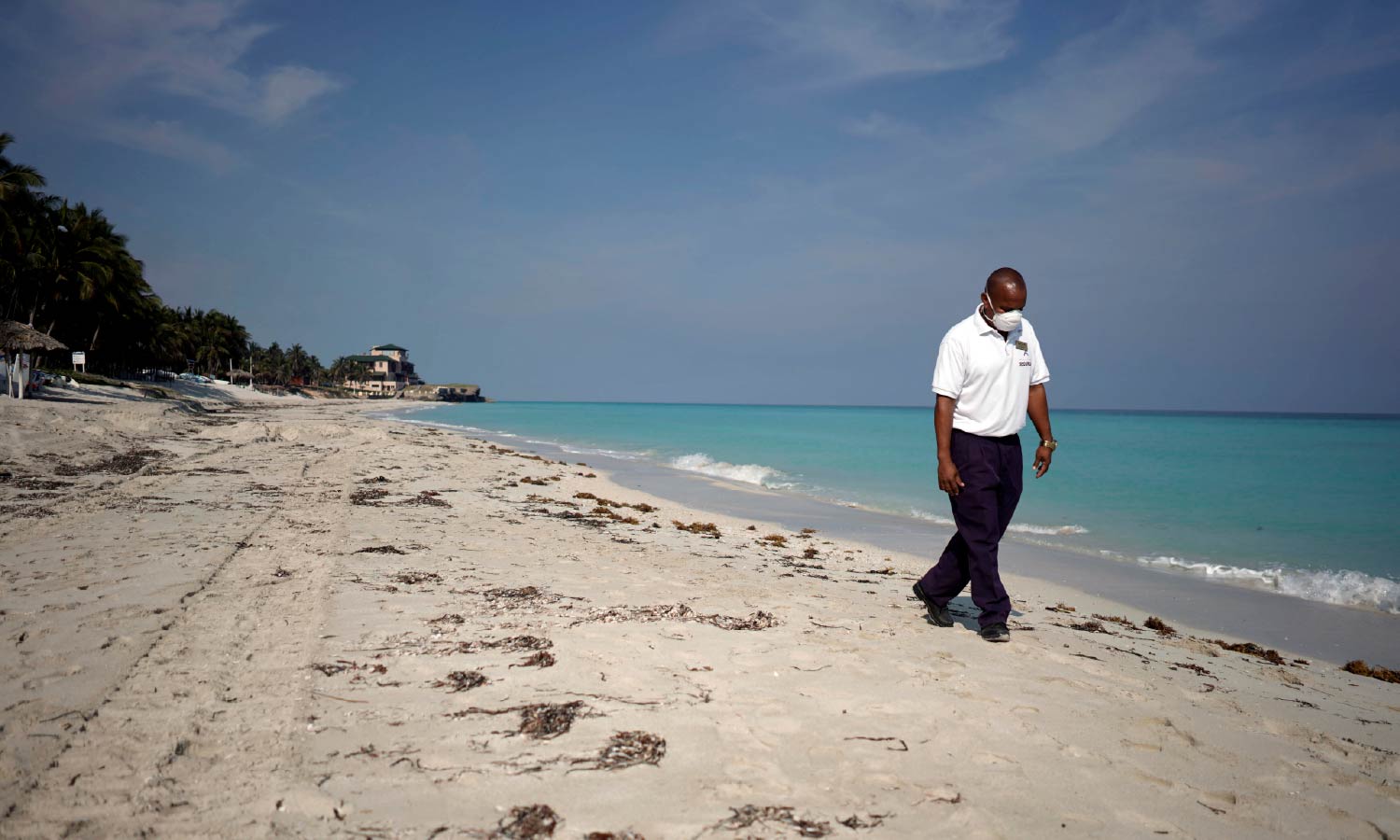
In addition to an enormous public health toll, COVID-19 fueled the worst economic downturn in Latin America’s history. The crisis paralyzed global supply chains, forcing the closure of factories that were unable to acquire essential parts. With factories shuttered and global demand down, regional exports fell 27 percent by the middle of 2020. In addition, the global pandemic brought the Caribbean’s vital tourism industry to a standstill. And as the public health crisis increased unemployment worldwide, remittances fell sharply in 2020. Together, those challenges exacerbated years of economic difficulties in the region, including slowing growth and mounting public debt. Following the COVID-19 outbreak, Latin American economies slowly made gains. By 2024, the region’s GDP had fully recovered and poverty had dropped below pre-pandemic levels. However, several countries still face unsustainable debt levels worsened by the pandemic.
9. Economic Inequality Persists
Latin America is the world’s most unequal region. In developed countries, the richest 10 percent make roughly four times more than the poorest 10 percent. In Latin America, the richest make twelve times more. Even Chile, often hailed as an economic success, suffers from rampant inequality. The country’s consistently high economic growth masks the fact that its wealth is largely concentrated in the hands of a few. Roughly 1 percent of Chile’s population controls nearly 40 percent of the total wealth. Experts trace Chile’s inequality back to years of economic policies that slashed government spending on public education and health care, and privatized basic services such as water distribution and social security. Those policies were part of an economic model called the Washington Consensus, which incentivized privatization and free trade after a previous inward-looking model called import substitution industrialization failed to create long-lasting regional development. In 2019, frustration over that inequality was illustrated by countrywide protests following the government’s increase in subway fares. While prices rose by the equivalent of only a few cents, Chileans expressed outrage at the hike, which came amid low wages and high living costs, leaving many living paycheck to paycheck.
10. China’s Economy Looms Large
The United States has long been the top trading partner for many countries across the Americas. But its influence in the region is no longer unrivaled as China becomes increasingly important. In Brazil, Latin America’s largest economy, China is the country’s top trading partner, far surpassing the United States. Regionally, China is Latin America’s second-biggest trading partner, with trade between China and Latin America increasing from $12 billion in 2000 to $315 billion in 2020. And by 2035, China is expected to surpass the United States, with trade in the region topping $700 billion. Several other countries, such as Chile, Peru, and Uruguay, are following Brazil in expanding trade relations with China, importing copper, iron ore, oil, and soybeans to fuel its economic growth and rapid industrialization. Some experts warn that China’s demand for those commodities discourages Latin American countries from diversifying their exports—exposing their economies to risk. During the 2010s, China also invested heavily in infrastructure through its Belt and Road Initiative, which twenty-two Latin American countries joined. One symbolic project was a $1.3 billion Chinese-run mega-port in Peru. The port is expected to increase the efficiency of trade between Asia and Latin America.
Learn More


