What Is Sovereignty?
Understand the principle that has underpinned world order for the past four hundred years.
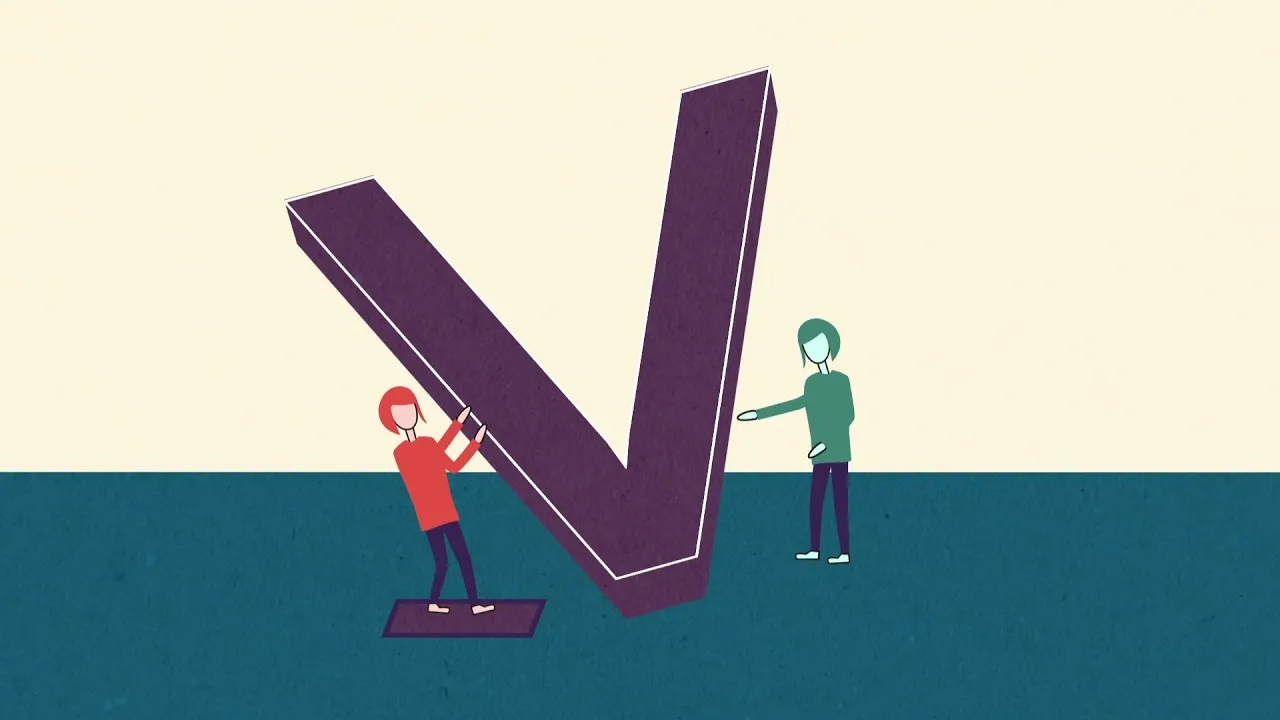
Sovereignty is the bedrock of international relations. The concept lays out basic rules for how countries are allowed to interact with one another. In principle, it means countries get to control what happens inside their borders and can’t interfere in what happens elsewhere. This protects countries from being invaded over internal matters.
But the concept of sovereignty doesn’t play out perfectly in reality. There are limits to the control a country can exercise over what happens inside its borders. In the case of grievous human rights abuses like genocide, many countries argue breaches of sovereignty should be allowed on humanitarian grounds. Meanwhile, dozens of countries around the globe choose to give up a degree of sovereignty to join organizations like the European Union and the World Trade Organization.
In today's interconnected world, what constitutes a violation of sovereignty is up for interpretation—and world leaders have to decide how to tackle problems like climate change and terrorism that know no borders.
Transcript: Sovereignty Explained
For centuries, the idea of sovereignty has shaped the world. It has important domestic and international implications. Within a country, sovereignty guarantees that governments have the ultimate authority over what's going on. This authority applies to everyone who lives within a country's borders and also whoever happens to be there. Internationally, sovereignty indicates a certain equality between countries.
No matter how big or rich a country might be, sovereignty requires it to respect other countries' borders and to avoid using military force to change them. It's also means that if a small impoverished country passes a law or elects a leader who is disliked by the government of a large wealthy country, the latter does not have the right to interfere.
Although it can react as it sees fit, for example with sanctions or criticism, there are limitations though to just how much a government can dictate what happens within its borders. For example, gross violations of human rights, genocide and ethnic cleansing have come to be recognized by the governments of the world as unacceptable. So when a country violates protections that guarantee the safety of its people, it risks forfeiting the rights that sovereignty grants like that promise of non-interference. This is the understanding between countries that has shaped and ordered the modern world.
Things weren't always organized this way. 400 years ago, wars raged between countries in Europe over religion, politics and power. The world was made up of a handful of empires and small kingdoms. Religious and political authorities regularly fought bloody conflicts over territory and authority. Orders were not respected and the world was often a free for all. The concept of sovereignty arose in the mid 17th century during a peace agreement after one particularly destructive European conflict, the Thirty Years' War.
It was called the Peace of Westphalia and it ushered in a world of countries that respected one another's independence. Today, there are almost 200 countries in the world but outside of those, there are a number of groups, territories and even governments that advocate or fight for becoming their own country. Not just anyone can claim sovereignty though and there can be disagreements as to what is considered a country and therefore eligible for this status. There are no clear rules or procedures for deciding who gets to form a sovereign country and these efforts are often violent and prolonged.
Violations of sovereignty and disputes over what constitutes a violation happens from time to time. Recent examples include Russia's annexation of Ukraine's Crimean Peninsula in 2014, Iraq's 1990 invasion of Kuwait. Countries can also decide to give up or delegate certain aspects of their sovereignty for example, many European countries choose to be a part of the European Union, a group with many political and economic advantages.
However, joining meant following European Union rules and allowing those rules to supersede national laws. Throughout centuries, sovereignty has provided a central organizing principle that is at the heart of modern international relations and it is a blueprint of many global institutions, laws and norms. Overall, the world has become more peaceful, more stable and less deadly in the centuries since the establishment of sovereignty. But while the concept of sovereignty can be clearly interpreted, its application in the real world is not always so straightforward. Especially in today's modern era, what goes on inside a country can affect us all and it's not as simple as letting a country go about minding its own business.
Refugees, cyberspace, diseases, cash, greenhouse gases. None adhere to lines on a map. Are carbon dioxide emissions a violation of sovereignty? Does an email cross borders? How does sovereignty respond to millions of refugees seeking safety? The governments, economies, militaries and people are far more interconnected now than they were in the 17th century. The challenge moving forward is how this 400 year old concepts can evolve and adapt to confront modern issues the world faces today.
Learn More


