Dispute in Kashmir
Overview
In 2019, India revoked Kashmir's autonomous status, stoking decades-old tensions surrounding the region. With Kashmiris calling for their right to self-determination and the looming threat of escalation between India and Pakistan, how should the UN Security Council step in and address the ongoing dispute in Kashmir?
Students will be able to summarize the core issues at stake regarding the dispute in Kashmir.
Students will be able to evaluate the abilities and limitations of the UN Security Council in addressing the issue.
Students will be able to debate the perspectives of different countries on Kashmir.
The Situation
When British colonial forces withdrew from the Indian subcontinent in 1947, the territory was divided into two newly independent countries: Hindu-majority India and Muslim-majority Pakistan. For the latter, two Muslim-majority provinces in India—Bengal and Punjab—were carved up to join Pakistan. However, the rulers of the subcontinent’s princely states—semiautonomous kingdoms governed indirectly by the British—were given the option to choose between the two countries. The decision was typically straightforward, falling along geographic lines.
Kashmir—the largest princely state—presented a unique case. Its majority population was Muslim, but its ruler, Maharaja Hari Singh, was Hindu. The Maharaja initially decided that Kashmir would remain independent. However, within months, Pashtun tribesmen from the northwest of Pakistan invaded Kashmir, allegedly with Pakistani support. To maintain control, the Maharaja exchanged independence for Indian military aid. Hari Singh signed a document known as the Instrument of Accession agreeing that Kashmir would join India but remain an autonomous region within the country.
India accepted those terms and intervened in Kashmir, sparking a war with Pakistan. Following a year of fighting, the two countries agreed to a UN-brokered cease-fire. India was left in control of roughly two-thirds of Kashmir, and Pakistan controlled the rest. China claimed an eastern portion of the region in the 1950s.
The original cease-fire called for a referendum in which Kashmiris could decide the region’s status. However, that referendum was never held, and the region’s division became permanent. Pakistan maintains that, in the absence of a referendum, India’s control in Kashmir is illegitimate. India holds that the maharaja legally signed the Instrument of Accession and that Kashmir’s regional government, and voters, have repeatedly affirmed the region’s status as a part of India. Therefore, India argues, no referendum is needed.
In the decades following the initial determination of Kashmir’s status, the region remained a source of tension. India and Pakistan have fought two full-scale wars over the territory and participated in numerous smaller skirmishes. Each of those conflicts, however, has ended more or less back where it began. The original cease-fire line (now called the Line of Control or LOC) continues to divide the region between Indian- and Pakistani-administered Kashmir to this day. Kashmiris, meanwhile, have experienced internal unrest due to the dispute. Decades of separatist militant violence—some of which has been supported by Pakistan—and fierce Indian military responses have claimed tens of thousands of lives and displaced hundreds of thousands more.
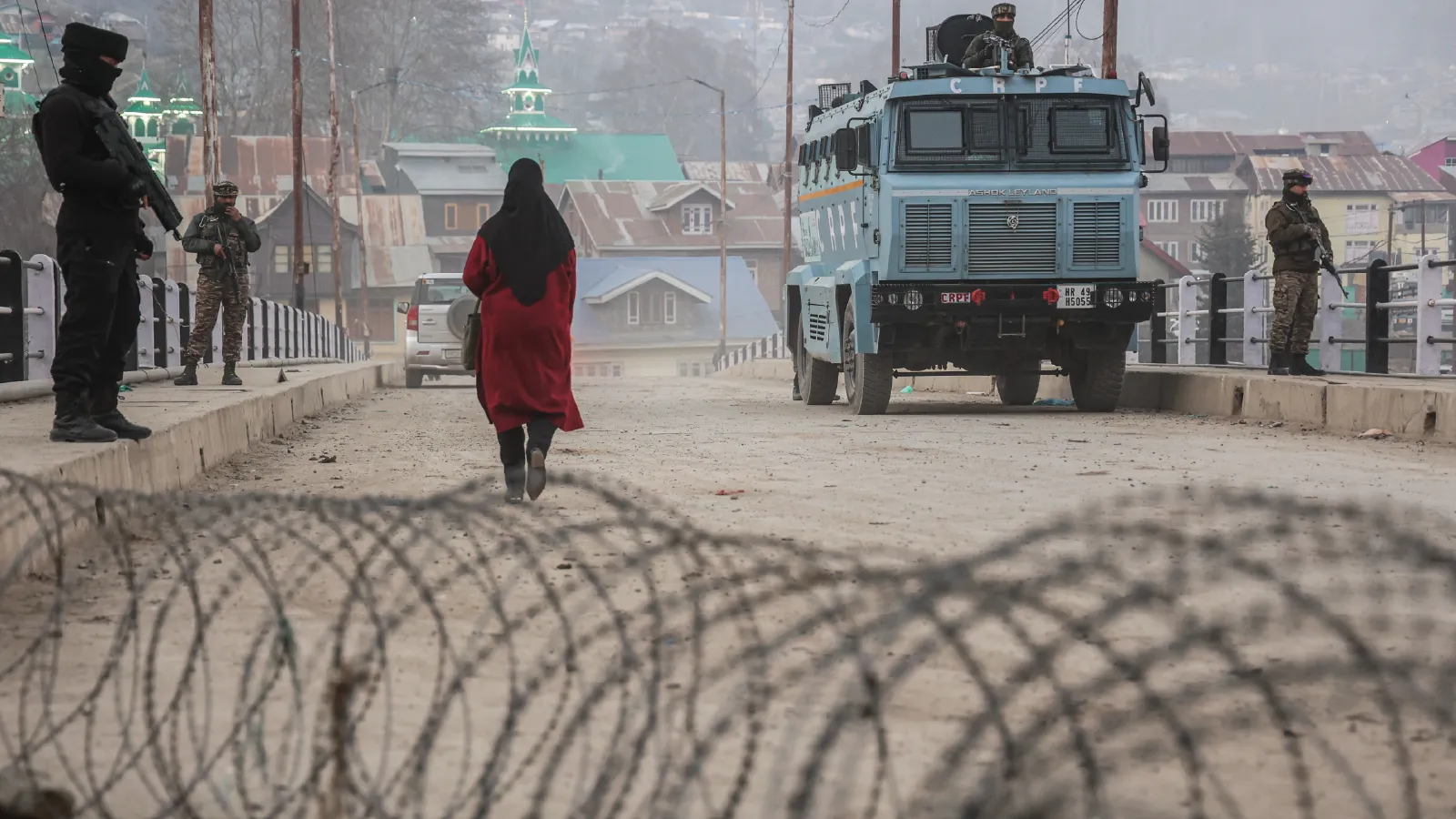
Throughout that period, Kashmir largely maintained its autonomous status. In recent decades, however, the region’s autonomy has become a focal point for a rising wave of Hindu nationalism—a political ideology advocating for India’s politics and culture to be tied to its majority Hindu faith. A key demand of the movement has been integrating Kashmir into India by revoking its autonomous status. The movement accelerated in 2014 with the rise of Prime Minister Narendra Modi and his Hindu nationalist Bharatiya Janata Party. Modi initially introduced a series of laws marginalizing India’s non-Hindu population and enabling the government to quash dissent. Under those laws, and amid allegations of increasing Pakistan-sponsored militant activity, Kashmir saw a severe crackdown on civil liberties. Constant surveillance, curfews, and internet blackouts became the norm. Then, in 2019, Modi fulfilled a core Hindu nationalist goal by revoking Kashmir’s special autonomy. Following the decision, Indian authorities increasingly asserted control in Kashmir. Any opposition was met with public beatings, tear gas, and forced disappearances. Hindu Indians, moreover, were enabled to purchase land in Kashmir, which Kashmiris saw as an attempt to manipulate the region’s demographic makeup.
In Kashmir, most remain opposed to India’s increased presence; one 2020 survey found that 91 percent of Kashmiri students wished for the complete withdrawal of Indian forces from the region, and a large majority also want a referendum to resolve Kashmir’s status. Human rights activists have labeled India’s activity as a form of occupation in the region. Pakistan, for its part, has condemned India’s decision and vowed to consider “all possible options” to oppose it. Meanwhile, as tensions rise, around 6.8 million people in Kashmir continue to grapple with political repression and sporadic militant violence. Since 2019, outbursts of violence have resulted in more than four hundred deaths in the region.
Decision Point
On 22nd April 2025, a group of gunmen attacked and killed twenty-six people in Pahalgam in Indian-administered Kashmir. India accused Pakistan of supporting the terrorists involved in the attack, whereas Pakistan strongly denied this claim. Tensions skyrocketed, bringing the two countries to the brink of war. India launched a series of aerial attacks on sites in Pakistan, and Pakistan responded with strikes of its own. After three days of fighting, India and Pakistan agreed to a U.S.-brokered cease-fire. But tensions remain high, especially in Kashmir. Reports of skirmishes along the Line of Control have continued to emerge. And Indian authorities intensified a clampdown in the region in response to the initial Pahalgam attack, arresting thousands of Kashmiris. In light of these events, the UN Security Council is convening to consider what steps can be taken to promote lasting peace in Kashmir. As Council members deliberate, they will need to consider the interests of those on the ground in Kashmir, as well as the risk of further escalation between India and Pakistan. Security Council members should also remember that any resolution needs to take into account China, which still controls a portion of Kashmir and, as a permanent member, holds veto power.
UN Security Council Members should consider the following options:
- Call for an independent referendum. The UN Security Council could adopt a resolution calling for a UN-administered referendum on Kashmir’s status. Conducting a plebiscite would enable the people of Kashmir to decide whether they want to join Pakistan, remain with India, or pursue independence. Although that approach honors the principle of self-determination, it would almost certainly draw strong opposition from India, even risking military escalation. Furthermore, if Kashmir chose independence, a lack of stable political leadership could result in governance, economic, and security crises, leaving Kashmir vulnerable to external and internal challenges. The United States, which today counts India as an important strategic partner, is unlikely to back the call for a referendum.
- Mediate diplomatic talks. The UN Security Council could adopt a resolution calling for further diplomatic talks facilitated by the United Nations or another third party, such as the United States. Those could serve as a constructive mechanism for addressing the situation in Kashmir by providing a neutral platform for dialogue between India and Pakistan while also ensuring representation of Kashmiris and various other interested groups in the region. That option would hold less risk of inflaming tensions than a call for a referendum. India has consistently rejected the notion of outside mediation in the past, but its recent acceptance of U.S. mediation could provide a precedent for future negotiations. Council members could not guarantee that all members would be willing to participate now.
- Do nothing. The UN Security Council could decide, as it has in the past, that Kashmir’s status should remain a question for India and Pakistan to negotiate bilaterally. It could adopt a statement calling for the two countries to take up the matter, and advocate for both parties to include Kashmiri representatives in their discussions. However, previous bilateral negotiations have failed to produce results. Such a statement would likely do little to alter the status quo. Should the situation escalate, doing nothing could also lead to criticism of the Security Council for failing to uphold peace and security.
Additional Resources
Need guidance for how to run your mini simulation?
More Mini Simulations


