What Is Terrorism?
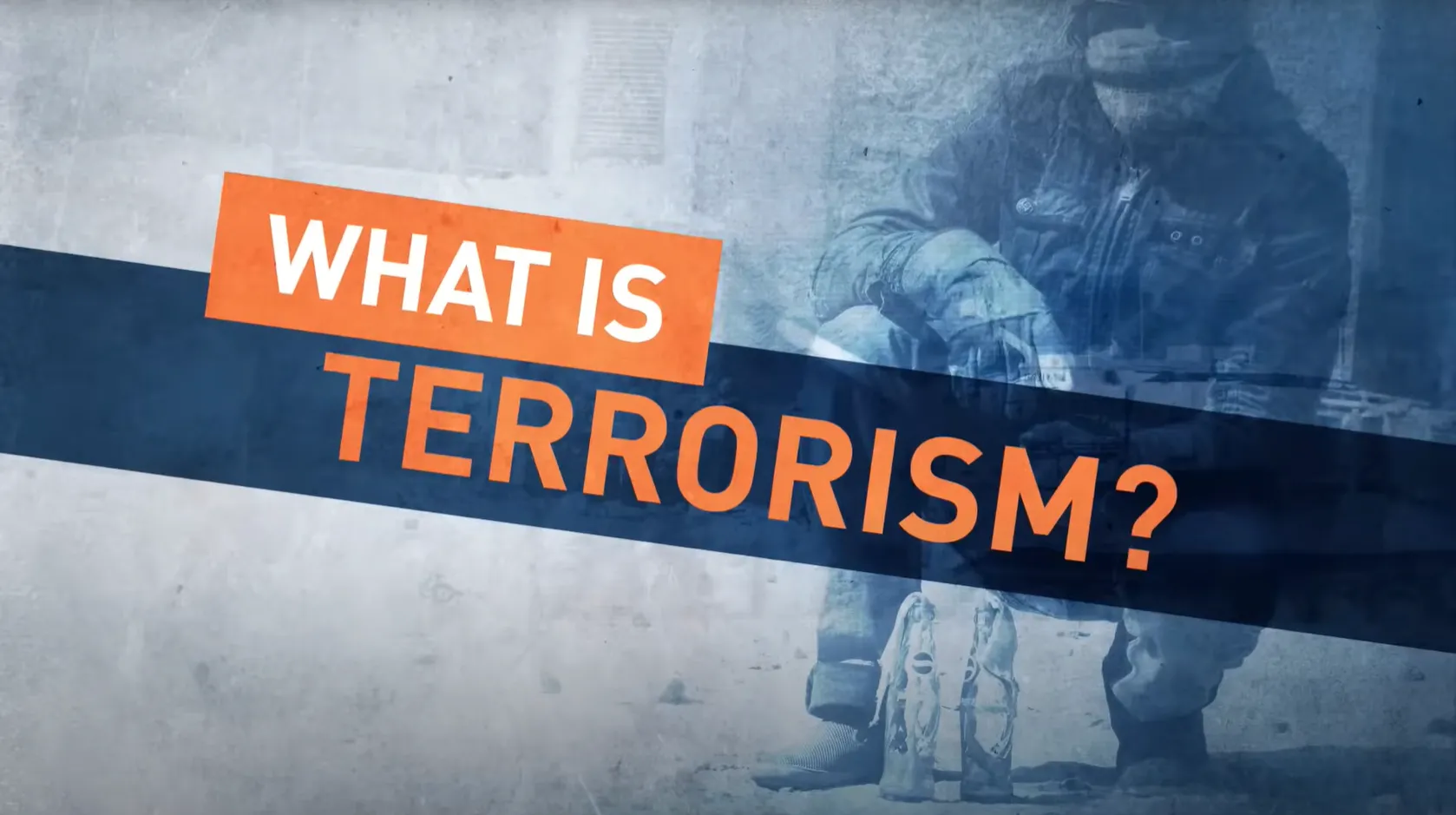
Learn how terrorists have sought to achieve their goals all over the world with this video on terrorism.
On September 11, 2001, nearly three thousand Americans died when terrorists in hijacked planes attacked major government and business sites in New York and Washington, D.C.—the deadliest terror attack in history. What drives such deadly violence around the world? And how are terrorism threats changing and evolving to shape the concerns most relevant to policymakers today?
Acts of terrorism are distinct from other classifications of violence such as murder and casualties from war. Terrorism is, unfortunately, a longstanding concern for governments all over the world. Although some terrorist threats have persisted for years or even decades, others have evolved more recently in relation to escalating political and economic challenges and new forms of technology.
Terrorism is a loaded term, one that stirs both fear and confusion. Public debate in the wake of attacks can make it difficult to grasp the nature of threats and to assess responses. But understanding terrorism is important, because policies enacted in the name of national security affect a wide range of issues, such as security and freedom on mobile phone apps, policies surrounding the admission of refugees, and distribution of foreign aid.
Defining Terrorism
Definitions of terrorism differ around the world. Policymakers consider differences depending on whether terrorist threats originate inside the country (domestic terrorism) or outside of the country (international terrorism). What most definitions of terrorism have in common is that they encompass acts of violence—usually against civilians—committed for political or ideological reasons.
Throughout history, terrorists all over the world have advanced diverse political agendas. Despite the prominence of terrorist threats in U.S. public debate, especially since the deadly 9/11 attacks in the United States, most terrorism threats aren’t actually aimed at the United States. 98 percent of terrorism deaths in 2024 took place in countries experiencing some level of conflict. And while international terror threats remain a critical concern for the United States, the threat of domestic terrorism has been a growing concern for U.S. national security experts.
Transcript: An Overview of Terrorism
Hijacked planes, car bombs and explosive belts, vehicles used as weapons, mass shootings.
It’s almost impossible to turn on the news without hearing about terrorism. Yet despite its prevalence, terrorism can be difficult to define.
Terrorist threats come from formal groups and from individuals. People can be directed by an authority to commit terrorism or simply inspired by a group’s rhetoric or a charismatic leader.
Governments can be involved in terrorism by actively providing sanctuary or resources to terrorist groups, or by an inability to prevent groups from using their territory or resources.
And while terrorism shares some characteristics of crime and traditional warfare, it does not fit squarely in either category. To further confuse things, people sometimes disagree on whether an act is in fact terrorism, based on whether they support or oppose the perpetrators' cause.
Regardless of its many interpretations, terrorism can be defined. It is the intentional use of violence by nonstate actors against civilians in pursuit of political or ideological objectives.
Many terrorists are motivated by the belief that their government fails to treat their ethnic or other group fairly. They may disagree strongly with a specific government policy, or they may follow political and religious teachings that view certain people or countries as enemies.
Throughout history, terrorist groups have committed violent acts to advance their agenda.
Examples stretch back centuries, though motives and methods have evolved through the ages, from the dagger-bearing Sicarii, who employed terrorism against ancient Roman rulers, to the terrorists who assassinated an Austrian archduke and lit the spark for World War I, and to the Irish Republican Army, which sought to remove Northern Ireland from the United Kingdom through armed force, and Hamas, which uses rocket attacks and other violence in its campaign against Israel.
The majority of recent terrorist attacks are attributed to individuals and groups acting in the name of their vision of Islam. These include al-Qaeda and its offshoots, as well as the self-proclaimed Islamic State, or ISIS. There is debate about whether religious, economic, political, and environmental conditions in many Muslim-majority countries have contributed to this wave.
Due to the conflict in Syria, the rise of ISIS, and the increased activity of Boko Haram in Nigeria, terrorism-related deaths skyrocketed starting in 2012 after decades of fluctuation.
In 2014, for example, tens of thousands of people around the world died in terrorist incidents, more than three quarters of them in just five countries. That year, almost ten thousand deaths occurred in Iraq compared to only twenty-six in the United States.
So what is being done to combat terrorism?
Terrorist operations require money. This can come from state sponsors, crime, private wealth, even the sale of oil and other business activities. Thus, one counterterrorism approach is to limit the funding of terrorist groups.
Discouraging the recruitment of new terrorists is another goal of counterterrorism efforts. In particular, attacks by lone actors, or individuals who are unaffiliated with an organized terrorist group but become radicalized online, are an area of growing concern, in part because they are so difficult to prevent.
Internet access and social media help terrorist groups organize, inspire, and recruit. But the sheer volume of information online makes it difficult for law enforcement officials to track and combat the narratives and activities of these groups.
Other counterterrorism tools include identifying and arresting those plotting attacks, and military and covert action against terrorists.
The ways in which the United States and other countries approach counterterrorism are sometimes controversial. Increased surveillance generates debate about the infringement of personal liberties. And drone strikes often generate criticism for killing or injuring people with no connection to terrorism.
Despite these extensive efforts, the truth is that it’s impossible to eliminate terrorism. There will always be individuals and groups ready to commit terrorist acts.
The challenge for governments is to reduce the threat posed by terrorism in ways that promote the safety and economic well-being of their citizens while minimizing any disruption to their lives.
Learn More


