What Is Nuclear Proliferation?
In this video on nuclear proliferation, learn why countries develop nuclear weapons—and what is being done to prevent the spread of these weapons and the possibility of nuclear war.
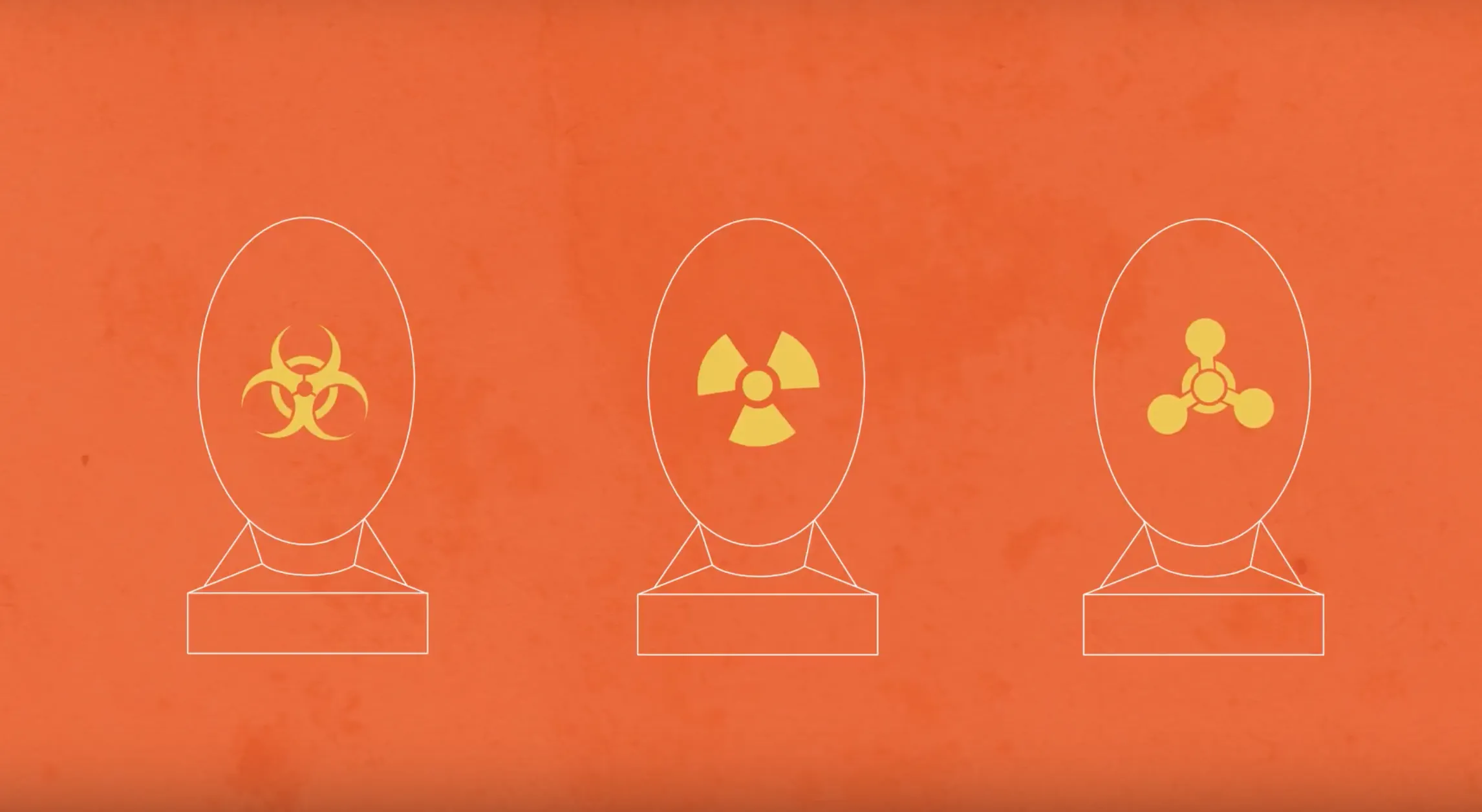
Simply put, a nuclear war could end most life on Earth. That’s why a top priority for the United States and other countries is nuclear nonproliferation, or preventing the production and spread of nuclear weapons. Nonproliferation is critical to safeguarding life as we know it.
What is nuclear proliferation? What is nonproliferation?
In foreign policy, proliferation most commonly refers to the spread or increase of nuclear weapons and, sometimes, other destructive military technologies and systems. Nonproliferation refers to the tools and policies used to mitigate that spread.
Discouraging countries from developing nuclear weapons while promoting nuclear technology use for peaceful purposes—such as energy generation and medical research—has been the main challenge of world leaders since the United States detonated the first nuclear weapons more than seventy years ago. Today, with growing security threats from nuclear-capable countries, nuclear nonproliferation remains a critical issue.
Transcript: An Overview of Proliferation
In 1939, Albert Einstein and other physicists sent a letter to President Franklin D. Roosevelt, warning him that Nazi Germany was developing a uranium-based bomb—a weapon vastly more destructive than any in existence. The physicists urged President Roosevelt to develop a research program aimed at producing an atomic weapon before Germany did.
In response, the United States commissioned the Manhattan Project. From 1942 to 1945, with the United States enmeshed in World War II, thousands of scientists and engineers worked in secret to build a new weapon based on nuclear fission—the process of splitting the nucleus of a uranium or plutonium atom to generate energy that can be used to produce a highly destructive nuclear weapon, otherwise known as an atomic bomb.
Desiring a quick and decisive end to the war in the Pacific, President Harry Truman and his allies warned Japanese leaders of prompt and utter destruction if they did not surrender. On August 6, 1945, the United States dropped an atomic bomb on Hiroshima. The blast and accompanying radiation destroyed five square miles of the city and resulted in over 100,000 deaths.
Three days later, the United States dropped an even more powerful bomb on Nagasaki, Japan, resulting in an estimated 70,000 deaths. Less than a week later, the Japanese surrendered.
The nuclear age had begun. It quickly became clear—with the development of atomic weapons first by the Soviet Union, and later by the United Kingdom, France, and China—that the American monopoly on nuclear weapons would not last, posing an enduring concern for American foreign policy and the entire world.
In foreign policy, proliferation refers to the spread or increase of military technologies and systems. Nonproliferation refers to the tools and policies used to prevent or stop this spread. Though these terms can refer to various capabilities, nuclear weapons have received the greatest focus because they are so destructive and dangerous. The goal is to limit those nuclear capabilities that exist and prevent their spread to additional countries or terrorist groups.
Since the advent of nuclear weapons, countries have sought them in the belief that they provide protection from attack, and for their prestige and destructive power. After World War II, many leaders and scholars grew concerned that nuclear proliferation would become widespread, raising the danger these weapons would be used again.
This was the context of John F. Kennedy’s commencement address at American University in 1963, in which he called for steps to reduce the dangers of nuclear development:
“Today the expenditure of billions of dollars every year on weapons acquired for the purpose of making sure we never need them is essential to keeping a peace. But surely the acquisition of such idle stockpiles, which can only destroy and never create, is not the only—much less the most efficient—means of assuring peace.”
Negotiations to stem proliferation culminated in 1968 with the Treaty on the Nonproliferation of Nuclear Weapons, also known as the NPT.
The treaty’s three main objectives, known as the “three pillars,” are:
- nonproliferation, which again is preventing states and non-state actors that do not have nuclear weapons from acquiring or building them;
- the peaceful use of nuclear energy, or promoting access for all countries to nuclear technology for nonmilitary use, such as for generating power; and
- disarmament, or the idea that the United States and other countries with nuclear weapons would eventually relinquish them.
One hundred and ninety countries are parties to the NPT. However, four countries that possess nuclear weapons—India, Israel, Pakistan and North Korea—are not. The NPT also allows withdrawal, so it does not prevent other countries from renouncing the treaty and developing or acquiring nuclear weapons.
Today nonproliferation efforts center on two main concerns. The first, preventing new countries from getting nuclear weapons, was the aim of the United States and other powers in their 2015 agreement with Iran, which limited the activities and capabilities of Iran’s nuclear program and imposed monitoring to verify Iran’s compliance. The deal, however, is not a conclusive resolution, as its terms begin to expire in 2025.
The second main concern revolves around existing nuclear weapons states that are judged to pose a threat. Most notably, North Korea’s nuclear arsenal and its increasingly capable missiles pose a threat to its neighbors and potentially to the United States. Another threat is the prospect that a country with nuclear weapons could lose control of nuclear material—or purposely transfer it to a terrorist group.
The United States and other countries use a range of policies and tools to advance nonproliferation goals. Arms control agreements are one example. Another is guaranteeing the security of allies so they see no need for their own nuclear weapons. International institutions and inspectors also monitor many nuclear facilities and discourage the trade of relevant items. Imposing sanctions to dissuade countries from nuclear development is another strategy, as is covert or military action to stop shipments of critical technologies and materials or to destroy weapons or facilities.
Nonproliferation efforts have, in part, succeeded: only nine countries have developed nuclear weapons in the last eighty years, and many countries with the capability to do so have chosen not to. Nuclear proliferation, however, remains a real threat, one with the potential to have enormous consequences.
Learn More


