Reimagining Sovereignty in a Global Era
When fires in the Amazon affect countries around the world, is there a need to rethink a centuries-old understanding of sovereignty?
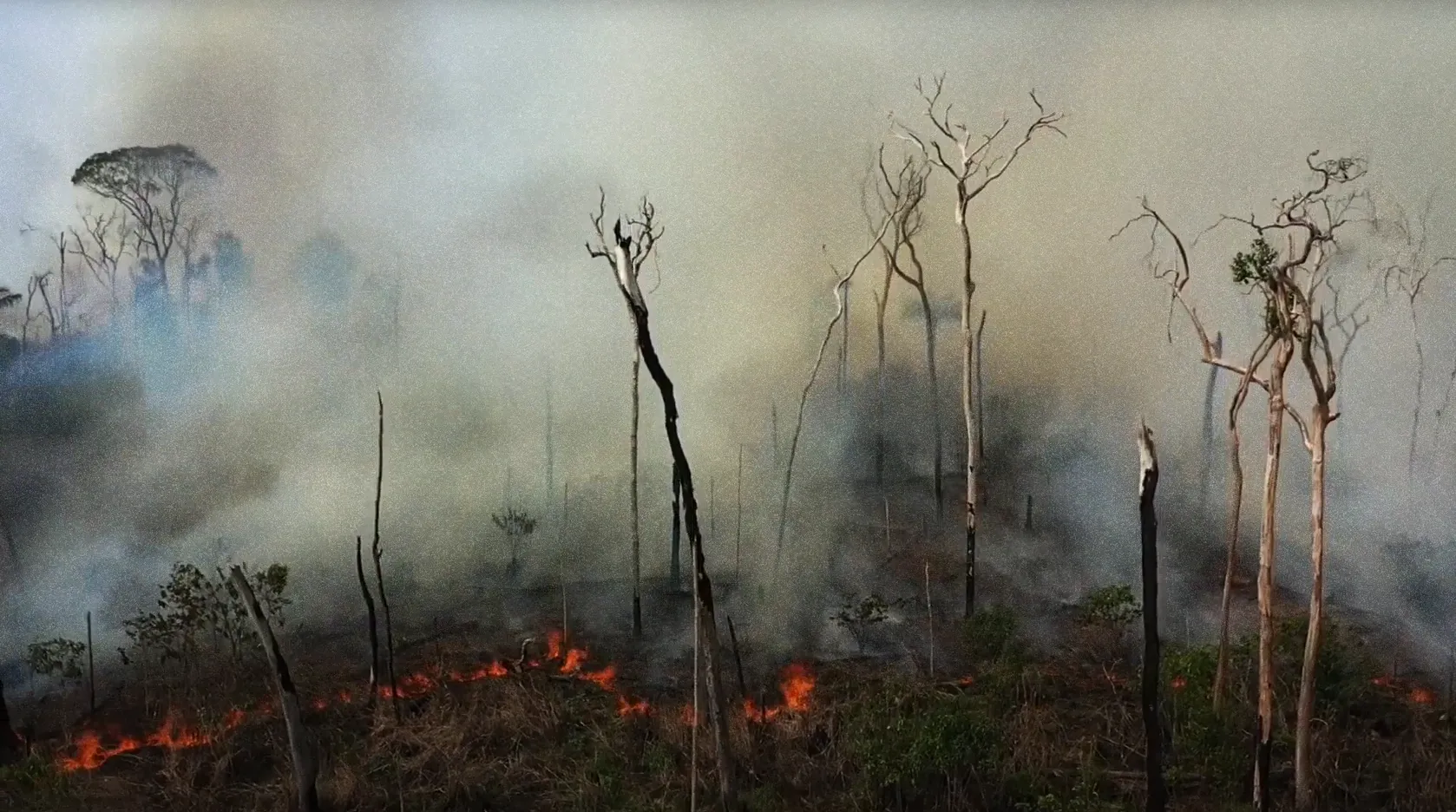
Sovereignty is the principle that guarantees countries get to control what happens within their borders and prohibits them from meddling in another country’s domestic affairs. But does this traditional understanding of sovereignty need to be reevaluated in a world where challenges within one country can ripple across borders and affect the entire planet?
The world is more interconnected than ever before, with trillions of dollars, tons of goods, and millions of people crossing borders every year. What was local has gone global, as is the case with climate change, in which one country’s greenhouse gas emissions can threaten the entire world.
In this new era, experts are wondering whether a centuries-old view of sovereignty still holds or whether global challenges require a new understanding of the principle—one in which governments have an obligation not only to their own citizens but also to other countries’ citizens for the consequences of their domestic actions.
Transcript: Sovereignty in the Global Era
This is the Amazon rainforest. Draped across northwestern Brazil, it's 1.4 billion acres of forest generates more than $8 billion of economic value for Brazil each year. But the Amazon isn't just valuable for Brazil, it's valuable for the entire world in the fight against climate change. As humans produce more greenhouse gases, like the 33 billion tons of carbon dioxide we emitted in 2019, average temperatures for the planet increase. That process is slowed though, by growing trees and other plants, which suck up gases like carbon dioxide and store them in their leaves, stems, trunks, and roots. The Amazon is so densely filled with vegetation, that it is estimated to have once been able to absorb up to two billion tons of carbon dioxide from the air each year.
But in 2019, the Amazon looked like this. While there are normally some fires in the Amazon, natural fires are rare. And 2019 saw the number of fires spike by 84% in the first eight months compared to the same period the previous year. By that point, over four million acres of rainforest had been scorched mainly by loggers, farmers, and ranchers so they could clear and use the land. Burning those trees and plants releases tons of carbon dioxide back into the atmosphere and with chunks of the forest cleared, the Amazon can't absorb as much carbon dioxide as it had before, which in turn speeds up climate change.
Fires in Brazil can heat up countries across the planet. So shouldn't those countries have a say in whether the fires are put out? Our modern world is built on the concept of sovereignty, that a country gets to decide what happens within its borders without foreign interference. But the world is changing. Computer viruses from one country can bring down critical infrastructure in another, and people migrating from one country can cause political crises in an entire region. Nowadays, lighting a match in one country can set the whole world on fire. While a country still decides how to govern itself, its decisions are more likely to affect other countries. And when one country's decisions cause harm to another country, that second country may try to protect its own.
This type of interaction occurred in 2019 when there was international outrage over the fires in the Amazon. The Brazilian government denied responsibility and pointed to loggers who illegally strip the forest, and ranchers and farmers who set fires to illegally clear the land. However, many environmentalists and international groups blamed the new president, Jair Bolsonaro, saying his pro-business rhetoric and weakening of environmental protection rules encouraged the fire starters. While the Amazon burned, a group of rich countries, referred to as the G7, held their annual meeting in France. Concerned about climate change, the G7 members tried to convince Brazil to put out the fires. They demanded more action from Bolsonaro and offered an incentive. They would give Brazil $22 million to help fight the fires. But Bolsonaro initially refused, with a government spokesman saying, "Our sovereignty is non-negotiable."
Meanwhile, some countries threatened to punish Brazil instead by opposing a major trade deal between the EU and a group of South American countries. Ireland and France publicly threatened to block the agreement unless Brazil worked harder to put out the fires. Eventually, Bolsonaro accepted some foreign aid money and sent the Brazilian army in to control the fires. And in the following months, there were far fewer fires. But climate change remains a global challenge and Brazil isn't the only country with important rainforests or harmful domestic policies. In the future, other countries may be targeted with incentives or with threats from economic sanctions to possibly more direct interventions. While these actions may violate the traditional concept of sovereignty, some modern problems ignore borders and their solutions might have to do the same.
Learn More


