What Are Human Rights?
Learn about the history of international human rights law and how countries and courts protect the rights of all people.

Anna gets up early for work, sometimes before sunrise. She packs light: water, a phone and charger, a first aid kit, and a recording device. Anna dresses practically, never anything that resembles a military uniform. Sometimes she crosses military checkpoints to go to work, so the less she stands out the better.
Anna is a real person. She works as a researcher for a prominent human rights organization. Her office is a war zone—Ukraine—where she sometimes works for twelve hours a day. Each day begins with a gas station stop for coffee. Then Anna drives for hours, going from town to town to conduct interviews.
The job is often dangerous. At times, Anna has to pause her interviews because of an air raid siren. Frequently, she meets with people in bomb shelters.
What kind of information is Anna looking for? And what will she do after she finds it?
What is a human right?
Human rights are moral principles that define and protect human dignity. They are universal and apply to everyone everywhere. Human rights are also inalienable, meaning they apply to people automatically and cannot be taken away. Finally, human rights are indivisible; each right is equally important, and many are interconnected.
Human rights are often grouped into three categories:
- civil and political rights, which protect people from government persecution and include the right to life and legal equality, as well as the right to vote and organize;
- economic, social, and cultural rights, which protect people’s basic needs and cultural expression and include the right to food, housing, health care, and education; and
- solidarity rights, which protect whole groups and societies and are newer and not as widely agreed upon as the first two categories; they include the right to sustainable development and a healthy environment.
Anna—like other human rights investigators and researchers—searches for evidence of rights violations. Her work helps ensure people keep those rights. It also alerts other countries to violations, motivating them to intervene.
In Ukraine, Anna is researching the rights of children and other people caught in the Russia-Ukraine war. Frequent bombings are traumatizing Ukrainian children. The war is also preventing them from accessing their human right to a safe learning environment.
Where do human rights come from?
Principles of human dignity and equality can be found as far back as ancient Mesopotamia (1760 BCE). But the modern idea of universal and inalienable individual rights mostly comes from the Enlightenment (1600s–1800s CE).
During the Enlightenment, political philosophers argued that humans are born free and equal—each with a right to life, liberty, and property. They also argued that power is given to rulers by the people to protect those natural rights and freedoms. Such ideas inspired several foundational political documents, including the English Bill of Rights (1689), France’s Declaration of the Rights of Man and of the Citizen (1789), and the U.S. Bill of Rights (1791).
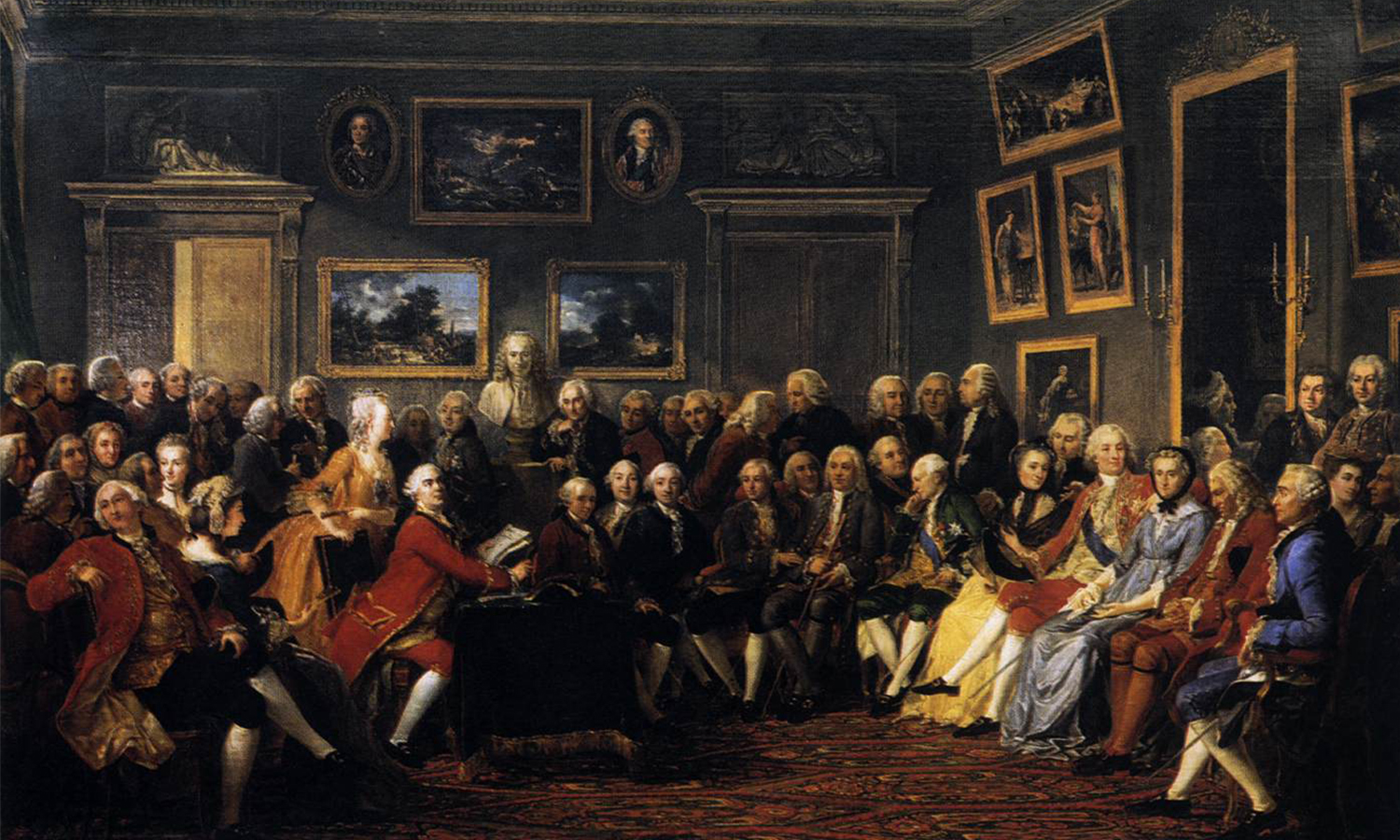
But in practice, the rights those documents described were far from universal. France, England, and the United States, for instance, did not grant women, ethnic and religious minorities, and members of other groups (including children and the poor) the same rights nor give them the same protections. Those rights and protections were also domestic, meaning they were defined within national borders.
It wasn’t until the twentieth century that countries attempted to define global rights. Early international institutions like the International Labour Organization (1919) sought to protect worker rights around the world. And international agreements like the Slavery Convention (1926) sought to end the global slave trade both in practice and in law.
How did human rights become international law?
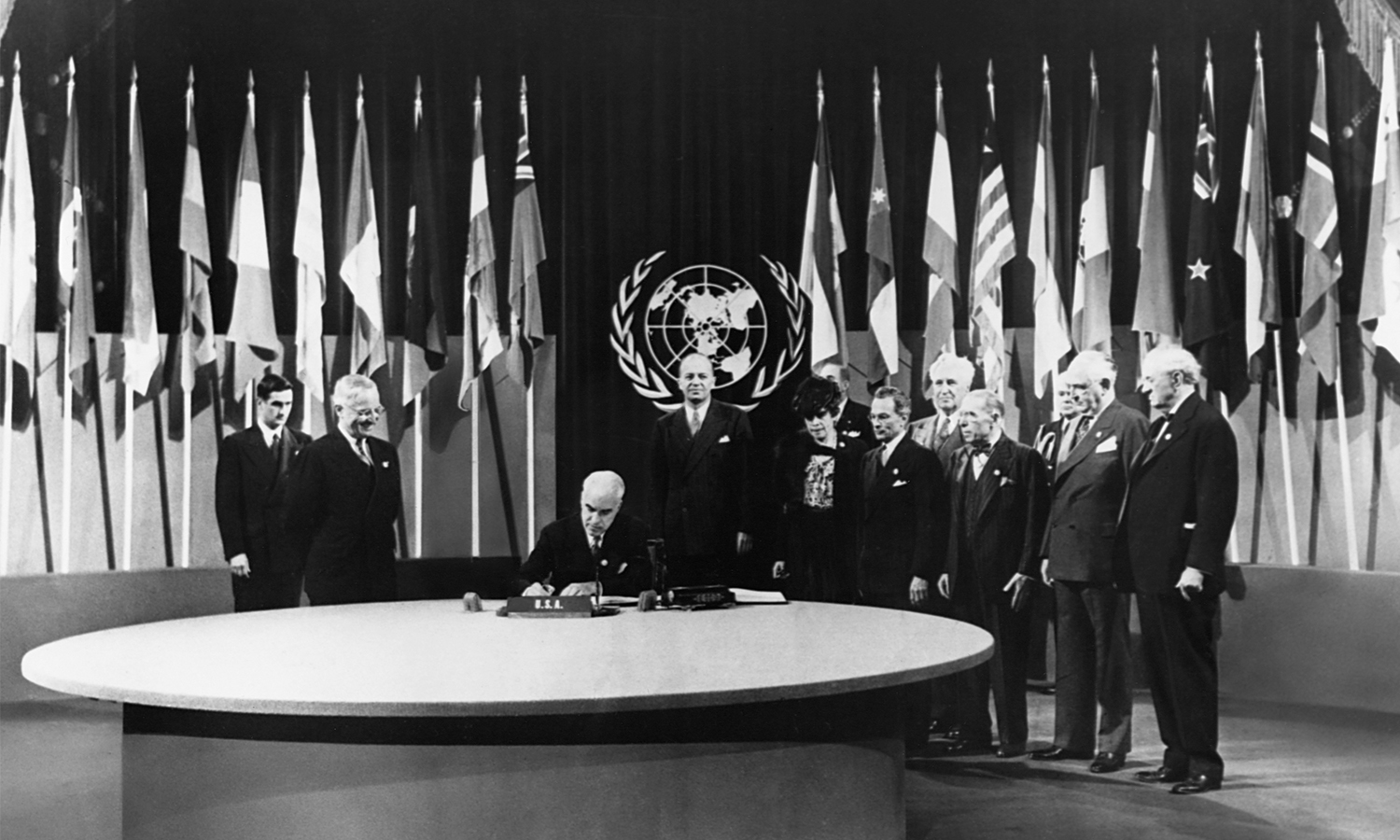
Despite those attempts to establish global principles, ideas about human rights remained primarily a matter of domestic law. But after witnessing the horrors of World War II and the Holocaust, many countries wanted to create a system of truly universal human rights, enshrined in international law.
The creation of the United Nations in 1945 marked a new chapter in international human rights. The UN Charter made promoting human rights a central mission. And in 1948, the United Nations adopted the Universal Declaration of Human Rights (UDHR).
The UDHR doesn’t just articulate protections against harm—like cruel punishment, slavery, and arbitrary arrest. It also says that those and many other protections are universal, regardless of sex, race, religion, or other features of identity. Finally, the UDHR holds everyone responsible for protecting and upholding those rights. By doing so, the UDHR asserted a new concept—the treatment of people inside each country is a concern for all countries.
The UDHR wasn’t legally binding. But it established a common standard for countries to incorporate into their domestic laws. It also set the stage for future treaties that would turn those ideas into international laws. The International Covenant on Civil and Political Rights (1966) and the International Covenant on Economic, Social and Cultural Rights (1966) made protections under the UDHR legally binding for many countries. Since then, dozens of international treaties have been ratified by hundreds of countries. They further outline rights for many groups, including women, children, indigenous peoples, migrant workers, and people with disabilities.
Treaties form the legal basis for all international human rights today. They protect the rights that Anna investigates. A child’s right to an education is protected under the International Covenant on Economic, Social and Cultural Rights. Over 150 countries have ratified that treaty, including Ukraine and Russia.
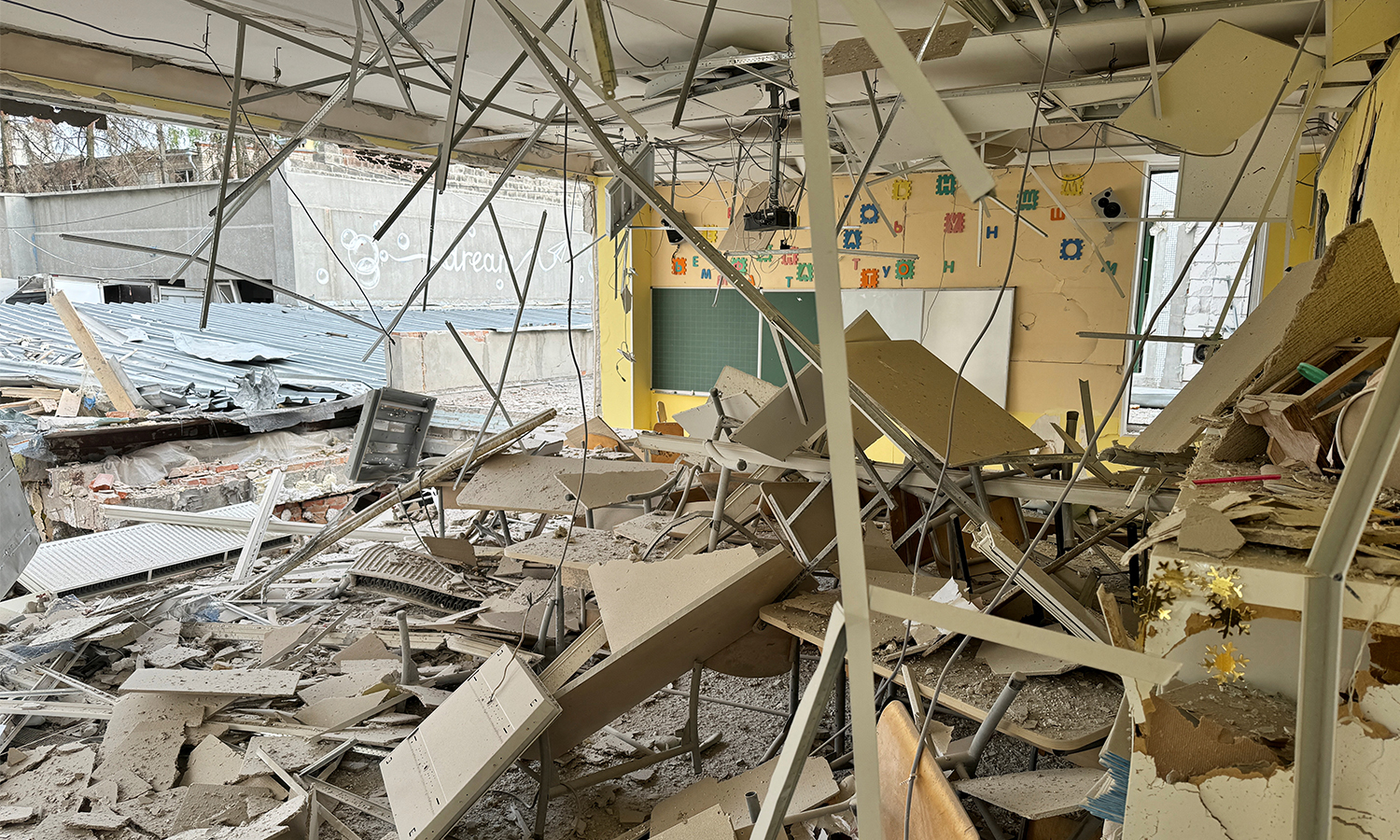
Since the start of the war in 2022, over 1,600 attacks have destroyed or damaged schools in Ukraine. In addition, Russia has also forcibly moved over nineteen thousand Ukrainian children into Russia, another human rights violation. So, what happens next?
How are human rights protected?
There are many levels to human rights protection.
At the highest level is the UN Office of the High Commissioner for Human Rights (OHCHR). The OHCHR helps to research, monitor, and assist governments in protecting human rights. Beneath the OHCHR, the United Nations’ Human Rights Council (HRC) reviews the rights records of every UN country, initiates investigations, and adopts resolutions regarding human rights issues.
But those organizations don’t directly enforce laws. Nor do they prosecute offenders. In general, international law puts the primary duty of protecting human rights on individual countries. Many countries have constitutions or laws that protect human rights, and legal systems that can punish violations when they occur.
Below the level of governments are individuals and nongovernmental organizations like Anna’s organization. They play an important role in monitoring and reporting on abuses and pressuring governments to act. Anyone can submit a complaint about a human rights violation to the HRC, which will then investigate.
If abuses go unaddressed, governments, human rights organizations, and individuals can also submit complaints to several international courts:
- The International Court of Justice (ICJ): The ICJ handles legal disputes between countries. In some cases, those disputes can include human rights issues, where one country accuses another of failing to uphold its obligations under certain human rights laws.
- The International Criminal Court (ICC): The ICC handles legal cases against individuals. It prosecutes the most serious crimes, like genocide.
- Regional courts: These include more regionally specific organizations like the European Court of Human Rights, the African Court on Human and Peoples’ Rights, and the Inter-American Court of Human Rights. They deal with human rights violations defined by regional conventions.

Those courts can issue decisions about whether a case constitutes a violation of human rights, and they can put public pressure on governments to address those violations. But they generally cannot take action to punish violators. The ICC is one exception. It has the authority to impose financial penalties or prison sentences on individuals convicted of genocide, crimes against humanity, war crimes, or aggression. However, convictions are rare; since its creation in 2002, the ICC has issued just eleven of them.
Individual governments can respond to human rights violations with diplomatic pressure, economic sanctions, or even military force. In some cases, they coordinate their responses with other countries or through international bodies like the UN Security Council, which can implement international sanctions or authorize military intervention to stop abuses.
Do human rights work?
During their time in Ukraine, Anna and other investigators uncovered evidence of human rights violations. They reported it to national governments and international bodies. But will that evidence matter?
By far the largest criticism of international human rights laws is practical: enforcement, some say, hasn’t been effective. Despite all the laws and treaties, many countries simply ignore their obligation to protect human rights. Instead, they continue to oppress women, force children into labor, persecute LGBTQ+ communities, and violate countless other human rights laws.
But some scholars have argued that although human rights treaties are difficult to enforce, they still reduce the number of violations. Treaties empower citizens to demand more from their governments. Governments are then better incentivized to change their policies. Treaties also help countries pressure violators, especially when violators have ratified those treaties.

Even without treaties, the idea of universal human rights is important because it allows people to put a label on bad behavior—and then use that label as an argument for action. As a result, human rights ideas and laws motivate activists and bring attention to existing problems.
Human rights can also expand in response to global changes. For example, some advocates are pushing for broader approaches to human rights that address emerging issues like climate change and digital privacy.
The frontline today
Researchers like Anna who investigate and record abuses represent the front line in the fight against human rights violations. Thanks to the work of Anna and many others, violations are documented every day.
Recently, some of those violations have been reported to the world’s highest courts.
In July 2025, the European Court of Human Rights ruled that Russia is responsible for, among other crimes, infringing upon Ukrainian children’s human rights.
Although the ruling is largely symbolic, cases like those encourage countries to guard against human rights violations, supporting victims and holding wrongdoers accountable.
Learn More


