China Under Xi Jinping
Xi Jinping has tightened the Chinese Communist Party’s grip at home and expanded China’s influence abroad. Explore how Xi’s policies have reshaped China and the world.
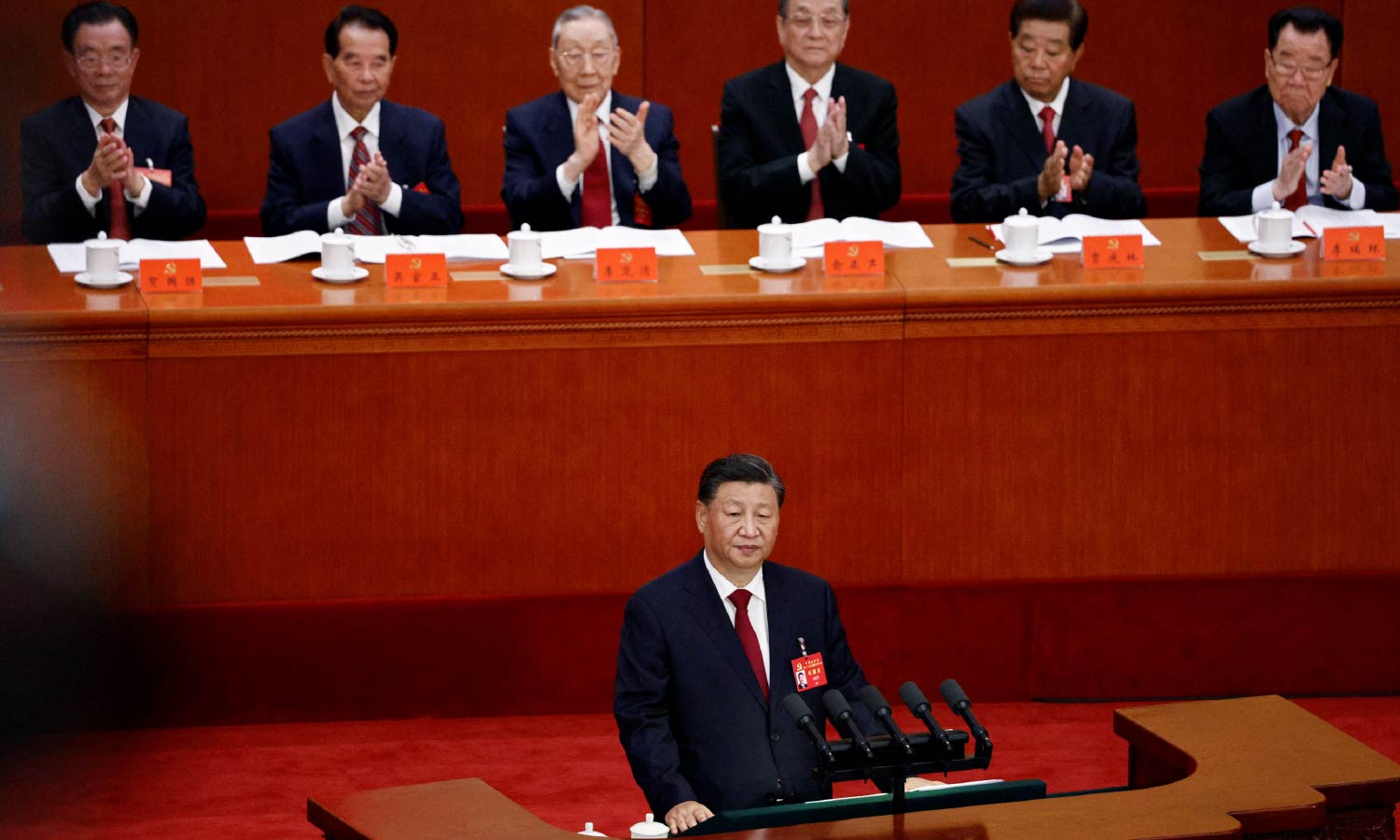
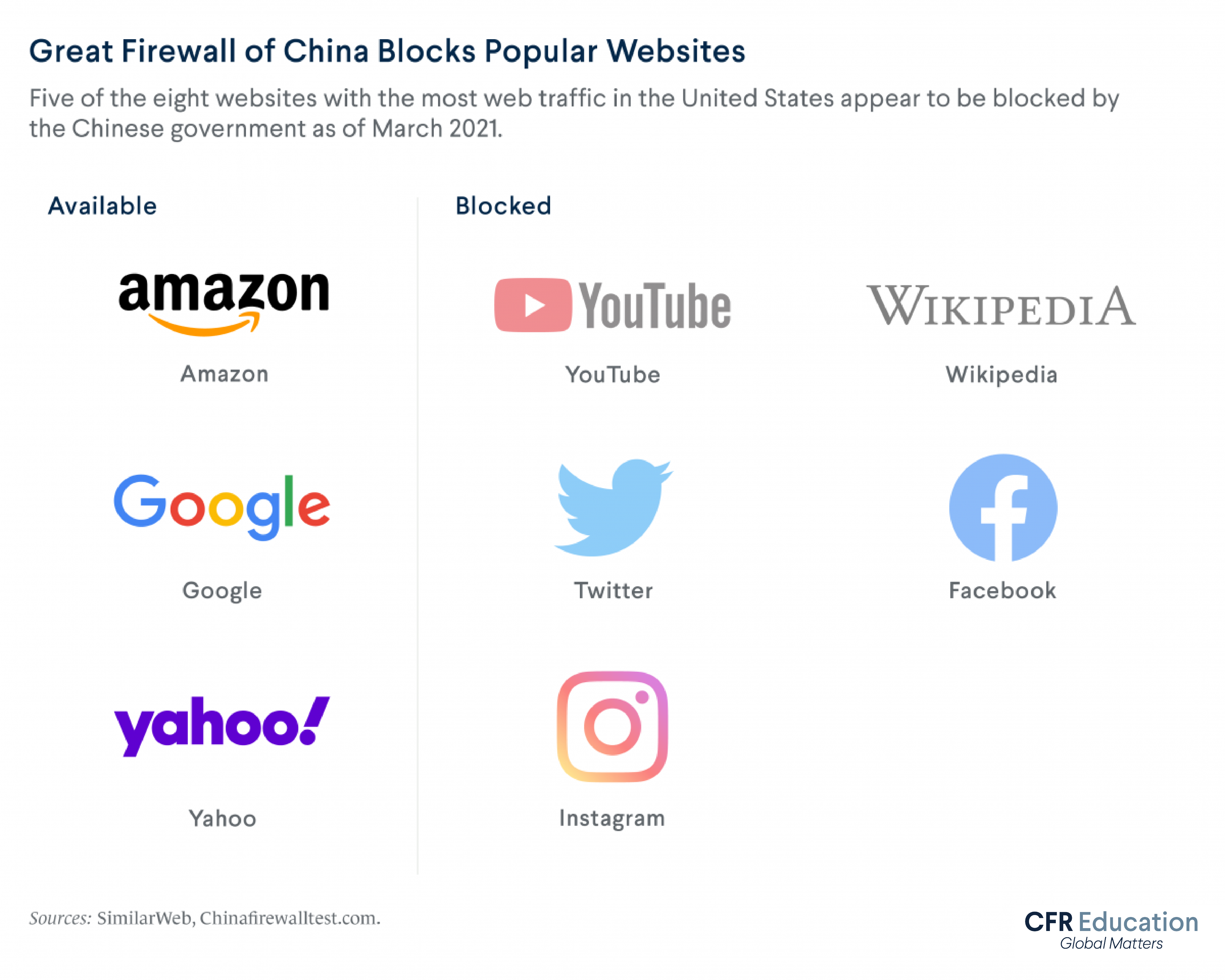
Since coming to power in 2012, Xi Jinping has become arguably China’s most influential leader since Mao. Under Xi, China has entered an era of “reform without opening up,” with the CCP backtracking on decades of liberalizing changes. In recent years, the party has cracked down on civil society and ramped up its system of highly effective internet censorship that some have dubbed the Great Firewall. The CCP has also eliminated presidential term limits—paving the way for Xi to preside in perpetuity. Meanwhile, Xi has departed from his predecessor Deng Xiaoping’s strategy of keeping a low profile on the global stage and instead initiated a more aggressive foreign policy.
Although Xi has broken with tradition in many ways, he follows in the footsteps of previous CCP leaders. Specifically, he uses China’s past—especially its century of humiliation— to remind the public of what can happen without strong CCP leadership. This tactic was on clear display when Xi gave a speech outlining his vision for the future of China on November 29, 2012. After touring a museum exhibit on Chinese history starting with the First Opium War, Xi announced his plans for the revival, or national rejuvenation, of China.
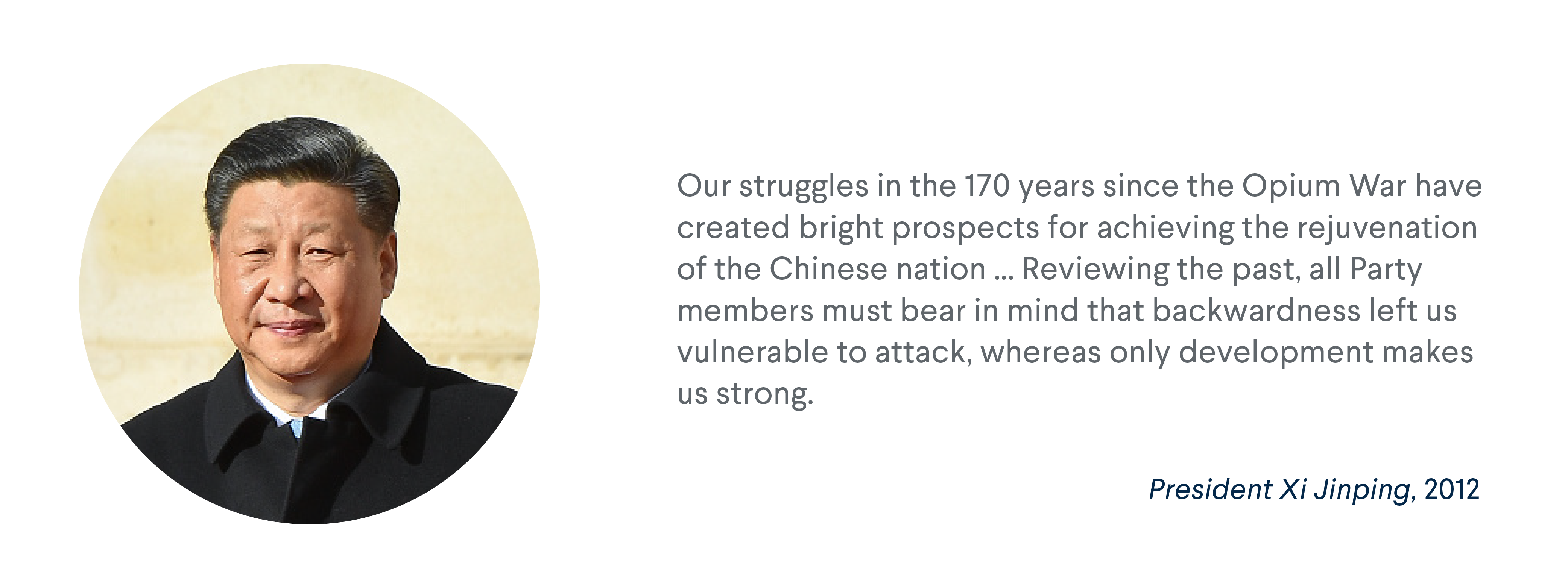
Xi has pursued the “Chinese dream” of national rejuvenation at home and abroad through policies seeking to restore what was lost during the century of humiliation. These areas of focus include international standing, territory, and domestic control. Here are just a few outcomes of those policies:
International Standing: China has become the world’s second-largest economy. The nation’s GDP per capita has surged more than one hundredfold since 1960. But in recent years, this breakneck economic growth has slowed, leading the CCP to seek new markets abroad to sell its goods and services. China’s Belt and Road Initiative (BRI) is President Xi’s signature foreign policy undertaking. Under BRI, Chinese institutions have loaned hundreds of billions of dollars to dozens of countries for infrastructure improvements. Investment in projects such as new railways, roads, and bridges have helped make China the world’s largest creditor over the United States and organizations like the International Monetary Fund and the World Bank. Although BRI projects have the potential to raise global income by 3 percent, they have increased indebtedness in host countries to a worrying level. Some countries have begun to question the economic feasibility of projects. Meanwhile, others criticize BRI projects’ disregard for human rights and their funding of nonrenewable energy sources like coal-fired power plants. Despite these issues, the massive scale of China’s economic policies reveals how far China has come in just decades. The country could even have the world’s largest economy by 2028. However, China’s GDP per capita would remain far lower than the United States’.
Shanghai Then and Now
Use the slider to see the changes.
This rapid growth has also increased both the interdependence and rivalry between the world’s two largest economies: the United States and China. Responding to what it viewed as unfair Chinese trade practices that were inconsistent with its World Trade Organization commitments and cost American jobs, the administration of former U.S. President Donald Trump imposed heavy tariffs on Chinese goods. These free trade restrictions pressed China to implement reforms and close the growing bilateral trade deficit. The move resulted in increased trade friction that saw multiple rounds of retaliatory tariffs imposed by both sides. In addition, the United States and China are battling over the technologies of the future. For example, the United States ordered a halt of exports to China’s Huawei telecommunications firm. Conversely, the CCP has pushed to develop artificial intelligence technology to help the Party control China’s vast population.
Territory: Throughout Chinese history, various dynasties ruled over different spans of territory. Today, the CCP uses select moments from that history to justify its territorial claims over disputed areas. Take Taiwan, for example. The Dutch colonized Taiwan’s indigenous population in the seventeenth century. After the Qing dynasty took control of China, it loosely governed the island until Japan wrested it away in 1895. After losing the civil war to the Communists, the Nationalists fled to Taiwan and relocated their government there in 1949. The Nationalists imposed martial law on the island’s residents until it began the process of democratization in the 1980s.
The CCP, meanwhile, claims Taiwan as an inalienable part of China and views it as a renegade province. However, the CCP makes this claim without actually having ever ruled over the island. The CCP has stated it is willing to use force, if necessary, to prevent Taiwan’s emergence as an independent country. Xi Jinping has made “unification” with Taiwan a central precondition to achieving the “Chinese Dream.”
In response, Taiwan has sought strong ties with the United States to ensure its security. However, the United States has walked a diplomatic tightrope in its policies toward the island. Three U.S. communiques (1972–1982) recognized the CCP’s stance “that there is but one China and Taiwan is part of China” and also downgraded U.S.-Taiwanese relations to become unofficial. Meanwhile, the 1979 Taiwan Relations Act promised the U.S. government would “consider any effort to determine the future of Taiwan by other than peaceful means of grave concern to the United States.” Today, the United States sells advanced weapons to the island. But it also maintains a policy of ambiguity on whether it would defend Taiwan with force should China attack it.
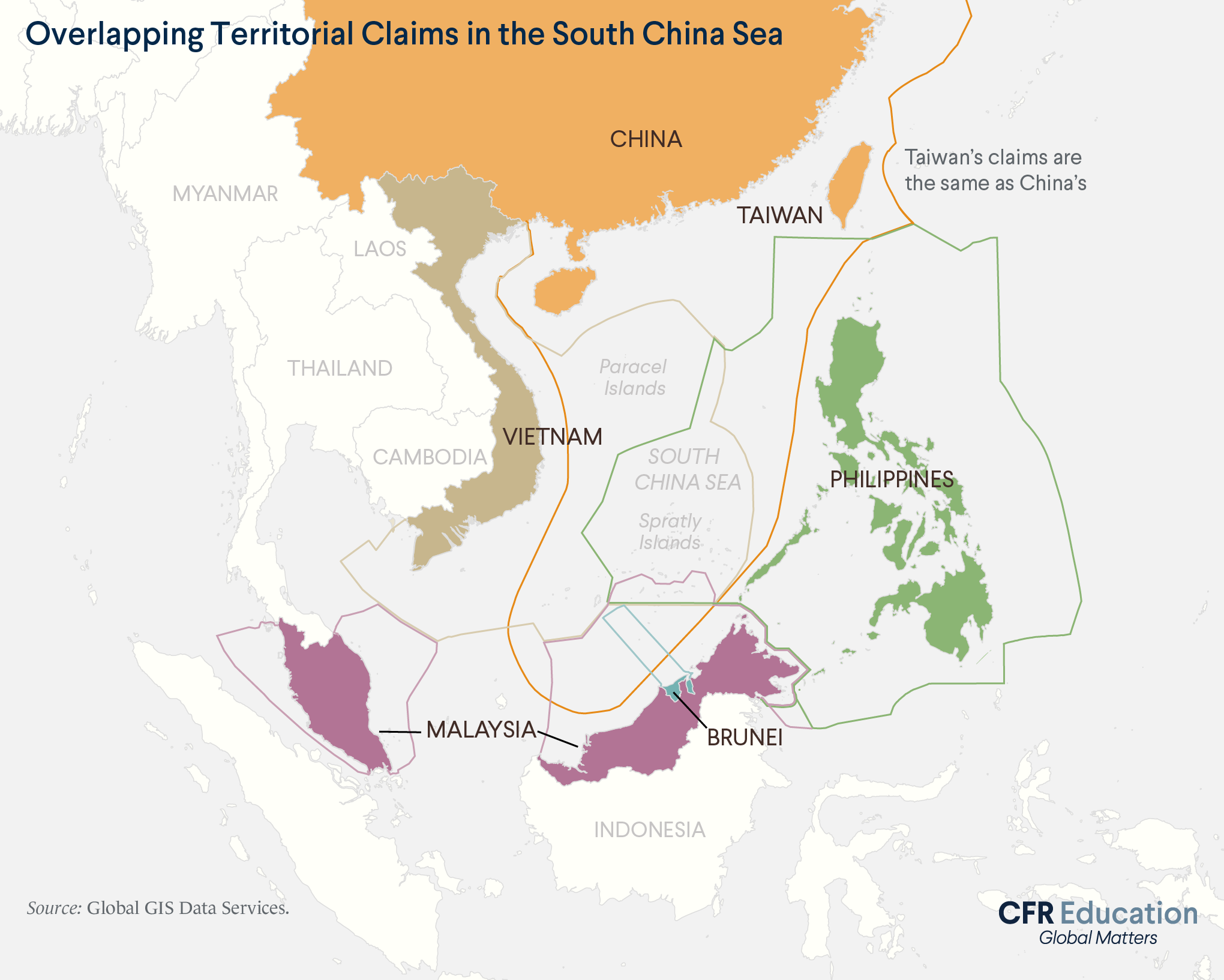
The CCP has also used history to support its claims to territory in the South China Sea—specifically, a mid-twentieth-century map that it inherited from the Republic of China showcasing a dashed line that the government argues demarcates its sovereign maritime territory. An international court ruled that these claims had no basis in international law. However, that decision has not stopped the CCP from building man-made islands and military installations in the disputed waters. In 2018, President Xi declared that China would not cede “even one inch of the territory left behind by our ancestors.” Meanwhile, the United States, Brunei, Malaysia, the Philippines, Taiwan, and Vietnam continue to contest China’s claims.
For more on China's territorial claims and border disputes, check out The China-India Border Dispute: What to Know and Tensions in the East China Sea.
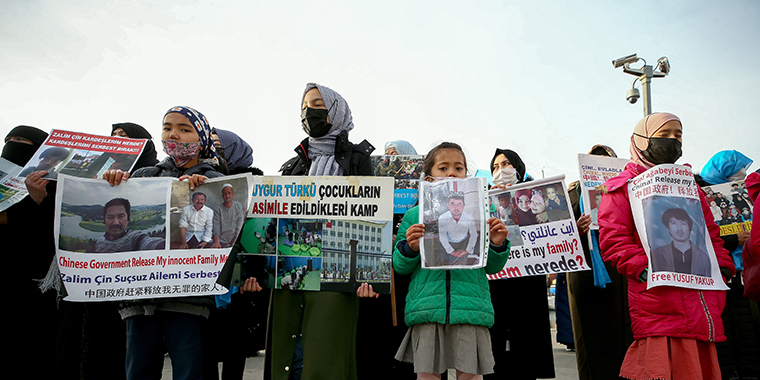
Domestic Control: Xi’s “Chinese dream” seeks to establish a “harmonious” society. The CCP has used this vision to justify the brutal repression of ethnic minorities and political dissent. In the Xinjiang region, the government has set up a sweeping surveillance system and destroyed thousands of mosques. The CCP has also detained over one million Muslims (mostly of the Uyghur ethnic group) in shadowy facilities, where they have been made to endure “reeducation,” forced labor, and forced sterilizations. In 2021, the United States declared this behavior amounted to genocide.
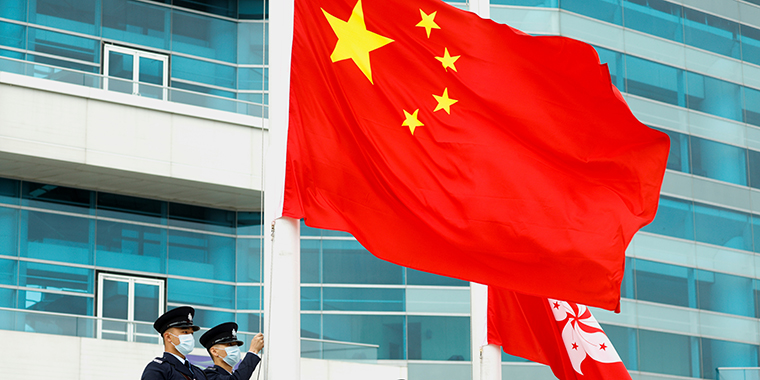
Meanwhile, the CCP has sought to bring Hong Kong—a former British colony and special administrative region of China since 1997—more firmly under its control.
The push to exert authority over Hong Kong has been widely viewed as a violation of the “one country, two systems” framework that was established ahead of the 1997 handover. Under the agreement, Hong Kong was guaranteed a significant degree of economic and political autonomy. The “one country, two systems” framework was designed to protect civil liberties such as freedom of the press and the right to assemble in Hong Kong. In exchange, matters of diplomacy and defense were left to Beijing. The framework was set to expire in 2047.
In 2020, however, the CCP passed a new national security law criminalizing most forms of protest in Hong Kong. This oppressive measure effectively wiped out political opposition and led to the arrests of dozens of high-profile activists. The law, which was supported by pro-Beijing lawmakers in Hong Kong, came on the heels of months of major protests against CCP encroachments. As a result of this crackdown, thousands of people have left or are trying to leave the island.
These developments in Hong Kong have also pushed Taiwan further away from the mainland, as the concept of “one country, two systems” has lost its credibility and appeal to the vast majority of Taiwanese people.
China on the World Stage
Since the founding of the People’s Republic of China in 1949, the CCP has used its version of history to argue that a strong government is essential to protect China from foreign incursion. Under Xi Jinping, the CCP has continued to leverage history to restore the country to a long-lost position of global power. This narrative has been used to advance the government’s domestic and foreign policy goals, sparking both internal conflict and friction with other countries like the United States.
With differing understandings of history and competing visions for the future, the United States and China have come into competition in several ways. In recent years, the two countries have been locked in a trade war, imposed economic sanctions on one another, and leveled accusations of meddling in the other’s domestic affairs. None of these issues has come close to triggering an actual war. However, the contentious relationship between the world’s two largest economies has serious implications for regional and world order.
Despite disagreements on how the past informs the present, the United States and China—among others—will need to find a way to manage their increasingly sharp competition. The two countries are also responsible for working together to tackle shared challenges. No nation can deal successfully with global challenges—such as climate change or the COVID-19 pandemic—entirely on its own.
Learn More


