Auto Industry
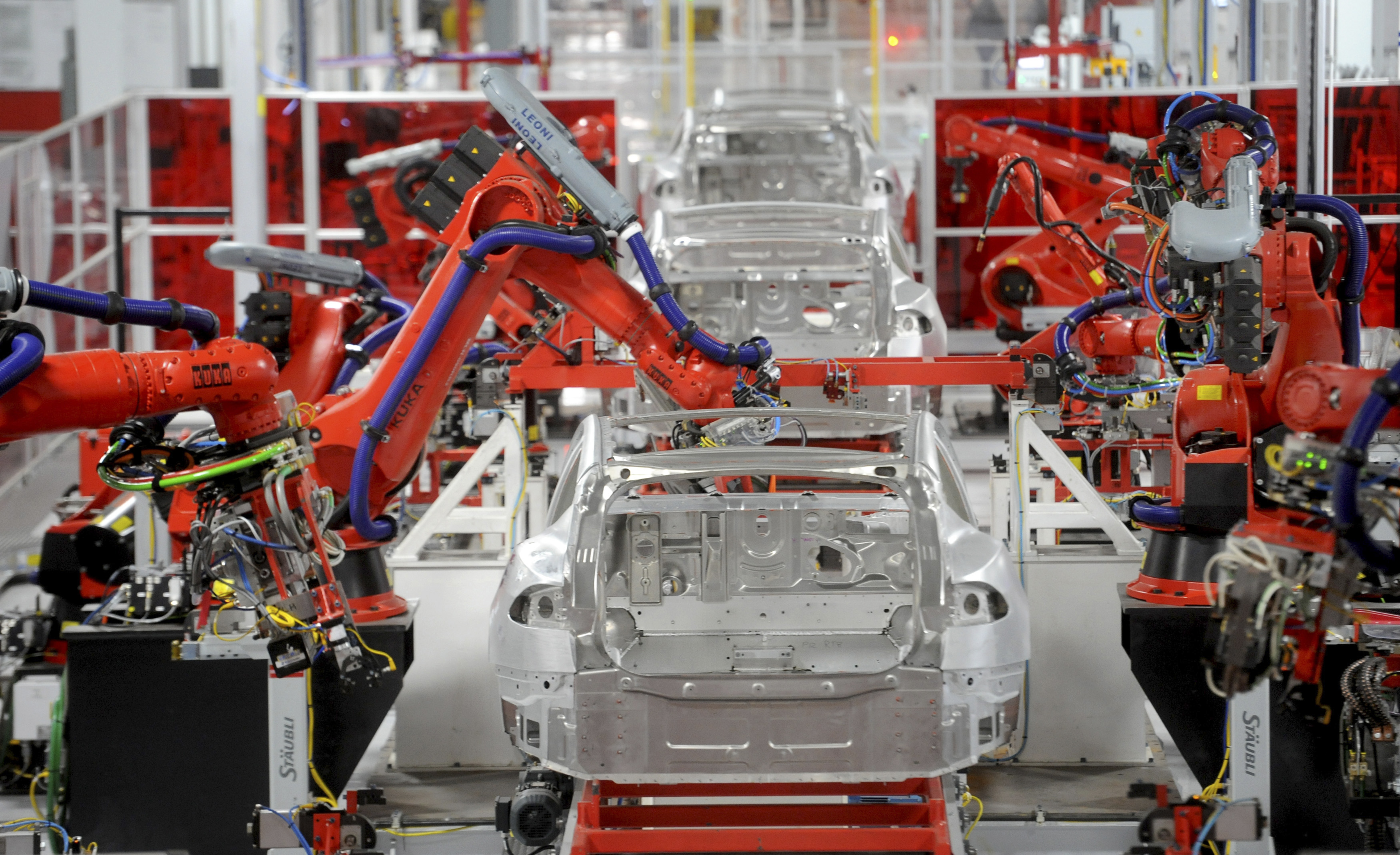
Robotic arms assemble Tesla's Model S sedans at the company's factory in Fremont, California, on June 22, 2012.
Source: Noah Berger/Reuters
Nearly thirty percent of all industrial robots at work today are found in the automaking industry. With over 100,000 robots installed annually, carmakers typically deploy their automated workforce for repetitive welding and painting jobs. And while some automakers like Tesla have attempted to fully automate their factories, this approach hasn’t met with much success because many carmaking tasks still require a human touch.
Health Care
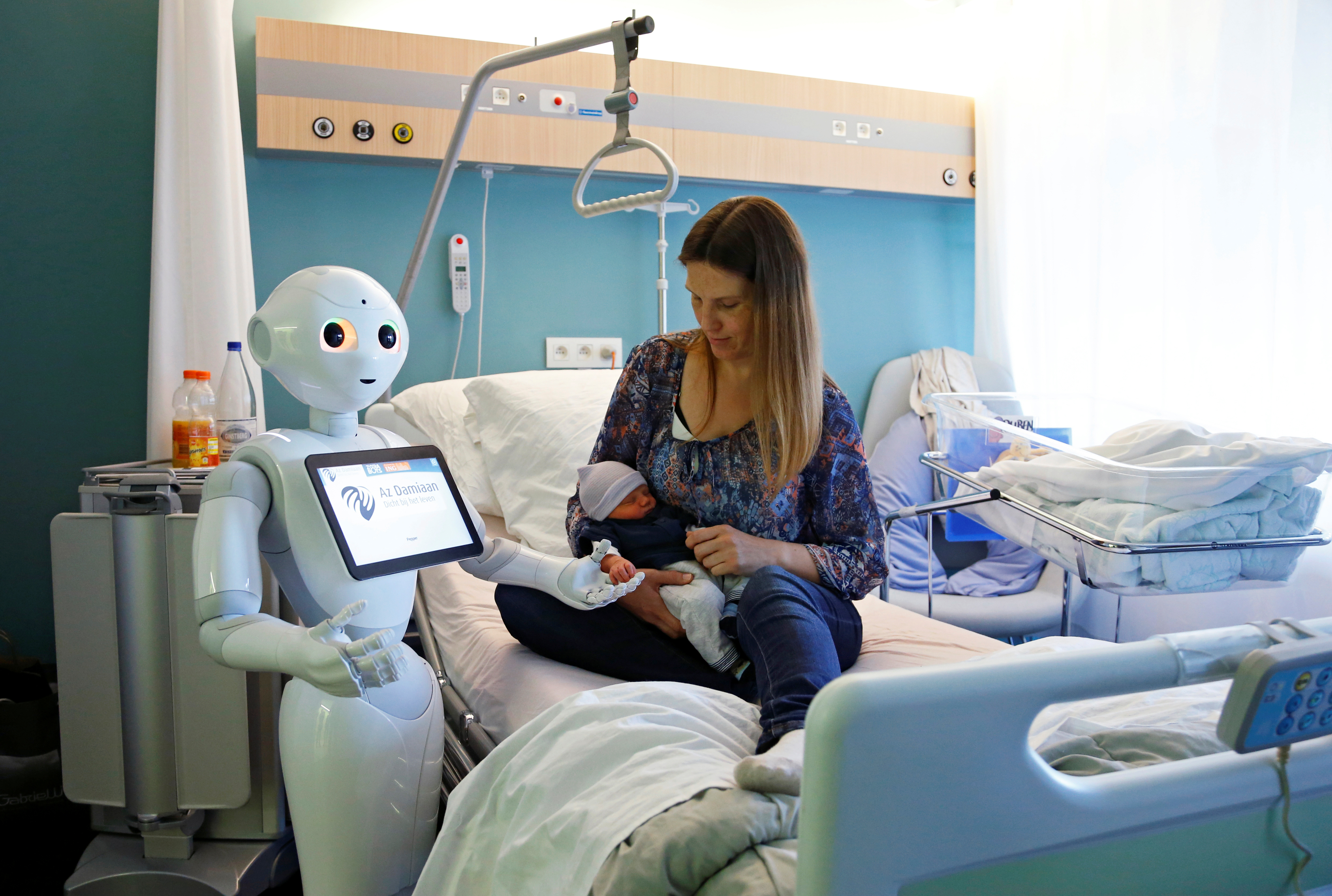
“Pepper” the robot, a humanoid robot designed to welcome and take care of visitors and patients, holds the hand of a newborn baby next to his mother at AZ Damiaan hospital in Ostend, Belgium, on June 16, 2016.
Source: Francois Lenoir/Reuters
Service robots, programmed to complete tasks like cleaning, stocking, or delivering medicine, and surgical robots, which are often operated by humans and used to enhance precision during surgery, are widely at use across the health-care industry. Beyond serving as a support for doctors, nurses, and staff in medical facilities, rapid advances in health-care robotics may soon usher in an era where robots travel to patients as opposed to patients traveling to the hospital for surgery.
Agriculture
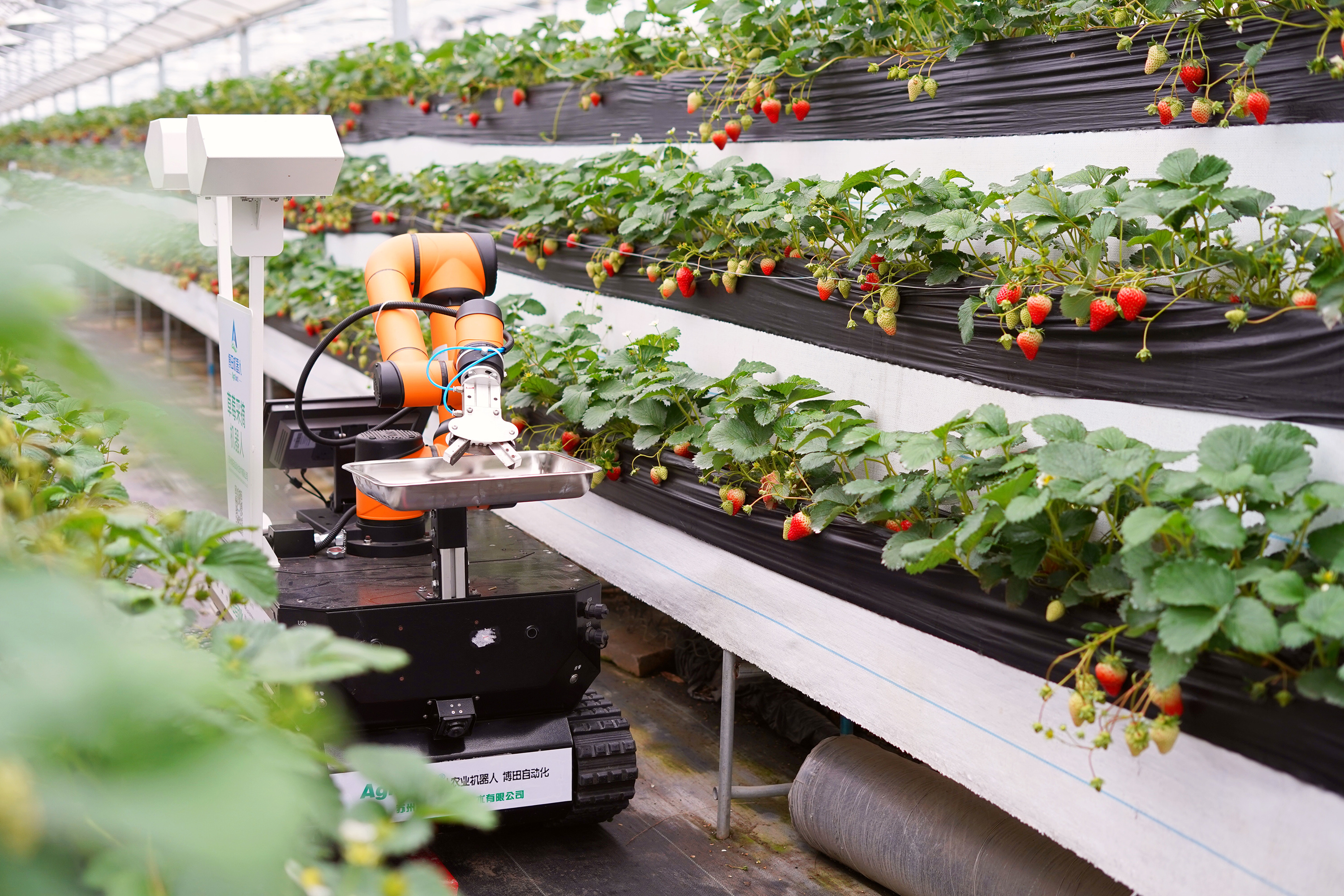
A robot picks strawberries in Hangzhou, Zhejiang, China, on December 26, 2019.
Source: TPG/Getty Images
The possibilities for robots to disrupt the labor-intensive field of agriculture are many, from pickers and weeders, to crop monitors. The industry has its eyes on robots as a way to complete tasks undesirable to humans and as a way to increase efficiency on farms. For example, using robots reduces the time it takes to harvest strawberries by up to 40 percent.
Restaurant Industry
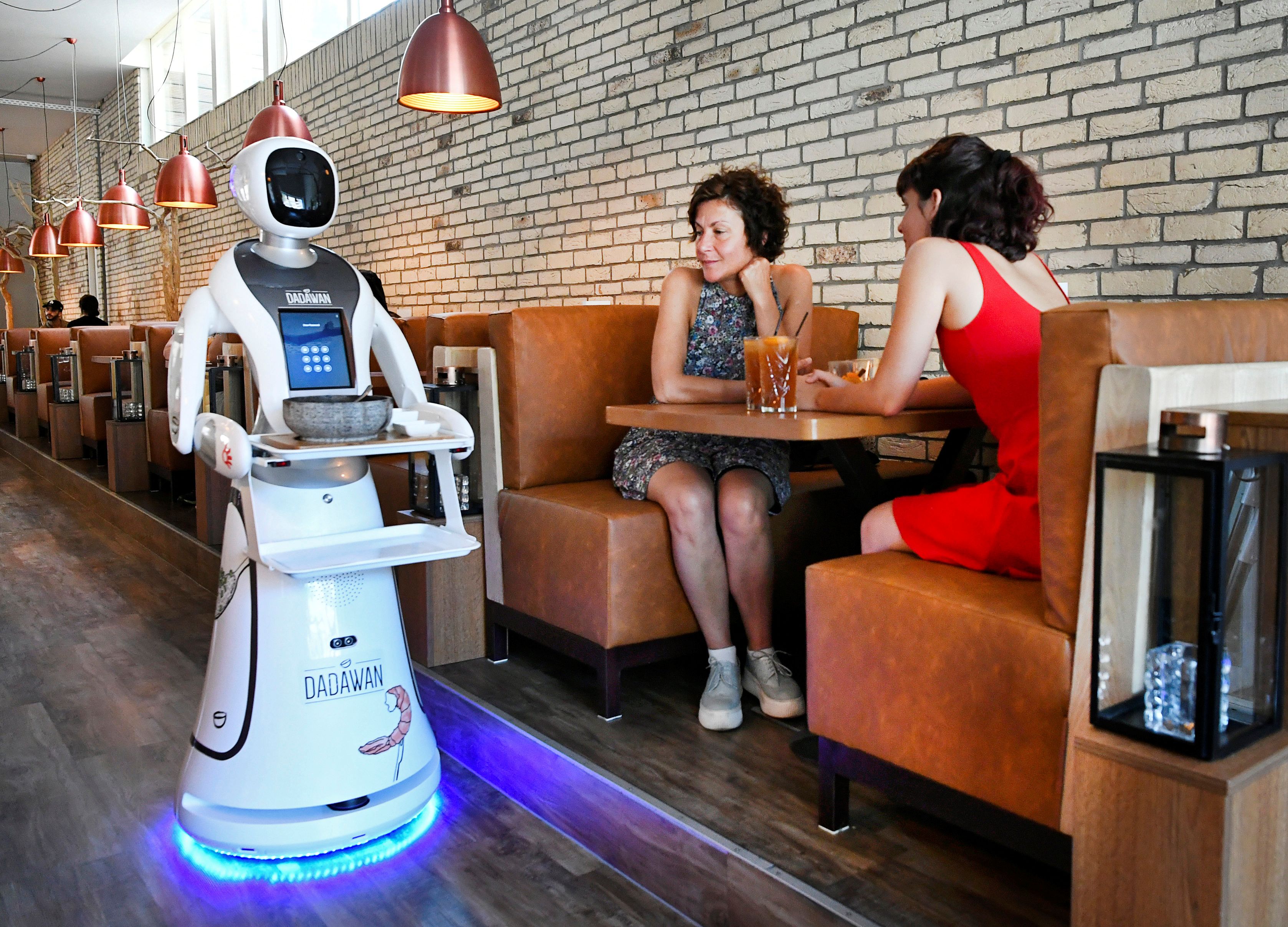
A robot serves food in a restaurant to reduce the risk of spreading the coronavirus disease (COVID-19) in Maastricht, Netherlands, on June 2, 2020.
Source: Piroschka van de Wouw/Reuters.
Already, automation allows customers to order and pay for food using a kiosk or table-side tablet, eliminating a server’s role. But automation is being introduced to the food preparation process too, via machines used to complete repetitive tasks such as making coffee or assembling burgers. One upside? Often, these machines are faster, more consistent, and more sanitary than human workers.
Transportation Industry

The screen in Delphi's automated vehicle shows the car stopping on its own after communicating with a stop light at an intersection at the Consumer Electronics Show in Las Vegas on January 5, 2016.
Source: Rick Wilking/Reuters
Though the technology that powers automated vehicles, or AVs, has advanced rapidly in recent decades, a future dominated by AVs won’t be reached without navigating some speed bumps, in particular the need to update related legal and financial systems. But the number of companies already operating in the space—fifty-two companies have permits to test AVs on California’s roads alone—has led many scholars to highlight those who drive for a living, from long-haul truckers to ride-share and delivery drivers, as parts of the workforce most vulnerable to automation.